Mural by Mel Waters and David Hyde Cho, Mission and 19th streets, San Francisco Mission District

Christopher Gil
Senior Content Marketing Manager
Mission Economic Development Agency (MEDA)
(415) 282-3334 ext. 152
cgil@medasf.org

FOR IMMEDIATE RELEASE
Jan. 10, 2018

Richard Raya Takes the Helm as Director of San Francisco’s Mission Promise Neighborhood
Will leverage years of experience in related fields to showcase results for families and students

San Francisco, Calif. — The Mission Promise Neighborhood (MPN) is ushering in fresh leadership with the start of 2018, announcing that Richard Raya will be the education initiative’s new director. The innovative strategy of the nation’s 17 Promise Neighborhoods is to commit to getting every neighborhood child into college or career by working with schools to connect families to a community network of support resources and using intensive data collection to measure results. MEDA is the lead agency of MPN, which includes over 25 partners.

MPN has seen numerous successes over its five years of community collaboration, including dramatic increases in high school graduation, augmented numbers of parents reading to their children and helping them meet early literacy milestones, and bringing valuable social-emotional and academic supports to neighborhood schools. (Read results report.)

As MPN enters its sixth year, the focus is now on how to accelerate impact in its next phase, and securing long-term funding to sustain the collaborative.

“This work combines my experience developing cross-agency programs to address community challenges with my equitable development and fundraising experience. All of these skills will need to be brought to bear in the current environment. I’m excited to join the MEDA team, which is at the forefront of community services with its family Asset Building programs and development of affordable housing,” explains Raya.

Prior to joining MEDA, Raya was chief of staff for an Oakland city councilmember. Raya mediated community-benefit negotiations. Before this, Raya served as executive director of Youth Radio, and director of administrative services for the Alameda County Public Health Department. At Youth Radio, he used grant writing and donor outreach to increase revenue and develop its first operating reserve. At Alameda County, he managed a $120 million budget and spearheaded the effort of the Interagency Children’s Policy Council to establish the county’s first results-based accountability (RBA) budget for tracking the outcomes of programs for children.

###

About Mission Promise Neighborhood
The Mission Promise Neighborhood is a citywide community partnership that was created to support kids and families living, working and attending school in the Mission District. It brings together schools, colleges, community organizations and community leaders to help kids graduate and families achieve financial stability. missionpromise.org

Read More

With the collective goal of fostering reading at home, the Mission Promise Neighborhood held its “Third Annual Holiday Book Giveaway” on Dec. 15. The venue was Plaza Adelante, the neighborhood center of the Mission Economic Development Agency (MEDA). MEDA is the lead agency of this education initiative.

Mission kids donning holiday attire — ranging from colorful sweaters to Santa hats — chose two or three books to go under their Christmas tree. The cute factor was high, as Mission Graduates’ Executive Director Eddie Kaufman played Papa Noel for the second year in a row, kids queuing up for a photo op.

There were books available for all children, with brackets of 0-3 years of age, Pre-K to kinder, first to third grade, fourth to fifth grade and middle school.

Choosing a book was no easy task for families, as there were 577 available. The majority of donations were via the Children’s Book Project, which for a quarter century has been bringing free books to underresourced kids.

The remainder of book donations came from Mission Promise Neighborhood partner Tandem, Partners in Early Learning, plus from members of MEDA’s Young Leaders Council.

With an amazing 445 books handed out in just two hours, the leftovers were put to good use, being forwarded to La Raza Community Resource Center, or Cesar Chavez and Bryant schools’ Parent Room libraries.

Additionally, there were 30 Talk, Read, Sing bags doled out at a workshop promoting early literacy at home, taught by Mission Promise Neighborhood Early Learning Program Manager Ada Alvarado.

Intern Maria Jose Gallo added an additional gift: Kids could be seen busily making a personalized bookmark using art supplies and crayons. She also created a two-pager advising parents that students get tested to ascertain their reading level — important to finding appropriate books to engage your child.

According to the 2016 Mission Promise Neighborhood survey (see Page 30), 77 percent of parents of children zero to five years of age now report reading to their child at least three times per week. This is an increase from 64 percent in 2014. Recent research has shown that children whose parents more frequently read to them, regardless of income or education, are more likely to do well in school.

As the Mission Promise Neighborhood is always using data to evaluate trends, there were 71 surveys collected from families at the book giveaway. Questions asked were along the lines of “How often do you read to your child at home?” and ”How often does your child read by themselves at home?”

The respondents by far indicated that they liked the event, offering ideas for betterment ranging from longer hours to maximize time at resource tables, augmenting donations so children could get three to five books each and finding toy donations, the latter possibly given out by raffle.

Upon departure, parents received gift bags with snacks and complimentary tickets to a pair of local museums: the Asian Art Museum and the California Academy of Sciences.

Stated one parent: “It was my first time attending an event like this one, I think it’s great so that as parents we can find out about programs and help our children for their future. Thank you!”

Thanks to partners Good Samaritan Family Resource Center, MEDA, Mission Graduates, The City and County of San Francisco Office of Workforce and Employment Development and the San Francisco Public Library for being on hand to make the holidays joyous for our Mission Promise Neighborhood families.

“The book giveaway means so much to our Mission families. This is a true collaborative effort. Thanks to the nine staff that volunteered their time, plus our many partners that contributed to this community event’s success,” summed up Mission Promise Neighborhood Family Support Manager Celina Ramos-Castro.

____________________________________________________________

About Mission Promise Neighborhood

The Mission Promise Neighborhood is a citywide community partnership that was created to support kids and families living, working and attending school in the Mission District. It brings together schools, colleges, community organizations and community leaders to help kids graduate and families achieve financial stability.


 

Read More

Story by Children’s Council San Francisco (a Mission Promise Neighborhood partner)

As a hard-working notary public and Spanish translator, Maria Antonieta had dreams of becoming a lawyer. She was attending San Francisco City College and was well on her way to achieving her goal when she became pregnant.

Six months before her son was born, Maria came to Children’s Council. She says, “I loved the facilities at Children’s Council right away, it was very child-friendly and everyone made me feel welcome. But I learned that securing child care was going to be as much of a challenge as finding affordable housing.”

“I wanted to go back to school after the baby was born, but there are not enough child care providers, especially for infants, and the waiting lists are long.” Maria was still on the wait list for child care when her son was born.

With the help of Children’s Council she received a voucher to help cover child care costs. But, she says, “The voucher was not enough to cover the actual cost of care, so I started working part time at San Francisco Homeless Prenatal Program, helping families in the same situation as I was.”

For another six months, she anxiously remained on the wait list for full-time child care, while working part-time and taking classes. “I wanted to pull myself out of this situation, but I was really struggling. I needed time to work and study, and I was always worried about child care.”

Maria’s patience and determination paid off when she received the good news from Children’s Council: a subsidized child care slot had opened up for her son. She was off the wait list. “Being able to have child care continuity allowed me to focus on work and my studies.”

In May, Maria received her paralegal degree from City College, and she has stable housing for her and her son. She says, “Child care and stable housing go hand in hand. When I didn’t have reliable child care, I couldn’t look for housing and put in applications.” Now, she continues to work part-time at SF Homeless Prenatal while pursuing her law degree at San Francisco State University, where she expects to graduate in two years.

And Maria’s son, now almost two years old, is also thriving. She says, “It’s very important for children to be in a loving environment where they can learn and get the stimulation they need. I love my child care provider. I know that my son is getting the kind of care he needs to be healthy, happy and successful.”

She has also become an active participant in child care advocacy through Parent Voices. This past summer Maria spoke before the Board of Supervisors as they debated the merits of increased funding for child care in the city. She told the Board:

“Affordable child care and stable housing strengthens families and makes them more economically secure while also reducing inequality. It will also keep diversity in our city, because when children learn and play together, they are color blind, and they don’t need to know how much their parents make. I hope children grow up in a culture that does not judge them by the color of their skin or by their economic status.” – Maria, working mother

Maria says, “Without Children’s Council, I would not be able to work and go to school. The support I’ve been given has been amazing.”

____________________________________________________________

About Mission Promise Neighborhood

The Mission Promise Neighborhood is a citywide community partnership that was created to support kids and families living, working and attending school in the Mission District. It brings together schools, colleges, community organizations and community leaders to help kids graduate and families achieve financial stability.


Read More

Immigrating together can definitely form a strong bond. Such was the case for Yeimy Moreno and Orlin Salazar, who separately decided to leave their native Honduras in search of a better life to the north. The bond formed put these émigrés on the path to becoming a family, but that did not happen overnight.
Yeimy wound up in the Northern California farming town of Watsonville, which offers a strong Latino immigrant community, while Orlin and his 8-year-old son, Dannis, headed to San Francisco’s Mission for the same reason.

Despite being 100 miles apart, Orlin could not forget Yeimy, so he started an online search — a search that eventually proved successful. A reunion turned into a permanent relationship.

The now close-knit Moreno-Salazar family rented a small bedroom in a three-room apartment on Cesar Chavez Street in San Francisco’s Mission District, with the relatively low rent supported by Orlin’s work cleaning restaurants at night, while Yeimy took care of Dannis. All was moving along until the family learned that the building was going to be demolished, effectively being taken off the rental market. The challenge of finding new affordable housing began with this no-fault eviction. Further complicating the situation was that Yeimy had given birth just two months prior to daughter Brittani, which meant this was now a family of four in search of affordable housing in the Bay Area. No easy task.

Yeimy had always been proactive in seeking assistance, which is why she came to Family Success Coach Yadira Diaz, based at Dannis’ school, Cesar Chavez Elementary, one of a quartet of Mission Promise Neighborhood schools. (MEDA is the lead agency of the Mission Promise Neighborhood.) Diaz acts as a connector to services in the Mission.

Yeimy feared her family would wind up on the street.

Knowing the difficulty of locating a permanent residence the family could afford — especially when trying to find a landlord open to accepting a housing subsidy — Diaz helped them secure a temporary spot at a Hamilton Families shelter. The search continued, a diligent Yeimy daily scouring Craigslist ads, enlisting the counsel of Diaz on which apartments seemed appropriate for the family. Diaz then passed on the best options to Hamilton Families caseworker Miguel, who ascertained how the housing subsidy could be put to best use.

While this process was taking place, Diaz was busily connecting Yeimy to other services to strengthen her family. When Dannis starting exhibiting behavioral issues, possibly attributed to leaving his homeland, Instituto Familiar de la Raza’s services made sense. The youngster was also awarded a special slot in Jamestown Community Center’s after-school program because of the family being in the extreme situation of being in a shelter; that organization offers age-specific support groups as a means to bettered academic achievement.

Another problem was that Diaz determined the Moreno-Salazar’s were unbanked, an especially egregious issue because they were carrying around money they had received from the landlord when they were evicted. Being unbanked is often an issue with newcomers, who often have an inherent mistrust of their new country’s financial institutions. That’s where MEDA’s Financial Asset Program Manager Jackie Marcelo’s came into play, getting the family set up with an account at Self-Help Federal Credit Union, located in the heart of the Mission and with an ongoing offer of just $5 to open a savings account.

The good news is that the determined family finally found a new home — a rental located in Oakland. This was an exhaustive, eight-month search from the time of the initial eviction notice.

Diaz then connected Yeimy to the Families & Youth in Transition (FYIT) program via SFUSD. FYIT is providing the Moreno-Salazar’s with assistance procuring BART passes, now needed so Dannis can get to school in San Francisco’s Mission, plus uniforms and much more.

Always looking to learn and better her family’s life, Yeimy is also looking to better her English-language skills by taking classes at Good Samaritan Family Resource Center. Additionally, Diaz has connected her to Mission Neighborhood Centers to eventually put her infant daughter in quality child care so that Yeimy can start working outside the home.

“Yeimy is resilient. She’s a doer. I am proud to be part of a Family Success Coach team for the Mission Promise Neighborhood, connecting families to free, culturally relevant services that will better their lives so their children can succeed in school,” concludes a zealous Diaz.

___________________________________________________________

About Mission Promise Neighborhood

The Mission Promise Neighborhood is a citywide community partnership that was created to support kids and families living, working and attending school in the Mission District. It brings together schools, colleges, community organizations and community leaders to help kids graduate and families achieve financial stability.


Read More

The Mission Promise Neighborhood is a prenatal-to-career continuum of support services for families in San Francisco’s Mission District. The beginning of the pipeline includes many partner strategies and programs working to promote kinder readiness by ensuring that children have a medical home, are enrolled in a high-quality preschool program and that families support learning.

Mission Promise Neighborhood has learned that there are some key predictors of readiness in the Mission District, including: child well-being; frequency of family activities; not having special needs; family income level; and having a preschool experience. (Read Applied Survey Research report on kinder readiness in the Mission.)

Children are healthy
Mission Promise Neighborhood partners offer services that address the top six predictors of readiness. An example of how one partner is addressing most of these predictors by having an integrated approach to serving families is how Mission Neighborhood Health Center (MNHC) offers prenatal services and is the medical home to most Mission Promise Neighborhood families. In 2016, the program supported 87 Mission women with the need for prenatal care. Of these women, 93 percent of their babies were born at both normal birth weight and gestational age at delivery. Additionally, 60 percent of those mothers initiated pediatric care at MNHC.

So far in 2017, MNHC has provided San Francisco children under five with 4,431 well-baby visits to ensure that children have a stable medical home and are healthy. In addition to not being sick, child well-being is also about their not being tired or hungry at school. MNHC has a family-support staff person that connects families to the resources and information they need to access food and, in some cases, a stable home. MNHC also houses a staff person from Support for Families who administers a developmental screening for children under five years old. This is a critical early-intervention service that ensures that children are developing in a healthy way and that if there is a concern, the family can be connected to the appropriate services. So far in 2017, Support for Families has conducted 93 screenings at MNHC. Lastly, the family support staff at MNHC ensures that families are connected to other Mission Promise Neighborhood partners that can provide families with information on early-childhood development, help families enroll in a high-quality preschool program and offer families financial services, such as MEDA’s financial capability program.

High-quality preschool
Mission Promise Neighborhood was designed to leverage much of the investments that First 5 San Francisco has made in the Mission District. First 5 SF supports the following MPN partners that offer preschool services:  Felton Institute, Good Samaritan Family Resource Center, and Mission Neighborhood Centers. These partners have been supported to meet the specific needs of the Mission’s Latino community, including culturally relevant training and enhancement funds to provide high-quality care.

Ingrid Mezquita, Executive Director of First 5 SF,  explains, “Providing a high-quality preschool experience means teachers receive ongoing support in their professional development, funding is available for children to have meaningful engagement, and programs reflect on student data to fine tune how to best meet children’s needs.”

Felton Institute exemplifies the impact being made for kids in the Mission Promise Neighborhood. The agency serves 400 children from birth to age 6, including those with special needs. After 46 years solely in the Mission, Felton Institute recently expanded to serve other San Francisco communities of color, with two centers in the Bayview and one in Visitacion Valley.

Explains Felton’s COO Yohana Quiroz of the power of being part of the collective: “Mission Promise Neighborhood has supported Felton Institute to achieve its mission and vision by leveraging and building upon existing community partnerships and coordinating our efforts for all to focus on a shared goal, using a Results-Based Accountability and collective-impact framework. This has supported our ability to continuously reflect on data, and focus on our collective efforts and how they align —  or not — to ensure we are continuing to move the needle to improve child outcomes.”

Quiroz has many client success stories to share, but one family’s experience truly showcases the impact being made in getting children kinder ready. States Quiroz, “A family with twins was struggling to find a service provider that could meet the needs of their children, who had a formal diagnosis. One of Felton Institute’s Early Childhood Education programs was able to enroll them in their infant-development program, which provides an inclusive learning environment for children with special needs and those typically developing. Now, after a few years, these children are thriving and will be transitioning into kindergarten next year, plus the mom has been able to get a full-time job, knowing that her two children are receiving comprehensive services that are ultimately supporting their school readiness.”

Eighty-two percent of San Francisco Latino 4-year-olds are now enrolled in Preschool For All — a huge success.

Despite this success, there are issues that remain, with First 5 San Francisco and Mission Promise Neighborhood committed to closing these gaps.

“Your ZIP code shouldn’t determine the quality of preschool. Every child deserves quality early education — it’s about creating opportunity for all of our kids,” concludes First 5 SF’s Mezquita.

Families support learning
To scale parent education/leadership programs — and in partnership with First 5 SF — six Mission Promise Neighborhood early-learning partners participated in the Abriendo Puertas/Opening Doors facilitator training last spring. Abriendo Puertas/Opening Doors is the only evidence-based parent education/leadership program for Latino parents with children birth to age 5. According to the UC Berkeley Institute of Human Development, this program “empowers them to transform cultural strengths into the tangible tools they need to build solid foundations.” Parents showcase significant increases in their knowledge of language and literacy development, social-emotional development, health development and school preparation.

Mission Promise Neighborhood’s goal is to support partners in scaling Abriendo Puertas in the Mission community and across San Francisco. Mission Promise Neighborhood created an Abriendo Puertas Learning community for facilitators to support each other and share best practices. Since April, there has been an increase in the amount of families that are accessing Abriendo Puertas, especially via partners that had never offered the curriculum before.

Conclusion
The initial five years of life are critical for shaping childhood outcomes. That’s why a collective impact approach has been put in place by the Mission Promise Neighborhood to address gaps, provide high-quality preschool and make sure all of our children in the Mission District are kinder ready.

A common value of closing the opportunity gap is what drives this work.

____________________________________________________________

About Mission Promise Neighborhood

The Mission Promise Neighborhood is a citywide community partnership that was created to support kids and families living, working and attending school in the Mission District. It brings together schools, colleges, community organizations and community leaders to help kids graduate and families achieve financial stability.

Read More

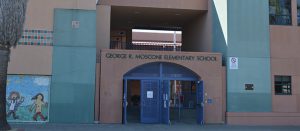
While the Mission Promise Neighborhood education initiative focuses on four schools — Bryant and Chavez elementary, Everett Middle and O’Connell High — the fact is all schools within the Mission footprint are deemed part of MPN. That why families at Moscone Elementary School, located on Harrison between 21st and 22nd streets, receive connections to free community services, too.
Being in the Mission, one issue of note for all Mission Promise Neighborhood families is affordable housing in what has become an ever-expensive neighborhood, six-figure earners moving in en masse since the tech boom.

The good news is that five Moscone Elementary families are now in safe, secure and quality housing: These are below-market-rate (BMR) apartments that cost only one-quarter to one-third the monthly rent of market-rate units in the same development. These brand-new properties feature many amenities, from rooftop terraces to on-site fitness centers.

Locating such affordable housing takes perseverance by families, all in search of a better life for their kids, the latter not wanting to leave their school, friends and, often, the only neighborhood they have ever known.

Some families have been living in cramped quarters, either several people in a garage studio or tiny, one-bedroom apartment. In fact, a comprehensive housing survey, taken of over 2,000 tax clients who came to MEDA last season, showcases the issue. (MEDA is the lead agency of the Mission Promise Neighborhood.)

Gauging by how many people per bedroom were denoted in the survey, the findings were that 21 percent of respondents reported living in overcrowded conditions (more than two people per bedroom, per HUD’s definition); however, the rate of overcrowding was more than twice as high among Latinos than non-Latinos.

While each Moscone Elementary family has their own story, they share a commonality of experience, as evidenced by discussions during affordable-housing presentations held Fridays at the school by MEDA’s Community Planning Manager Dairo Romero. He has already spearheaded these sessions seven times, afterward assisting attendees with the BMR application process.

An education is offered on the need to keep applying as a way to better your odds of winning the BMR lottery. Also, Romero explained the process of what would occur after winning the lottery, including paperwork required and the need to have one’s finances in order.

The five families having won lotteries and who have received keys to their brand-new apartments are:

  1. Heidi Deleon, now at Trinity.
    Heidi had been living in a studio apartment with her two children.
  2. Asenaida Escober, now at Five 88 Mission Bay.
    A master tenant had asked Asenaida to leave the unit.
  3. Maria Esquite, now at L SEVEN.
    Maria’s family experienced a no-fault eviction, so she received the City’s Displaced Tenant Housing Preference (DTHP), which helps the holder’s chances of winning BMR lotteries.
  4. Laura Mejia, now at L SEVEN.
    Laura’s family also experienced a no-fault eviction, so she received a DTHP.
  5. Edilma Castañon, now at Waterbend.
    Edilma is part of a five-person household that was living in cramped quarters.

The principal at Moscone Elementary is thankful students are now in much-improved housing, plus being connected to other free services available to strengthen families in the Mission.

Romero will continue to offer his presentations, putting forth the important message that “¡Vivienda económica es posible para todos en San Francisco!” (“Affordable Housing is possible for all in San Francisco!”)

____________________________________________________________

About Mission Promise Neighborhood

The Mission Promise Neighborhood is a citywide community partnership that was created to support kids and families living, working and attending school in the Mission District. It brings together schools, colleges, community organizations and community leaders to help kids graduate and families achieve financial stability.

Read More

“For all families, health starts with food on the table and a roof over our heads. It warms our hearts to see the smiles on the faces of these families in their new and secure homes,” says Executive Director Brenda Storey of Mission Neighborhood Health Center (MNHC). She was speaking in general about Mission Promise Neighborhood families, and specifically of the families of siblings Jazmin and Marcos Florian. MNHC has served the Mission’s Latino community for almost five decades and is a valued Mission Promise Neighborhood partner.
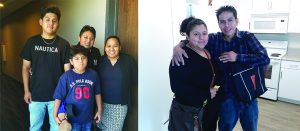
Jazmin Florian, spouse Antonio Chunux and their two children (photo, left) are now in a below-market-rate (BMR) apartment rental at Abaca on Third Street in Dogpatch, while Marcos Florian and wife Jessica Alvarez (photo, right) found affordable housing at Five 88 in Mission Bay. Both are brand-new developments featuring many amenities.

To make affordable housing a reality, it took determination by the families and a partnership between MNHC and MEDA, the latter the lead agency of the Mission Promise Neighborhood.

MNHC knows that a lack of safe, secure and quality housing can lead to major health issues.

Chronic Disease Coordinator Iran Pont explains the issue as follows: “Studies show that if you are under stress because you don’t have a home, then major health issues can occur. if you don’t have the roots of your home established, you can’t build anything else.”

That’s why MNHC’s Storey reached out to MEDA to provide affordable-housing workshops at her clinic. This formal request occurred during one of Mission Promise Neighborhood’s monthly referral network meetings, where the 20+ partner organizations share information and best practices around direct services.

Last December, Jazmin Florian attended the first workshop at MNHC, with MEDA Community Planning Manager Dairo Romero availing Latino families of the affordable-housing opportunities in San Francisco’s pipeline, plus how to get rental ready so that eligibility requirements can be met once you win the housing lottery. At this meeting, a distressed Jazmin shared with the group that her entire family was in the throes of an owner move-in eviction from their Bayview neighborhood home — a home where her family of four lived in one unit, and her brother and his spouse lived in the other flat.

Jazmin was made aware of how San Francisco’s Displaced Tenant Housing Preference (DTHP) for evicted residents could help her family win the lottery and find a new affordable home in the form of a BMR rental. So she and sister-in-law Jessica filled out the necessary DTHP paperwork. They then applied for BMR rentals at multiple properties.

Jazmin won three lotteries, but was initially denied because her family had not filed for the 2015 tax year. MEDA helped appeal Jazmin’s case with the developer, plus the MEDA tax team prepared the taxes for free. Jazmin, Antonio and their children moved into Abaca in July. Additionally, during the process of obtaining a BMR rental, Jazmin decided to become an affordable-housing advocate, even providing Board of Supervisors’ public testimony in favor of MEDA’s 1296 Shotwell affordable-housing development for seniors.

Jessica was a victor of five lotteries, but was denied at one project because of too high a household income (every development has its own minimum and maximum income requirements.) Their case for Five 88 was closed, but later reopened by Romero.

Romero states, “Our Latinos families who win the lottery need support throughout the leasing process because some developers do not offer bilingual staff. Plus, families don’t always understand what additional documents are being requested by the developers.”

Jessica was also counseled by Family Success Coach Yadira Diaz at Cesar Chavez Elementary — a Mission Promise Neighborhood school — to apply for a Hamilton Families housing subsidy that covered the required first month’s rent and security deposit. Marcos and Jessica moved into Five 88 at the end of June.

“MNHC is excited and eager to continue our collaboration with MEDA, with the goal of having many more Mission Promise Neighborhood families find their secure home in San Francisco,” concludes Storey.

____________________________________________________________

About Mission Promise Neighborhood

The Mission Promise Neighborhood is a citywide community partnership that was created to support kids and families living, working and attending school in the Mission District. It brings together schools, colleges, community organizations and community leaders to help kids graduate and families achieve financial stability.

Read More

With an eye toward the exciting start of school, 110 families attended Mission Promise Neighborhood’s third annual Education Forum at the Mission Campus of City College on July 29. The theme was ”Putting Success in a Backpack,” but the event offered so much more. (See photos.)
The majority of students were from pre-K to 8th grade, with families having been made aware of the day’s agenda from fliers, partner agencies or other family members.

Mission Promise Neighborhood Associate Director Liz Cortez welcomed attendees, sharing her own inspiring story that showcases the importance of parents taking an active role in their child’s education. Cortez explained how her own parents lent such support, despite their being newcomers not cognizant of how to get into college in this country. Such support translated to Cortez earning her degree.

Next up was a panel conversation moderated by Amelia M. Martínez-Bankhead, a Mission Graduates board member. Five parents provided information about the upcoming workshops, telling of their experiences applying for affordable housing, getting family finances in order, promoting reading at home or creating a college-going culture at home. Their words definitely resonated with the crowd for their attending following workshops; Abriendo Puertas; Literacy Champions; How to Pay for College; Family Financial Health; Overcoming English Language Barriers in Schools, Housing Lottery Readiness; and Reclassification. The latter proved popular, with Mission Graduates and Familias Liderando la Educación Exitosa (FLEE) leading education around this reclassification campaign.

A survey was handed out as a way to better gauge parents’ understanding of Latino reclassification issues for English Language Learners. There were 76 surveys completed, and parents will now be invited to attend groups at Mission Promise Neighborhood schools, plus become active participants in the reclassification campaign.

To keep six- to 13-year-olds engaged and learning while parents attended workshops, a trio of Mission organizations were on hand. The Mission YMCA taught STEM via intriguing science experiments. Instituto Familiar de la Raza offered drumming, the joyous sounds filling the campus’ courtyard. Project Commotion  featured jump roping, with athleticism showcased by numerous youngsters.

Once parents exited their workshops, it was time for the distribution of backpacks generously donated by the Mayor’s Office of Neighborhood Services (MONS). These sturdy backpacks contained everything from notebooks to coloring pens. A raffle was then held for backpacks teeming with even more much-needed items for the school year, with 10 delighted families having their numbers picked.

Additionally, there were raffles for a pair of $20 gift cards from Mateo’s Taqueria, located on Mission Street.

To fostering reading in the community, 280 Spanish- and English-language K-12 books were doled out by the San Francisco Public Library. Volunteers from the library also handed out Talk, Read, Sing bags for infants and toddlers.

For a touch of art, MONS also divvied up complimentary museum passes to a number of San Francisco venues.

To strengthen families, there were 12 resource tables offering materials and free services. Topics ranged from affordable housing and low-cost internet to after-school programs for children and literacy information. Parents walked away with information, pamphlets … and the tools they needed to succeed.

By the time the five-hour Education Forum 2017 came to a close, families were definitely ready for the 2018-2019 school year. Let’s make it a great one!

____________________________________________________________

The Mission Promise Neighborhood acknowledges the partners, volunteers and community members that made the Education Forum 2017 a success. Thank you to Mission Graduates, MEDA, Mission Neighborhood Centers, SFUSD-Early Education Department, Tandem, Partners in Early Learning, Project Commotion, Instituto Familiar de la Raza, Mission-YMCA, La Raza Centro Legal, Good Samaritan Family Resource Center, AT&T, ScholarMatch and Innovate Public Schools.

____________________________________________________________

About Mission Promise Neighborhood

The Mission Promise Neighborhood is a citywide community partnership that was created to support kids and families living, working and attending school in the Mission District. It brings together schools, colleges, community organizations and community leaders to help kids graduate and families achieve financial stability.


Read More

“Our bathroom is larger than the one room my two children and I used to share,” says a thankful Juana Martinez of her two-bedroom apartment at brand-new FIVE 88 in San Francisco’s burgeoning Mission Bay.


Juana (photo, right, showing winning lottery ticket) is the devoted mother of sons Eduardo, a seventh-grader at Everett Middle School, and Edwin (photo, center), a fourth-grader at Sanchez Elementary. Back in El Salvador, Juana was concerned that gang violence would soon become part of her children’s lives. So she made the difficult decision to start anew, first heading to Houston in January 2016, and then venturing to San Francisco a year ago. Some cousins and friends advised her of opportunities in the Bay Area, translating to that trip out west.

Their prior rental was that tiny room, far removed from the Mission. Because of the distance, Juana’s children needed to wake up at 5 a.m. to get to school on time. She also knew that the landlord needed her family to soon leave that rental.

To make ends meet, Juana worked six days a week at a restaurant, plus some Sundays at another eatery in Oakland. She was allowed to bring home food, which was a blessing, but her kids weren’t that interested in Italian and Filipino cuisines. These picky eaters longed for rice, beans and homemade tortillas — not easy for Juana to make in a communal kitchen.

Life remained difficult.

An introduction to the  BMR rental process
Juana was introduced to the possibility of a BMR rental via a flier hand delivered by Eduardo; this flier came from Mission Promise Neighborhood Family Success Coach Roberto Aparicio (photo, left). Based at Everett Middle School, Aparicio personally greets all unaccompanied minors throughout the school year, to make sure newcomer students know a caring adult at the school. This welcoming process also helps Aparicio gauge family and student needs, with the latter always getting a brand-new backpack.

Juana set up a meeting to speak with Aparicio to discuss affordable-housing options, one item denoted on the flier.

Now armed with some information, Juana was connected to MEDA Housing Opportunities Program Manager Juan Diego Castro, who helped her fill out an application for Five 88. It was just two weeks later that Juana received a voicemail from the City, but the only word the monolingual Spanish speaker recognized was “apartment.” So Aparicio came back into the picture, listened to the message and advised Juana that she had won the lottery. Great news, but the work was just beginning.

It was imperative to gather six months of bank statements and pay stubs. When Juana ran into trouble getting pay stubs from one of her employers, the stress built up as the deadline was imminent. Aparicio called the leasing agent at Five 88 and advocated on Juana’s behalf; this led to a few more days being granted, in which time the correct paperwork was received.

Aparicio later counseled Juana to bring a bilingual friend to her initial meeting with the property manager at Five 88, so she enlisted a co-worker named Celida. Aparicio then accompanied Juana to her second such meeting. Everything was now in the works.

A new home
Juana was elated when a week after her meeting with the property manager she received a call that she had qualified. It was time for a tour of Five 88, accompanied by Aparicio. They saw the terrace. The gym. The laundry room.

Then Juana was handed three sets of keys. She was at first confused until it was explained that she could choose from one of a trio of available two-bedroom units. As configurations were fairly similar, Juana asked Aparicio which of the three should she pick. He suggested an apartment that offered a view of the development’s entrance, so that she could see her boys coming into and out of the building.

Now with a stove of her own in an open-concept kitchen, Juana’s children can indulge in those handmade tortillas, loving made from scratch by their mother. The boys have bunkbeds in their own bedroom, and Juana now has the privacy every parent deserves.

Commute times have greatly decreased, older brother Eduardo escorting Edwin to Everett Middle school each weekday, as they both take the MUNI 55 bus line. Juana can get to work much faster, too, meaning more time to spend with her boys.

Life has definitely improved for this Mission Promise Neighborhood family.

Juana advises others seeking affordable housing in San Francisco to know that this could also happen for them. Her main advice:  Make sure your documents are always up to date.

Todo es mejor aquí. Hay esperanza,” exclaims Juana, translated as “Everything is better here. There is hope.”

____________________________________________________________

About Mission Promise Neighborhood

The Mission Promise Neighborhood is a citywide community partnership that was created to support kids and families living, working and attending school in the Mission District. It brings together schools, colleges, community organizations and community leaders to help kids graduate and families achieve financial stability.


Read More

Great news: Thanks to partner strategies, mentorships and increased parent engagement, the graduation rate of John O’Connell High School is now approaching that of SFUSD overall. According to a recently published Mission Promise Neighborhood data brief, “Making College an Achievable Dream: Foundations and Results,” O’Connell’s graduation rate increased from 68 percent to 85 percent between 2012 and 2016.

While O’Connell students desire to attain a college degree, how to pay for postsecondary education remains daunting, as the majority of students come from underresourced families. The same data brief reported that 51 percent of students at O’Connell indicated that financing is their main barrier to attending college.

That was the impetus for the creation of the Mission Promise Neighborhood Scholarship Fund last year, with the community’s efforts translating to four deserving O’Connell seniors matriculating at colleges in fall 2016.

Looking to further increase  the Mission Promise Neighborhood Scholarship Fund’s impact was the goal for 2017, with MEDA Development Manager Alberto Galindo setting the goals and spearheading the strategies to make this happen. MEDA is the lead agency of the Mission Promise Neighborhood education initiative.

“Our aim was to generate community involvement via fun events that would showcase impact,” explains Galindo, who was assisted in his efforts by Education Manager Laura Andersen.

That impact definitely occurred, with $11,000 raised.

Fundraisers were held this spring at three generously donated venues: the Mission’s Cease & Desist, which allowed their back bar to feature Mission Promise Neighborhood and John O’Connell High School guest bartenders; Senegalese restaurant Bissap Baobab, a MEDA Business Development client; and North Beach’s Cigar Bar & Grill for a Mother’s Day event. Numerous local businesses donated raffle prizes.

Complementing these fundraising efforts was an online Razoo donation page, where over $3,500 was raised. (This page remains active for anyone looking to give us a head start for 2018’s awards.)

For 2017, six O’Connell students are receiving awards after having their applications, including compelling personal histories, reviewed by committee. Recipients are all Mission students who have overcome obstacles and now want to better their futures — and that of their families — by attending college.

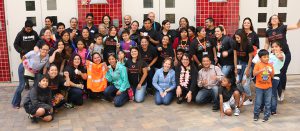
Four of the recipients for 2017 (photo left to right, flanked by Andersen and Galindo) are Diamond Woodruff, Gisselle Ortega, Alicia Rodriguez and Maria Zaragoza. Miguel Guzman and Diana Rodriguez are not pictured. All are grateful for the benevolence of their neighbors and are now better prepared for this next step in their journey.

Ortega’s story showcases the resiliency of these students. The youngster woke up at 4 a.m. each day to help her mother earn money by cleaning a pizzeria, a task that took over three hours before Ortega headed to school. She was in the first grade.

Ortega explains what drives her as follows: “I am motivated to go to college since neither my mom nor my brothers finished high school. By achieving my goal of going to college, I will bring great joy for my family, and a better life for us.”

“Thanks to the community for their generosity, as we send these young adults out into the world with local support from the Mission,” concludes Galindo.

____________________________________________________________

Special thanks to our community partners that contributed prizes to our fundraisers and provided venues to host our events: Alamo Drafthouse Cinema, Bissap Baobab, Cigar Bar & Grill, Dandelion Chocolate, Giordano Bros., Latin City Productions, Mateo’s Taqueria, Mission Cliffs, Mitchell’s Ice Cream, Roxie Theater, Tartine Bakery & Cafe and Tonic Nightlife Group.

____________________________________________________________

About Mission Promise Neighborhood

The Mission Promise Neighborhood is a citywide community partnership that was created to support kids and families living, working and attending school in the Mission District. It brings together schools, colleges, community organizations and community leaders to help kids graduate and families achieve financial stability.


Read More

MONTHLY ARCHIVE

Contact

Email
info@missionpromise.org
 
Phone
(415) 569-2699
 
Address
2301 Mission Street, Suite 304
San Francisco, CA 94110

Newsletter
Get the latest news and information on
what’s happening in your neighborhood.

SIGN UP