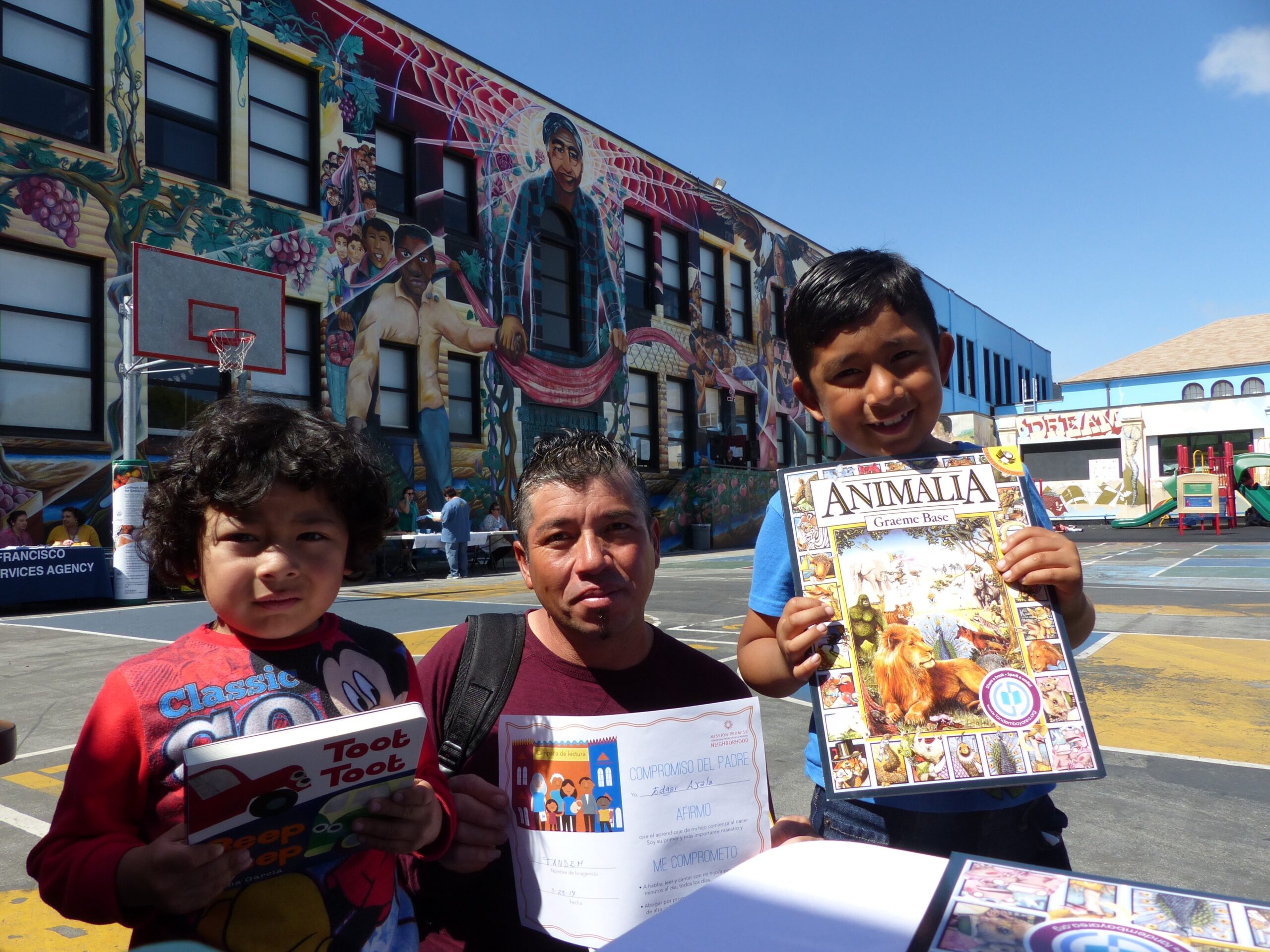
In the heart of the Mission District, the holiday spirit shone brightly as the Mission Promise Neighborhood (MPN) collaborative hosted its 10th annual book giveaway at Cesar Chavez Elementary. Despite the rain and overcast skies, the event was filled with festive energy as 300 children and families gathered to select from a diverse collection of nearly 1,000 books, enjoy art activities, and take pictures with Santa.

Since 2014, MPN has remained committed to providing every child with the opportunity to read, learn, and grow. This year’s book giveaway gave students from elementary through high school the chance to choose books that sparked their imaginations and nurtured healthy reading habits.

True to MPN’s commitment to inclusivity, the collective impact initiative continued its tradition of offering Spanish-language books, allowing immigrant families to share the joy of reading and nurture bilingualism at home.

In addition to the books, MPN organized creative art activities that included bookmark crafting, Christmas cutouts, DIY piggy banks, and even a comic book station. These activities allowed the children and youth to express their creativity while making lasting memories.

The giveaway was more than just books—it was an opportunity to bring the community together and ignite a lifelong love of reading.

Gratitude goes to Jamestown Community Center for their invaluable role in coordinating students and their partnership in making this event a success for families.

Special thanks to the following organizations for their generous contributions:

  • Cesar Chavez Elementary School for providing the space to host the event
  • Children’s Book Project and San Francisco Public Library for donating books
  • San Francisco’s Kindergarten to College (K2C) program for contributing school supplies
  • San Jose Sharks for their Mental Health Kits for elementary students
  • California’s Office of Community Partnerships and Strategic Communications (OCPSC) for ensuring families receive information about free mental health tools, including the Brightlight and Soluna apps.

These cross-sector collaboration and partnerships are critical to ensuring that Mission children, youth, and their families have the essential tools for academic success and a bright future ahead.

If you are passionate about supporting MEDA’s in advancing equity, creating opportunities for San Francisco families, and making meaningful and lasting change, reach out to development@medasf.org for more information about how you can get involved.

Read More

For several decades, Parents for Public Schools of San Francisco (PPSSF), a partner of Mission Promise Neighborhood (MPN), has been instrumental in advocating for equity in education. By actively engaging parents and mentors, PPSSF has championed the well-being of public schools and addressed the evolving challenges within communities

These efforts have not gone unnoticed. In August 2023, Vanessa Marrero, the executive director of PPSSF, was appointed by U.S. Secretary of Education Miguel Cardona to serve at the Comprehensive Center Program for the  Regional Advisory Committees (RAC) in the West (Arizona, California, Nevada, and Utah), which provides technical assistance to educators. In this role, Marrero and the committee identified four key areas affecting academic achievement: Chronic Absenteeism, Opportunity Gap, Social Emotional Learning, and Teacher Retention and Recruitment.

Regarding chronic absenteeism and the opportunity gap, Marrero emphasizes that these issues should not be viewed in isolation.

“The notion of opportunity gaps refers to structural or non-structural factors in society that essentially distance young people and their families from accessing education, health, jobs, and economic opportunities,” she explains. “The opportunity gaps we’re seeing across California are affecting Latinos, Black children, students with disabilities, and those in foster care. We can’t achieve academic progress if a student can’t see the blackboard due to a lack of insurance for vision care, to provide an example.”

By closely addressing these opportunity gaps, PPSSF, in constant dialogue with parents, has started to shift the focus on issues like chronic absenteeism. A concrete example has been placing more emphasis on the programs offered by San Francisco Unified School District (SFUSD) high schools—such as technical education programs—rather than just the enrollment process. Parents are now better informed about the programs and their objectives thanks to this strategic equity enrollment.

Collective impact initiatives like Mission Promise Neighborhood (MPN) are crucial in addressing opportunity gaps to support student academic progress. “As an organization, we (PPSSF) can advocate for academic mentorships in schools,” says Marrero. “But that mentorship should be provided by one of the partner organizations of the initiative. How can we support that community partner so that the School District understands that the partner provides the mentorship and also has a direct connection with the community?”

Initiatives like MPN have successfully closed academic and economic gaps in the Mission District, but new barriers and threats continue to emerge for both students and families. Marrero believes that a Promise Neighborhood should have a greater presence in the Superintendent’s cabinet meetings because failing to utilize the existing community infrastructure itself becomes an opportunity gap.

“I believe there needs to be coherence and alignment within MPN around family engagement strategies and tactics. What is each partner doing, and how can we be more strategic in our efforts to uplift the power in our community?” says Marrero.

Community partners and school principals can identify the opportunity gaps that lead to chronic absenteeism. The culturally significant relationships between organizations, parents, and mentors enable an inclusive, rather than intimidating, solution to absenteeism. Unity is also crucial when pursuing resources for programs that bridge opportunity gaps.

“We have a strong voice when it comes to the School District, the State, and the nation. We can inform systemically, and then resources like the comprehensive learning center grant can return to the communities,” says Marrero.

Learn more about parent engagement in combating opportunity gaps in the following presentation from PPSSF for the 2024 California Community Schools EMPOWER Summit.

About Vanessa Marrero

Vanessa D. Marrero M.S.W. practices center around empowering and building inclusive and trusting relationships between cross-sector programs, coalitions, and stakeholders to develop and practice cultural humility for all people in the digital age, reducing the barriers of mobility between education, career, and life. She has worked within a wide range of positions in both K-12 and Community College educational, non-profit, and policy sectors, where she
serves as a public education thought leader providing transformative organizational and school improvement, strategic equity enrollment, the opportunity gap and community leadership in California and nationally. Currently, Vanessa D. Marrero M.S.W is the executive director of Parents for Public Schools of San Francisco, an independent 510, 3(c) part of a national network of public education advocates with the mission that public education fundamental value
of democracy.

In August 2023, Vanessa D. Marrero M.S.W, was appointed U.S. Secretary of Education Miguel Cardona Marrero to serve as a Regional Advisory Committees (RAC) Vice Chair and member for the Comprehensive Center Program for the West RAC (Arizona, California, Nevada, and Utah). She was elected Rent Board Commissioner, appointed as Commissioner for Disability for the City of Berkeley. Vanessa D. Marrero M.S.W, served the Justice and
Equity for Transformation Council of the Office of Racial Equity (ORE) a division of the SF Human Rights Commission.

Vanessa D. Marrero M.S.W was named Latina of Influence in 2021 by Hispanic Lifestyle.

Read More

The transition from middle school to high school brings emotional and academic challenges for many young students. That’s why the summer before this significant change is a crucial time to provide the support they need.

Urban Services YMCA SF, a Mission Promise Neighborhood (MPN) partner, offers this support through the Power Scholars Academy (PSA), a six-week program across San Francisco for students of different ages. At John O’Connell High School, PSA focuses on the transition for incoming ninth-grade students.

In addition to introducing students to their new school, PSA is an academic program emphasizing math, reading, and science. This helps minimize summer learning loss.

“What I most wanted for my daughter Genesis was for her to get to know the environment since it’s a new school with everything new—the teachers, the classmates—and she liked it a lot. She’s excited to start at John O’Connell,” says Rudy Sánchez, mother of Genesis Tersero, who comes from James Lick Middle School, another MPN school in the Mission District.

The program is also vital for students who have recently arrived in San Francisco, as it continues the process of adapting and welcoming these youth.

“Our program has always focused on meeting students where they are. The majority of our incoming students are newcomers and are at a 4th to 6th-grade reading and math level,” says Patricia Barraza, James Denman Beacon Director at Urban Services YMCA. “At the beginning of the year, we share resources from our afterschool program to help students succeed in their first year. This is why we do what we do. Our partnerships with local middle schools through our MPN partners ensure that students who need our program experience a smooth transition”.

The Graduation

The PSA graduation at John O’Connell took place on July 18. The celebration was bilingual in English and Spanish. During the event, participants gave presentations about their experiences in the program and a group science project.

For many students, it was their first in-person graduation ceremony since the pandemic halted such events.

“I really appreciate how much care you have given to my child. She really needed a trusted adult, and you all have met her needs so well,” said the parent of a 9th grader who took the summer program at O’Connell High School.

The graduation also served as a reminder for parents and mentors to stay in communication with the school, as their involvement is crucial for the programs and the well-being of the students.

“Similarly, it is important for students’ families to feel connected to the school and build relationships with the staff who interact with their children daily,” says Celina Castro-Saelao Director of MPN Partnerships. “Parents are encouraged to stay involved and partner with the school to support their children’s education.”

Read More

[Leer en español]

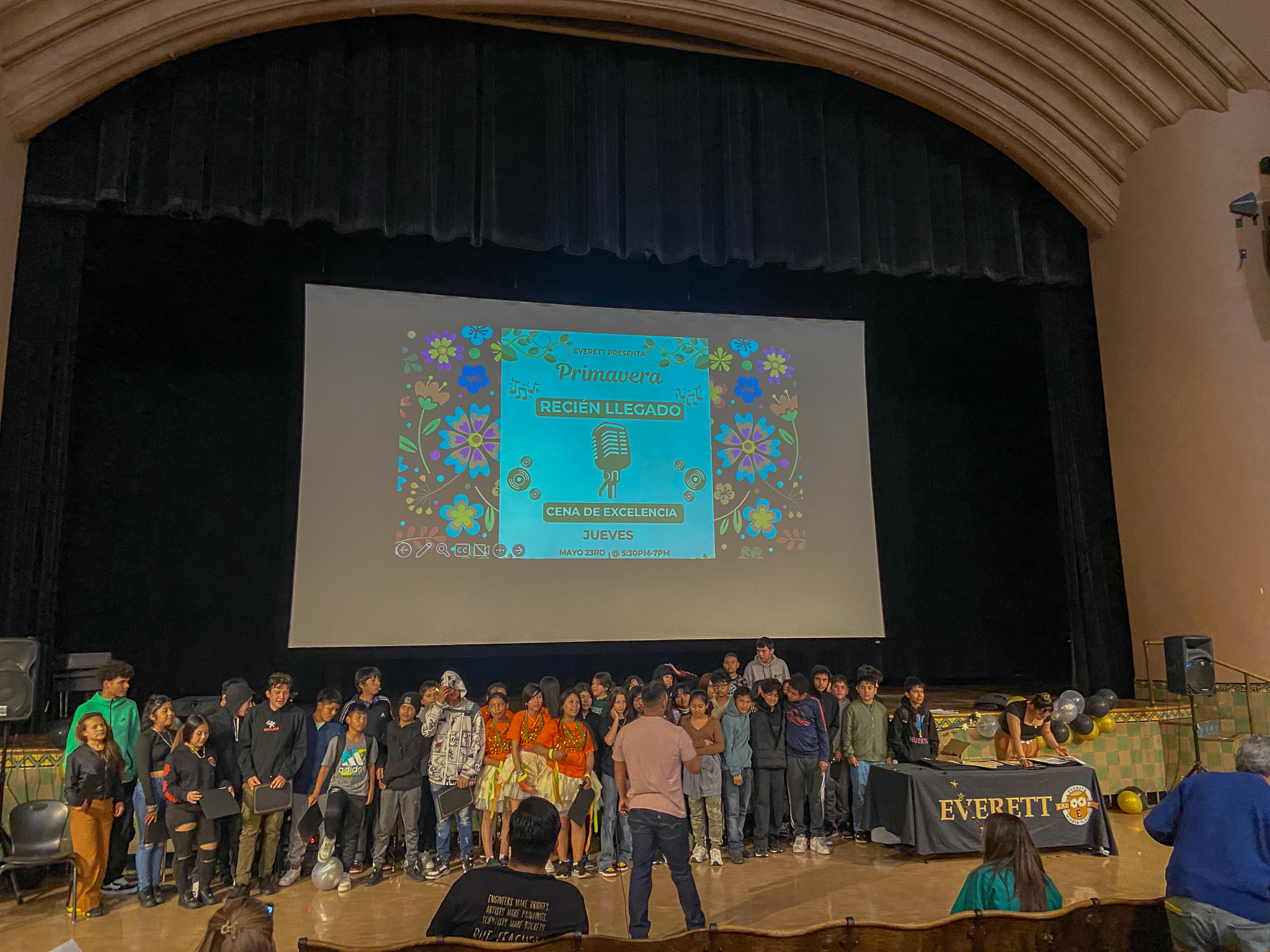
The end of the 2023-2024 school year held special significance for 85 immigrant students at Everett Middle School who arrived in San Francisco over the past two years.

The school, in coordination with Mission Graduates and MEDA, two of Mission Promise Neighborhood partners, celebrated with an “Excellence Dinner” the efforts of new students to excel in many aspects despite the challenges they face while adjusting to life in a new city and learning a new language.

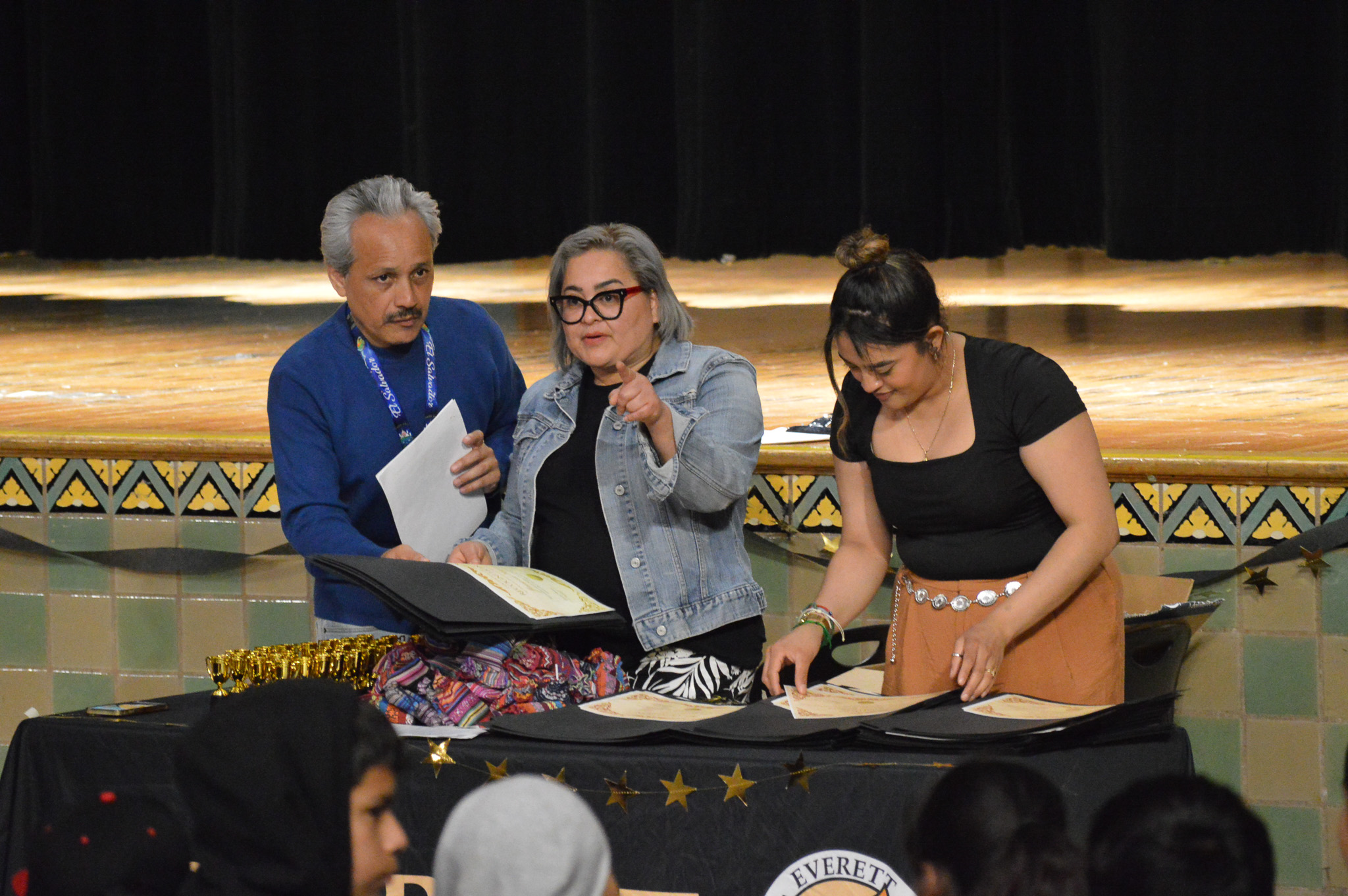
The event took place on May 23 in the school auditorium. The newly arrived students received certificates and then enjoyed a community dinner with their parents and guardians. There was also a dance performance by Everett students who participated in Carnaval San Francisco.

“We believe it is important for students to see that they are recognized and for families to see the fruits of their efforts in bringing them here and the benefits that the country can offer academically,” said Cassandra Reyes, secretary of Everett Middle School.

The idea of having a “graduation” for the newcomers began to develop last November, according to Wilson Jiménez, who was the director of the Everett Beacon program at Mission Graduates at that time.

Roberto Aparicio, a Family Success Coach with MPN, presents a recognition diploma to one of the students.

“We wanted to focus on highlighting the positives of the students, the wonderful things they did throughout the year,” said Jiménez. “We worked hard to make this event happen, and we are very grateful to the teachers and the Everett community.”

During the ceremony, the organizers invited the students to give their parents a round of applause, recognizing their resilience and support.

“I feel happy because they have recognized my son, not only for his efforts but also for being respectful, and that makes me proud,” said Selvin García, mother of one of the honored students, who will be entering high school next school year.

García highlighted the support from the school, Mission Graduates, and Roberto Aparicio, the Family Success Coach from Mission Promise Neighborhood at Everett.

“Roberto supported my son a lot in his development, helping him make friends, and now he has friendships, which fills me with joy,” García said.

The celebration concluded with a sense of accomplishment and hope for the future. With the continued support of the school community and local organizations, these young people have a solid foundation to build a promising future in their new home.

Everett Middle School celebra los logros de los estudiantes recién llegados al final del año

El final del año escolar 2023-2024 tuvo un significado especial para 85 estudiantes inmigrantes de Everett Middle School que llegaron a San Francisco en los últimos dos años.

La institución, en coordinación con Mission Graduates y MEDA, organizaciones que hacen parte de Mission Promise Neighborhood, celebró con una “Cena de Excelencia” los esfuerzos de los alumnos nuevos por sobresalir en muchos aspectos pese a los desafíos que enfrentan mientras se ajustan a la vida en una nueva ciudad y con un idioma por aprender. 

El evento tuvo lugar el 23 de mayo en el auditorio de la escuela. Los estudiantes recién llegados recibieron certificados y luego disfrutaron de una cena en comunidad junto a sus padres y tutores. También una presentación de danza por parte de los estudiantes de Everett que participaron en Carnaval San Francisco. 

Roberto Aparicio, Guía de éxito familiar de Mission Promise Neighborhood, junto a uno de los estudiantes y su madre.

“Creemos que es importante que los alumnos vean que se les reconoce y que las familias vean el fruto del esfuerzo de traerlos aquí, de los beneficios que el país puede ofrecer académicamente”, dijo Cassandra Reyes, secretaria de Everett Middle School. 

La idea de hacer una “graduación” para los recién llegados se empezó a desarrollar en noviembre pasado. 

“Queríamos concentrarnos en destacar lo positivo de los estudiantes, las cosas maravillosas que hicieron durante el año”, dijo Wilson Jiménez, director del programa Everett Beacon de Mission Graduates•. “Trabajamos duro para hacer este evento, tenemos mucha gratitud con los maestros, con la comunidad de Everett”.

Durante la ceremonia, los organizadores invitaron a los estudiantes a aplaudir a sus padres, reconociendo su resiliencia y apoyo.

“Me siento feliz porque han reconocido a mi hijo, no sólo por sus esfuerzos, también por es respetuoso, eso me enorgullece:”, dijo Selvin García, madre de uno de los jóvenes reconocidos, que el próximo año escolar ingresará a la secundaria.

García destacó el apoyo de la escuela, de Mission Graduates, y de Roberto Aparicio, el Guía de éxito familiar de Mission Promise Neighborhood en Everett. 

“Roberto apoyó mucho a mi hijo para que se desarrollara, para que hiciera amigos, y  pues él ahora tiene amistades, eso me llena de alegría”, dijo García.

La celebración culminó con un sentido de logro y esperanza para el futuro. Con el apoyo continuo de la comunidad escolar y las organizaciones locales, estos jóvenes tienen una base sólida para construir un futuro prometedor en su nuevo hogar.

Read More

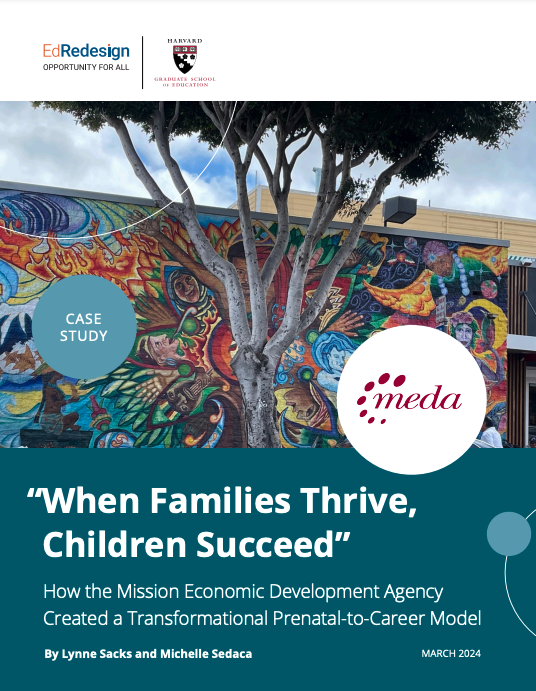
The Mission District has served for decades as the vibrant epicenter of the San Francisco Bay Area’s Latino community. The Mission District faces the challenges associated with neighborhoods characterized by poverty and gentrification. The Mission Economic Development Agency (MEDA), founded in 1973, has become a national model for place-based prenatal-to-career strategies designed to “build Latino prosperity, community ownership, and civic power.” For the people who live in the Mission District, MEDA has been a lifeline, providing access to stable housing, affordable childcare, afterschool programs, mental health support, financial capability coaching, small business loans, and a host of other services.

EdRedesign documented MEDA’s development and impact in this case study, authored by Lynne Sacks and Michelle Sedaca, that highlights the strategic steps that propelled MEDA’s growth into one of the leading examples of how place-based collaboration can change the life trajectories of local residents while maintaining the culture and heritage of the community.

The case aims to help community leaders, policy makers, and practitioners understand the prenatal-to-career infrastructure MEDA has built, the impact it has had, and how to replicate the core practices within different local contexts.

Read the highlights

Read the case

Puntos destacados en Español

Read More

Participants of the photography and advocacy workshop.

[Leer en español] | [Photos]

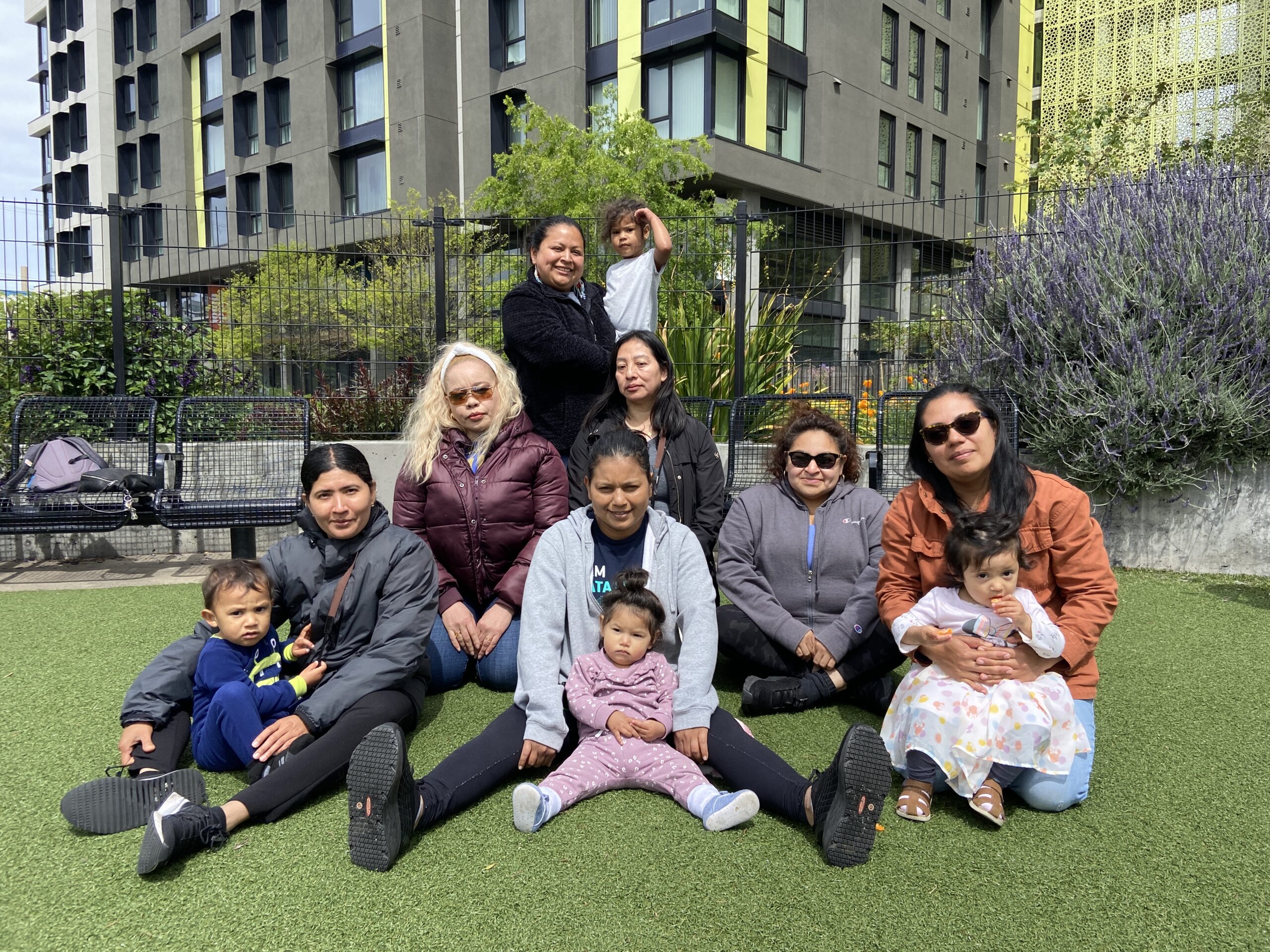
“A picture is worth a thousand words” became the flagship saying for a group of families in San Francisco throughout 2023. The reason? A photography and advocacy project by the Mission Promise Neighborhood‘s Family Council.

For 12 months, a group of Latino parents participated in a workshop on everyday life photography aimed at highlighting the systemic barriers faced by immigrant families in the city. Participants focused on two themes for their images: the impact of immigration on the family unit and quality time spent with their children.

The group was coordinated by Ana Avilez, Program Associate for Promise City at MEDA, and Juan Mesa, Community Communications Manager at MEDA.


“At Promise Community, we provide a platform for families and students to share their experiences, which are valuable to our organization as they lead to positive changes in the Mission District,” Avilez said about the system’s objectives.

Among the participants were immigrants with over ten years of residency in San Francisco and others with less than two years.

“It was a positive experience,” said María González, who has been in San Francisco for 19 years. “At first, expressing my feelings through photographs was difficult, but later I understood that through my expression in the photos, I was giving other families an opportunity to identify themselves and express themselves calmly because it’s a safe space.”

Yajaira Ferreira, who has been in the city for nearly two years, shared a similar feeling at the beginning of the project.

“I was scared at first, it was a new experience, but as we progressed and took photos, I found my expression,” explained Yajaira. “Today, I feel more secure, stronger, I know my rights, I no longer have blinders on.”

MPN’s Family Council is a working group where Promise Community members participate in projects advocating for the well-being of families in the Mission District.

“It’s important to engage with these groups because you grow personally and academically,” said María. “We had moments of joy and sadness, but we formed a community.”

During their work together, participants take on leadership roles while becoming aware of the power of expressing their feelings and sharing their experiences with others.

“There’s always the fear of speaking up, but one must make time for everything,” said Yajaira. “We grow and become strong for our children, we will all face obstacles, but the desire is for our children to have a better experience than ours.”

The Family Council is now coordinated by Susana Gil-Durán, Family & Youth Engagement Specialist at MPN. If you’re interested in participating, you can contact Susana at sgilduran@medasf.org.

Familias abogan por el bienestar de la comunidad a través de la fotografía

“Una imagen vale más que mil palabras” se convirtió en el refrán de cabecera de un grupo de familias de San Francisco a lo largo de 2023. ¿La razón? Un proyecto de fotografía y de abogacía del Concilio de Familias de Mission Promise Neighborhood.

Durante 12 meses, cabezas de hogar tomaron un taller de fotografía de la vida cotidiana con el fin de destacar las barreras sistémicas a las que se enfrentan las familias en la ciudad. Los participantes se concentraron en dos temáticas para sus imágenes: el impacto de la inmigración en el núcleo familiar y el tiempo de calidad con los hijos.

El grupo estuvo coordinado por Ana Avilez, Program Associate de Promise City en MEDA, y Juan Mesa, Community Communications Manager de MEDA.

“En Comunidad Promesa ofrecemos una plataforma para que familias y estudiantes compartan sus experiencias, las cuales son valiosas para nuestra organización porque llevan a cambios positivos en el Distrito de la Mission”, dice Avilez sobre los objetivos del sistema.

Entre los participantes estuvieron inmigrantes con más de diez años de residencia en San Francisco y personas con menos de dos años.

“Fue una experiencia positiva”, dijo María González, quien lleva 19 años en San Francisco. “Al principio fue difícil expresar lo que sentía en las fotografías, pero luego pude entender que a través de mi expresión con las fotografías estaba dando una oportunidad a otras familias para que se identifiquen y puedan expresarse con tranquilidad porque se trata de un espacio seguro”.

Yajaira Ferreira, quien lleva cerca de dos años en la ciudad, compartió un sentimiento similar al comienzo del proyecto.

“Tuve miedo al principio, se trataba de una experiencia nueva, pero a medida que avanzamos y tomamos fotos, encontré mi expresión”, explicó Yajaira. “Hoy me siento más segura, más fuerte, sé cuáles son mis derechos, ya no tengo una venda en mis ojos”.

El Concilio de Familias de Mission Promise Neighborhood es un grupo de trabajo en el que miembros de la comunidad promesa participan en proyectos que aboguen por el bienestar de las familias en el Distrito de la Mission.

“Es importante acercarse a estos grupos porque se crece personalmente y académicamente”, dijo María. “Tuvimos momentos de alegría y tristeza, pero formamos una comunidad”.

Durante el tiempo de trabajo, los participantes asumen liderazgo al tiempo de que se concientizan del poder de expresar sus sentimientos y compartir sus experiencias con otros.

“Siempre se tiene el miedo de alzar la voz, pero uno debe tener tiempo para todo”, dijo Yajaira. “Uno crece y se hace fuerte por los hijos, todos vamos a enfrentar obstáculos, pero el deseo es que los hijos tengan una experiencia mejor a la nuestra”.

El Concilio de Familias ahora es coordinado por Susana Gil-Durán, Family & Youth Engagement Specialist en Comunidad Promesa de la Mission. Si le interesa participar la puede contactar a Susana a sgilduran@medasf.org.
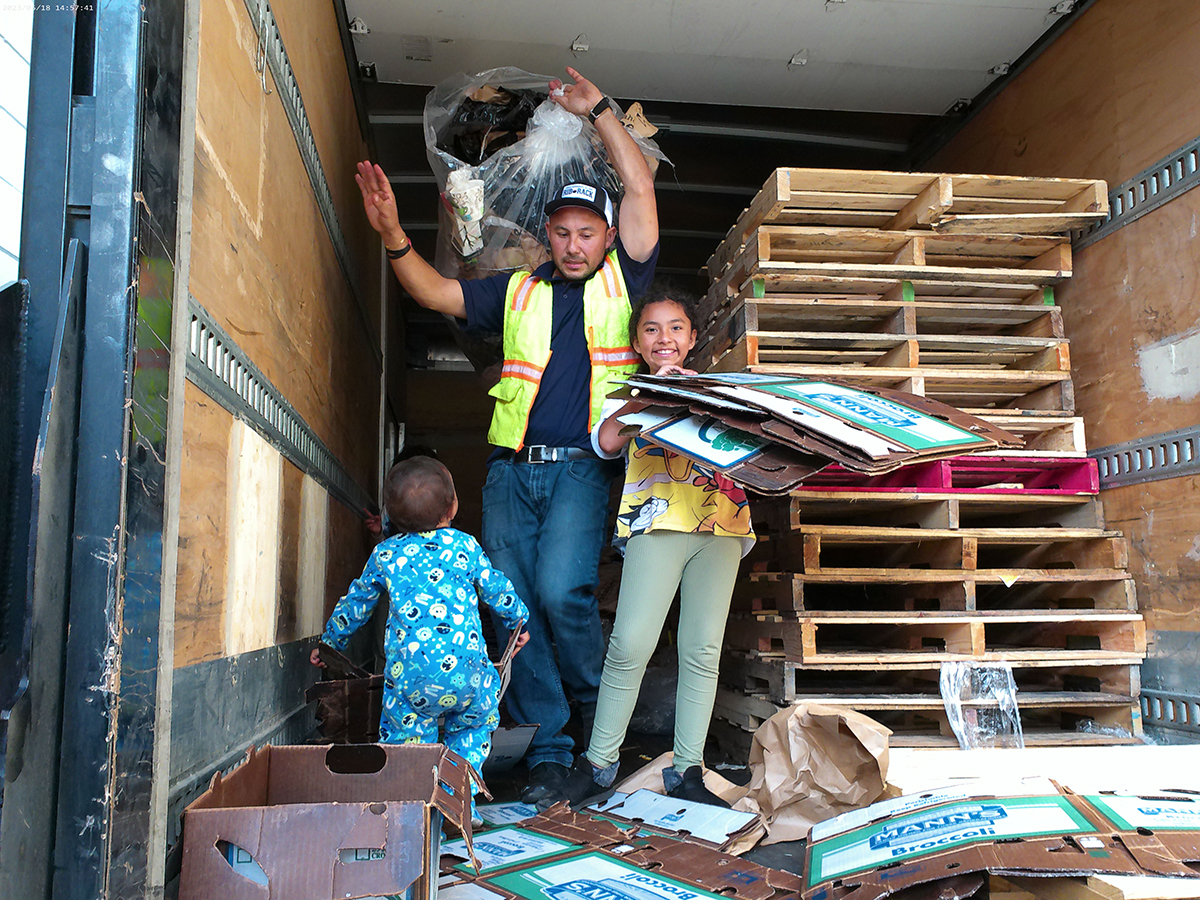
Deyser. “You can never give up. Even when life hits you hard, even if your heart is oppressed, don’t forget to smile, a smile feeds your soul.
I will tell you a little about our family. He have had a few tough months. Initially, because we lost our home in a fire. I thank god that our lives were saved, even though we lost everything. We never lost, nor will we ever lose, is our faith. A few days ago, they also stole our truck, our tool(s) for work, with which our family uses to get ahead. We cried, and we cried a lot, because we worked hard to be able to buy it, it was a huge effort. Are you wondering what we are doing here? We are unloading garbage, and those pallets that you see there, we sold them. We also sell cans and containers, metal and sometimes copper. No job is dishonorable nor should it bring any shame. The world is a better place when we recycle.We teach our children the value of work and the effort that everything in life requires, but our dream as parents is for our children to have better opportunities, to prepare themselves, to get an education, to be good people, who contribute good things to society. Life can be harder for us Latinos, we always come across more obstacles, we have less opportunities, but as a mother to my children, I have big dreams, and with God’s help they will become reality. With this photo I show our reality in this society. For those reading, what is your reality in this city?”
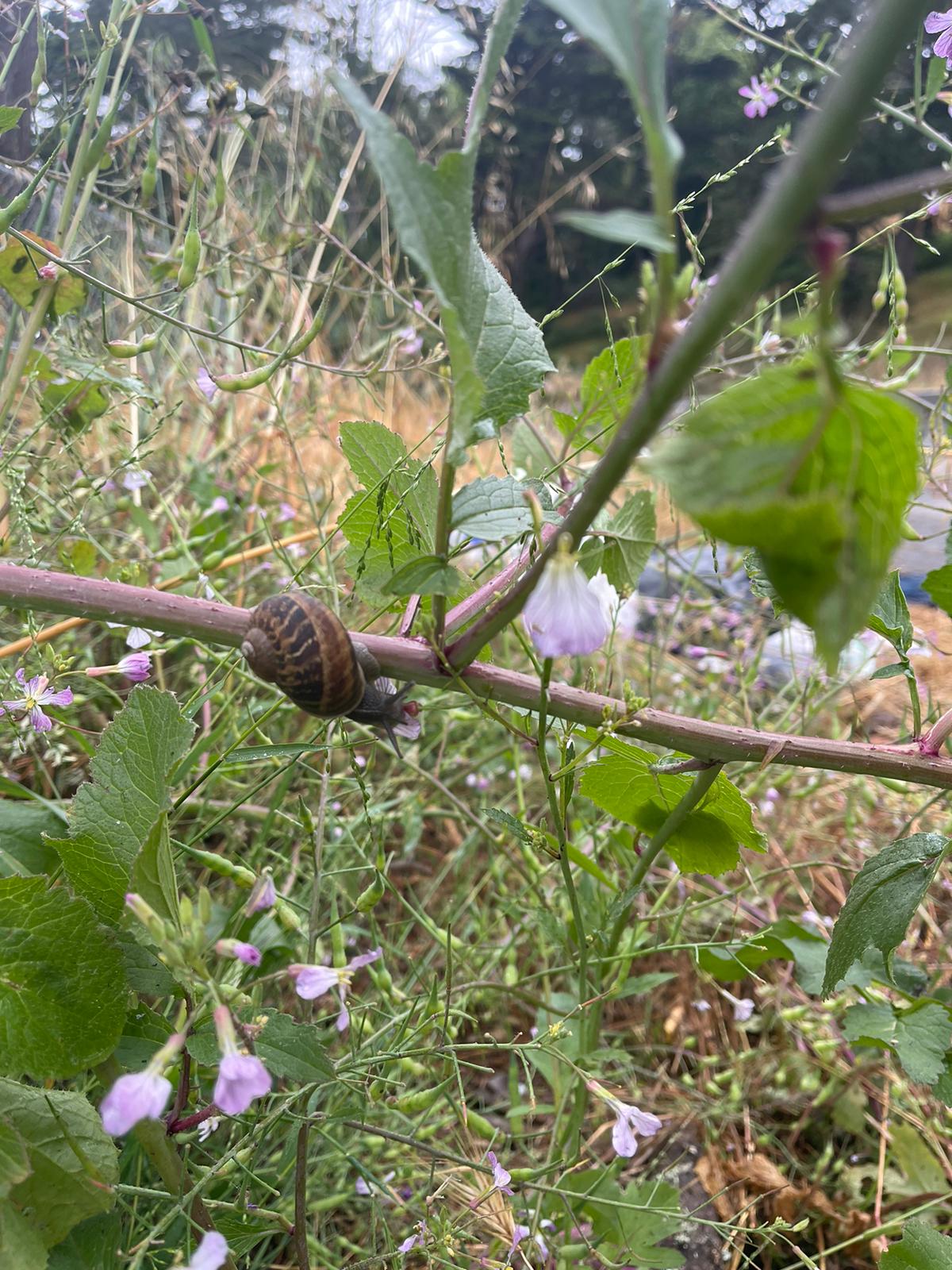
María. “Sometimes I feel like we are moving like this snail🐌 very slow and everything is so difficult.
Decisions have to be made, which path should I choose. To have two or three jobs or be a mother who is present in my childrens’ lives? To decide if my children’s wellbeing matters more or if I should provide them financial stability and security? Am I a bad mother for preferring to work and struggle against all the obstacles that life puts in my way? I think the system was created so that I can never rise up. The system wants to see me dragging like a snail. The final goal looks close, but walking this path will take me an eternity.”
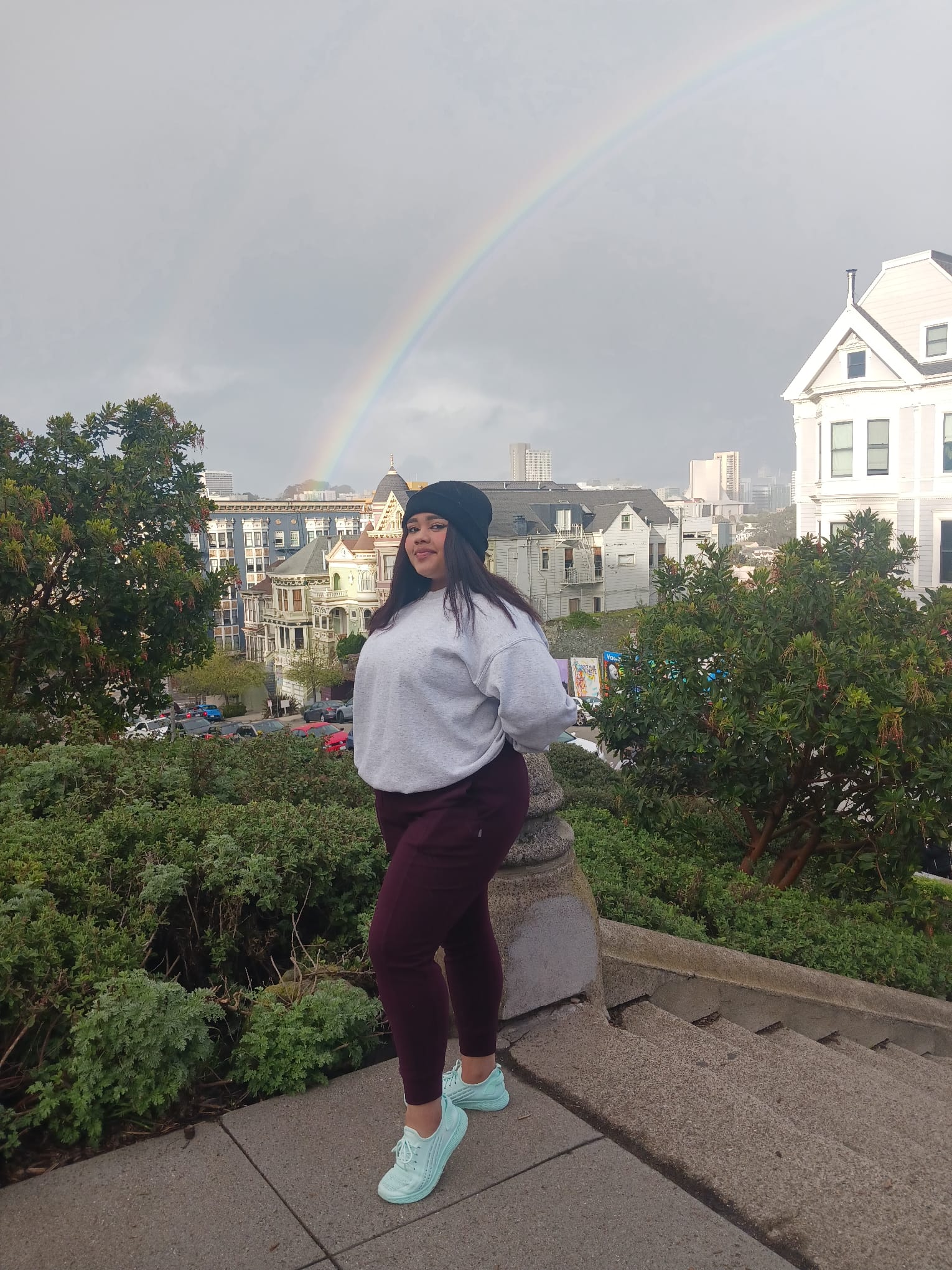
Yajaira. “The reflection of the rainbow. The colors that give our life meaning. Hope, promises, general wellbeing for our children, the motivation for my struggle. The importance of bringing out a smile from our loved ones, for those we work hard for, so they are without anything they need, so they can grow as a person, think about their future, without worries of what their legal status is. The goal is so they can feel free and safe in their lives.”
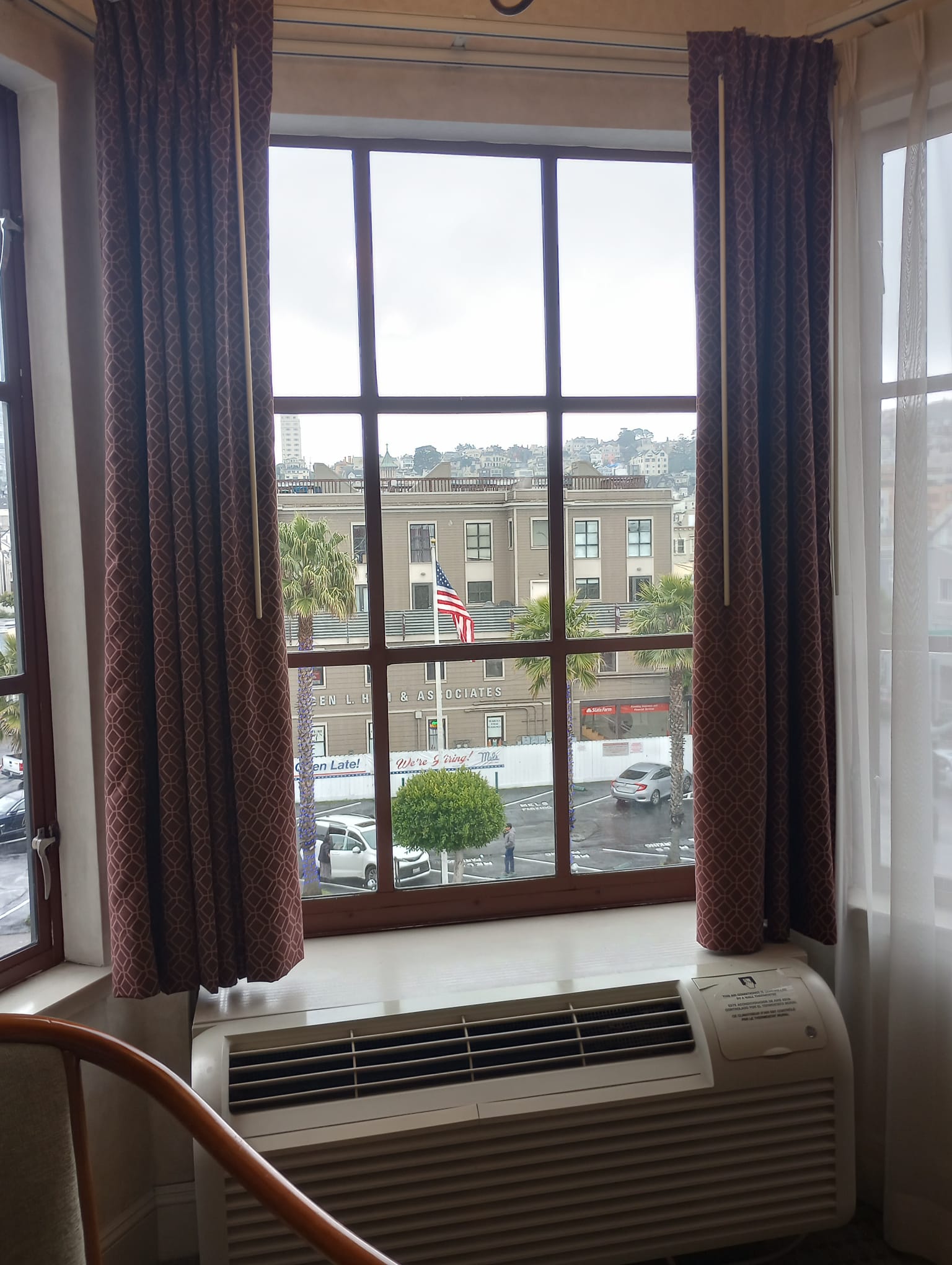
Alejandra. “When emigrating, there are times when one feels imprisoned. We all know the date of entry, but not the exit date because we don’t know how long the judicial process will take.We know it can take years. I have my team, my small nuclear family here, but I really miss my family that is over there, who despite the fact that we call each other daily, we do not know when we will be able to hug them again. The issue of immigration is very complex for all those of us which want to do things in the best way, but with the knowledge that we will always be against the clock since it takes time to gain status for undocumented immigrants.”
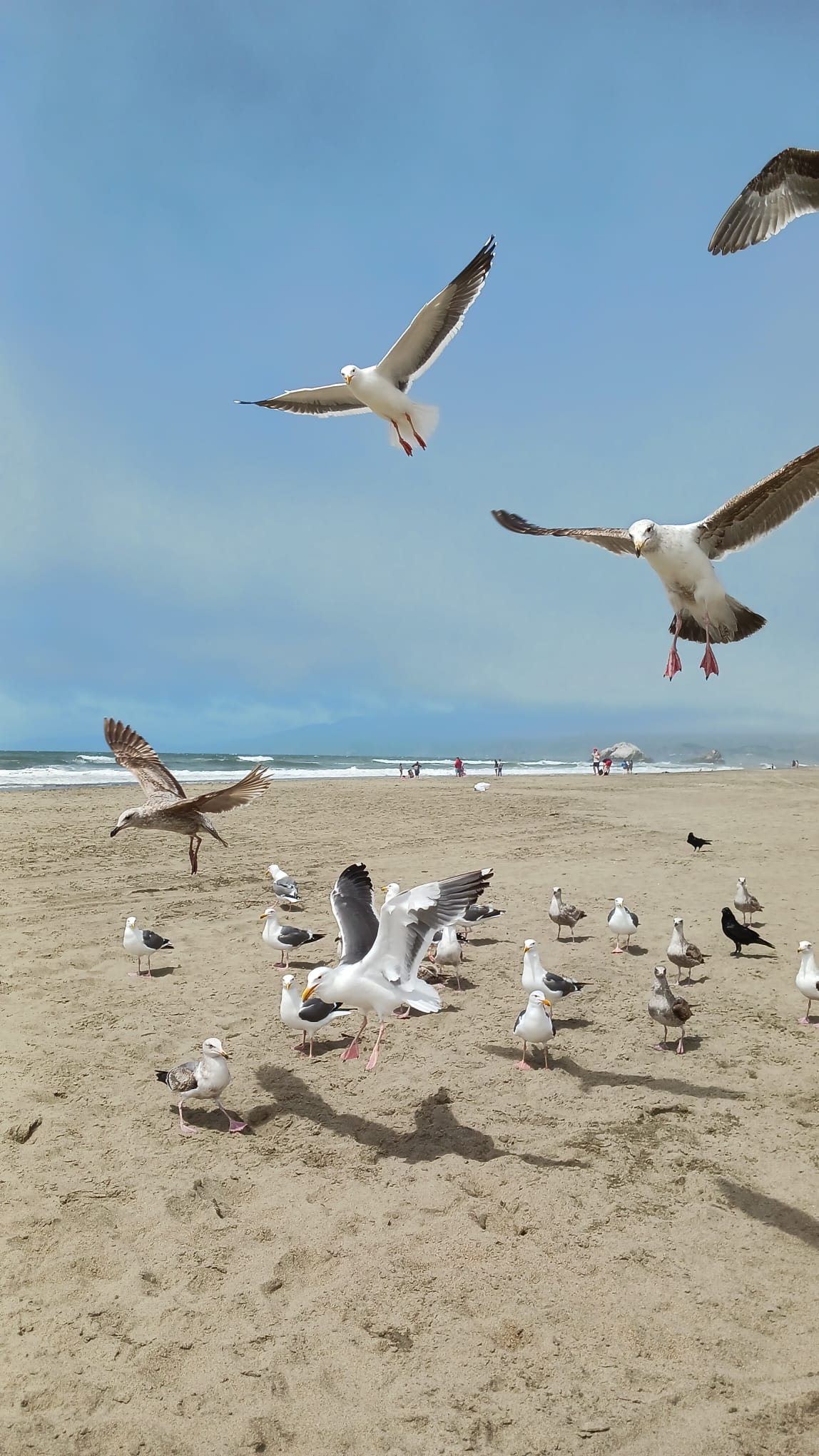
Jessica. “I want to someday feel free like the birds. Without stress, without worry, without fear of being deported to my country. To be able to get to a place that I can call my home. To look to the sky and to know that the sky’s the limit. To not limit my abilities due to a simple document that determines my value as a person or my capacity.”
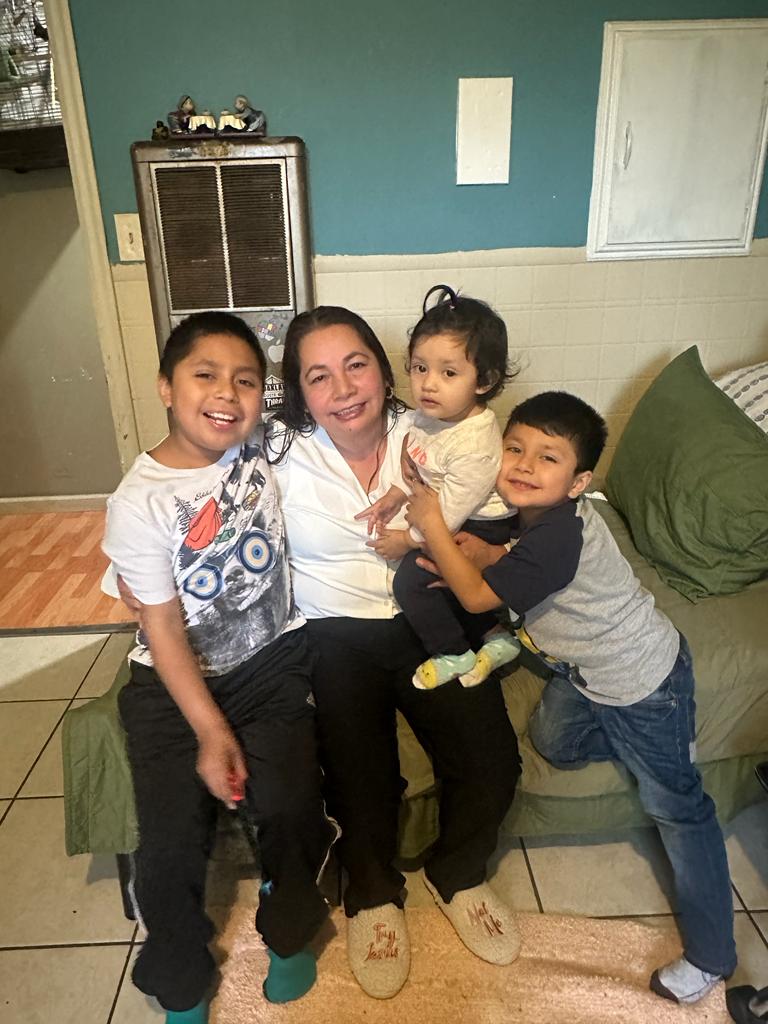
Yesika. “The joy of my family after my mother received her work permit. Here I am sharing with my children a moment which will change our family’s history in this country. One of the kids told his grandma ‘you are going to be like us’ and the other told her ‘I will help you learn English.’ Three years ago, my mother thought about returning to Mexico because the opportunity to have some kind of immigration status was too far away. Now she is my motivation day-to-day, to keep fighting. I am motivated to learn English and to defend myself and communicate with other people.”
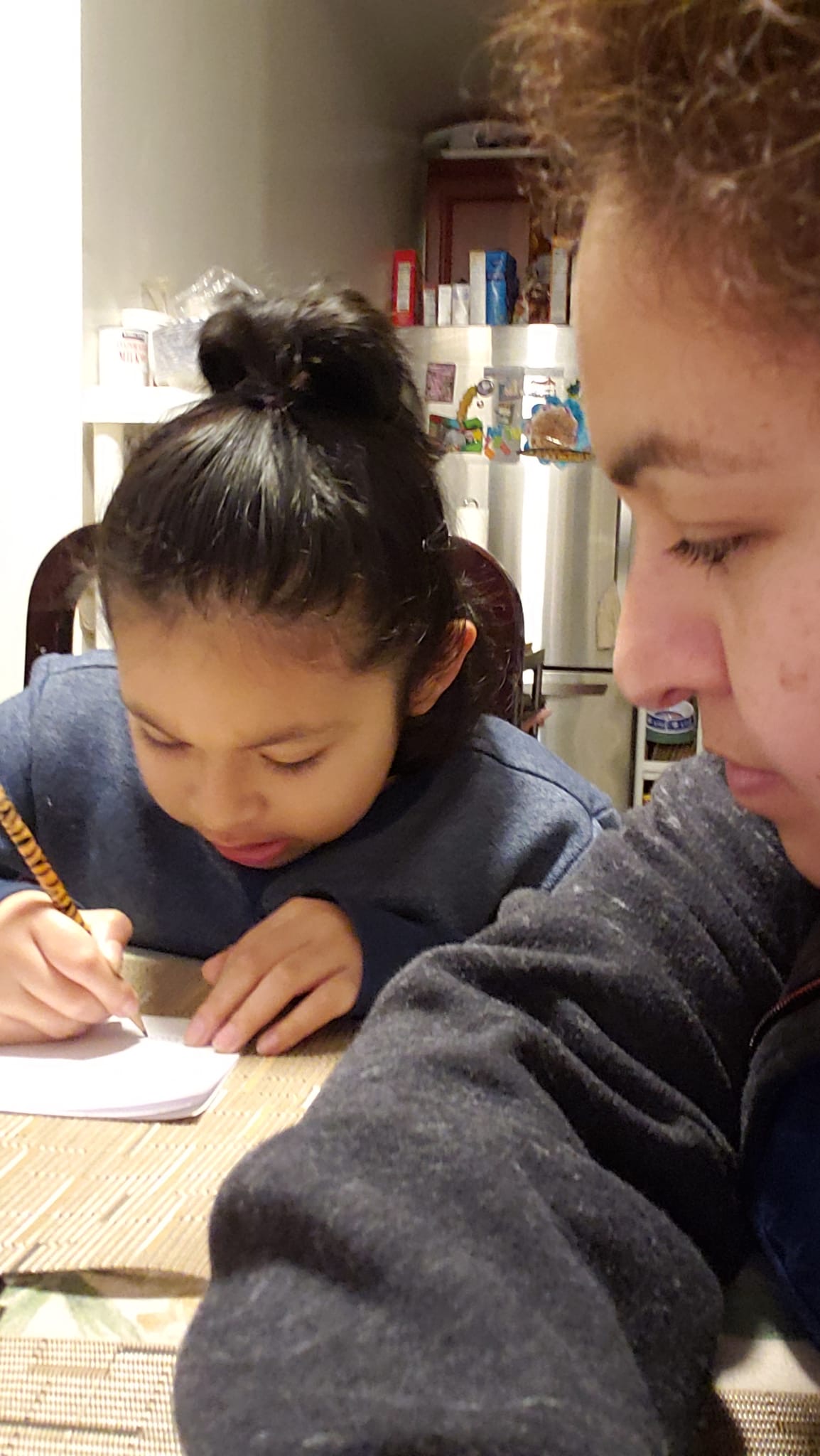
Maura. “Something as common as being with our children doing homework, is so difficult for mother like me. When it happens, it becomes a privilege. Having to work from dawn to dusk at two or three jobs just to survive the high cost of housing, high cost of food and being a single mother, leads us to have limited time with our families, without having any support. They say that the United States is a country of opportunities, but it is difficult to be able to realize the dream. What we have left is to pass on our dreams to our children.”
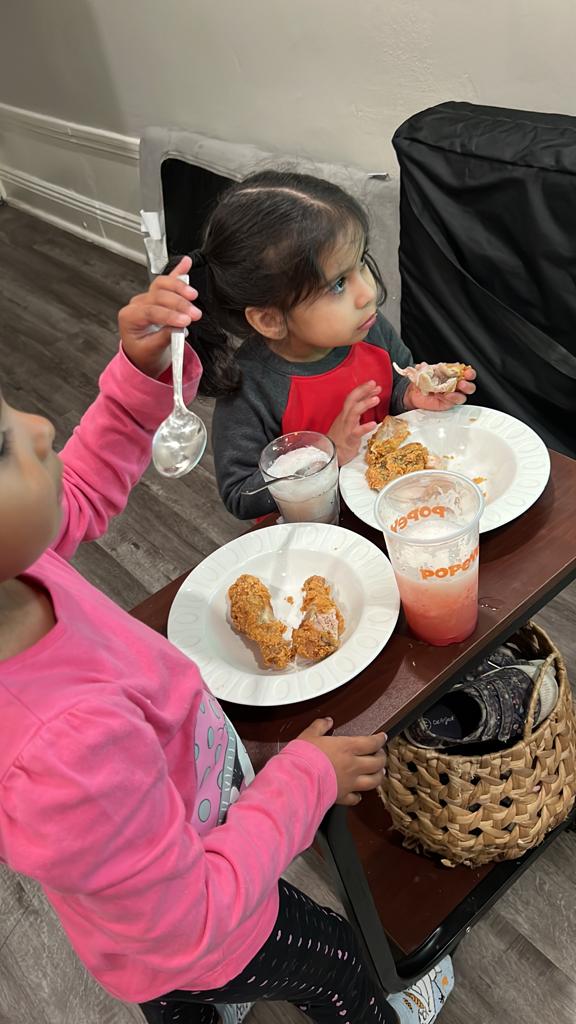
Janeth. “The constant struggle to become legal as an immigrant and the limitations that our available to our children. Here are my daughters, together. For one of them, it will be easier to survive in the United States. For the other, my older child, she will struggle to be seen and will have to deal with her legal status from day to day.
I am a single mother. I am willing to continue fighting to show them that anything is possible and nothing is impossible.”

Read More

Washington, D.C. – Today, the Delta Health Alliance in Mississippi, Mission Economic Development Agency in San Francisco, Partners for Rural Impact in Kentucky, and SBCS (formerly South Bay Community Services) in San Diego, leading place-based organizations announced the launch of the National Promise Neighborhoods Coalition. A national, nonpartisan coordinating body, the new coalition will advocate for the Promise Neighborhoods Initiative and the program’s imperative work in increasing positive outcomes for children and families in high poverty communities across the United States.

The Coalition, which is composed of representatives of nearly a dozen Promise Neighborhoods, will aim to build awareness of place-based, cradle-to-career strategies and bring together supporters around a common advocacy agenda to ultimately secure public funding and grants that ensure long term sustainability, scaling, and increased impact of the Promise Neighborhoods Initiative. The Promise Neighborhoods Initiative is a place-based U.S. Department of Education program, modeled after the Harlem Children’s Zone (HCZ), to ensure children growing up in distressed communities have access to great schools and strong family and community support systems that will prepare them to attain an excellent education and successfully transition to college and a career.

The founding members of the Coalition have outlined four key strategies that will guide the work of the Coalition:

  1. Build strong nonpartisan relationships in Congress, the Department of Education, and the White House.
  2. Increase federal funding for Promise Neighborhood programs.
  3. Improve federal policies impacting Promise Neighborhood programs.
  4. Create a community of practice for Promise Neighborhood providers.

“At MEDA, we have seen the power of Promise Neighborhoods to positively impact children, families and whole communities not just here in the Mission District of San Francisco, but all over the country. We are thrilled to be launching this initiative with our partners to advocate to expand the program and ensure this transformative work can continue long term,” said Jillian Spindle, COO at MEDA and co-chair of NCPN.

“Thanks to the Promise Neighborhood initiative, we have been able to bring community leaders together to address the conditions that limit our young folks access to opportunity. Through a process of partnership building, the communities have created pathways to upward mobility,” said Dreama Gentry, Partners for Rural Impact.

“The Mississippi Delta is being transformed by the Promise Neighborhoods initiative as we provide life-changing community services for both students and families,” said Dr. Karen Matthews, President & CEO of Delta Health Alliance. “In the counties we serve, some of the poorest in the country, we have seen kindergarten readiness go from a ranking of 99th best in Mississippi to 8th-best after becoming a Promise Community- highlighting that with the right support for a child, we can make generational change.”

“Save the Children works in rural communities across America that suffer from multigenerational concentrated poverty. We have seen the incredible impact that Promise Neighborhoods bring to the communities we work in,” said Trevor Moe, Save the Children. “The continuum of services that the Promise Neighborhood program drives into these U.S. communities is unparalleled in scope and impact. We must increase funding to this incredible program. All children deserve the opportunity to have a healthy, strong foundation to thrive as learners and in life.”

Created by the United States Department of Education and authorized under the Every Student Succeeds Act (ESSA), Promise Neighborhoods programs work to improve educational and economic outcomes for students in underserved urban and rural areas. Promise Neighborhoods provide funding to support eligible entities that build access to great schools, strong systems of family and community support, and impactful programs to help more young individuals transition to higher education and employment while achieving sustainable and scalable neighborhood-wide results.

Founding members of the Coalition have strong records of generating incredible outcomes in their communities through Promise Neighborhoods grants. Since its founding, the Mission Promise Neighborhood in San Francisco, CA, has seen graduation rates among students attending MPN schools increase by nearly 20 percentage points to 86 percent. Also in California, San Diego’s Chula Vista Promise Neighborhood saw the percentage of children living in the neighborhood who test kindergarten-ready increase from 77 percent to 100 percent, more than double the national average of 48 percent. In Kentucky, Partners for Rural Impact’s Perry Promise Neighborhood schools rebounded post COVID in 3rd grade reading proficiency from 29% in 2020-21 to 47% in 2021-22. During the implementation of Perry Promise, the graduation rate improved from 86% to 94% and college going rates improved from 63% to 74%.

There are even more impressive examples: the Delta Health Alliance (Mississippi). In Mississippi, students enrolled in three or more PN programs were 41 percent more likely to be ready for Kindergarten and 85 percent of students scoring 530 or higher at the beginning of Kindergarten are proficient in reading at the end of third grade.

A major funder and advisory member of the Coalition is the William Julius Wilson Institute at Harlem Children’s Zone. The William Julius Wilson Institute is a national resource for place-based, people-focused solutions that open pathways to social and economic mobility.

“Every child, no matter where they are from, should be placed on a pathway to social and economic mobility, which include access to healthy early development, attending quality schools, receiving targeted academic supports, participating in enriching after-school activities, graduating from college, and pursuing meaningful careers,” said Christian Rhodes, Deputy Executive Director of the William Julius Wilson Institute at Harlem Children’s Zone. “The National Promise Neighborhoods Coalition will serve as an important resource for place-based communities across the country and will be a leading nonpartisan voice advocating for federal investments to lift children out of poverty.”

###

The National Promise Neighborhoods Coalition can be found at www.PromiseCoalition.org and on X at @TheNPNC. For media inquiries, please contact info@promisecoalition.org.

Read More

[Click for English, which follows Spanish.]

Families are often focused on enrolling their children in educational institutions, but the learning experience doesn’t have to stop at the end of the school day. After-school programs offer a plethora of opportunities for children to expand their horizons, explore new interests, and build valuable life skills. Mission Promise Neighborhood partners—Jamestown Community CenterMission Graduates, and Urban Services YMCA—support families in the Mission District with after-school services and programs that cover a wide array of subjects, accommodating various interests and learning preferences.

From arts and athletics to computer science and civic engagement, these resources are designed to nurture well-rounded individuals. Children can engage in creative pursuits, stay active through sports, delve into the world of technology, learn about social responsibility, and even explore the art of healthy cooking. These diverse offerings cater to different learning styles, ensuring that every child can find a program that resonates with them. By engaging in these programs, students can cultivate a love for learning that extends beyond the traditional school day, fostering personal growth and development.

We invite families to explore their after-school options with MPN partners. Below, you can find the MPN schools where they serve:

Jamestown Community Center:

  • Buena Vista Elementary
  • César Chávez Elementary
  • James Lick Middle School

Mission Graduates:

  • Bryant Elementary
  • Flynn Elementary
  • Sánchez Elementary

Urban Services YMCA:

  • John O’Connell High School

And remember to always check in with the Family Success Coach assigned to your children’s school for questions and information about the resources available to you.

For a complete list of after-school programs in the city of San Francisco, visit this link. These programs offer a remarkable opportunity to continue your child’s educational journey beyond the classroom, ensuring they thrive in a well-rounded and supportive environment.

MÁS ALLÁ DE LA CAMPANA: PROGRAMAS DESPUÉS DE CLASE DENTRO DE COMUNIDAD PROMESA DE LA MISSION

Las familias suelen centrarse en inscribir a sus hijos en instituciones educativas, pero la experiencia de aprendizaje no tiene por qué detenerse al final del día escolar. Los programas después de la escuela ofrecen una gran cantidad de oportunidades para que los niños amplíen sus horizontes, exploren nuevos intereses y desarrollen habilidades valiosas para la vida. Los socios de Comunidad Promesa de la Mission (MPN) —Jamestown Community Center, Mission Graduates y Urban Services YMCA— respaldan a las familias en el Distrito de la Misión con servicios después de la escuela y programas que abarcan una amplia gama de materias, adaptándose a diversos intereses y preferencias de aprendizaje.

Desde artes y atletismo hasta informática y compromiso cívico, estos recursos están diseñados para nutrir a individuos con una formación integral. Los niños pueden participar en actividades creativas, mantenerse activos a través de deportes, adentrarse en el mundo de la tecnología, aprender sobre la responsabilidad social e incluso explorar el arte de la cocina saludable. Estas diversas ofertas se adaptan a diferentes estilos de aprendizaje, asegurando que cada niño pueda encontrar un programa que resuene con ellos. Al participar en estos programas, los estudiantes pueden cultivar el amor por el aprendizaje que se extiende más allá del día escolar tradicional, fomentando el crecimiento y desarrollo personal.

Invitamos a las familias a explorar sus opciones después de la escuela con los socios de MPN. A continuación, puede encontrar las escuelas de MPN donde prestan servicios:

Jamestown Community Center:

  • Buena Vista Elementary
  • César Chávez Elementary
  • James Lick Middle School

Mission Graduates:

  • Bryant Elementary
  • Flynn Elementary
  • Sánchez Elementary

Urban Services YMCA:

  • John O’Connell High School

Y recuerde siempre consultar con el Guía de Éxito Familiar asignado a la escuela de sus hijos para preguntas e información sobre los recursos disponibles para usted.

Para obtener una lista completa de programas después de la escuela en la ciudad de San Francisco, visite este enlace. Estos programas ofrecen una oportunidad destacada para continuar el viaje educativo de su hijo más allá del aula, asegurando que prosperen en un entorno integral y de apoyo.

Read More
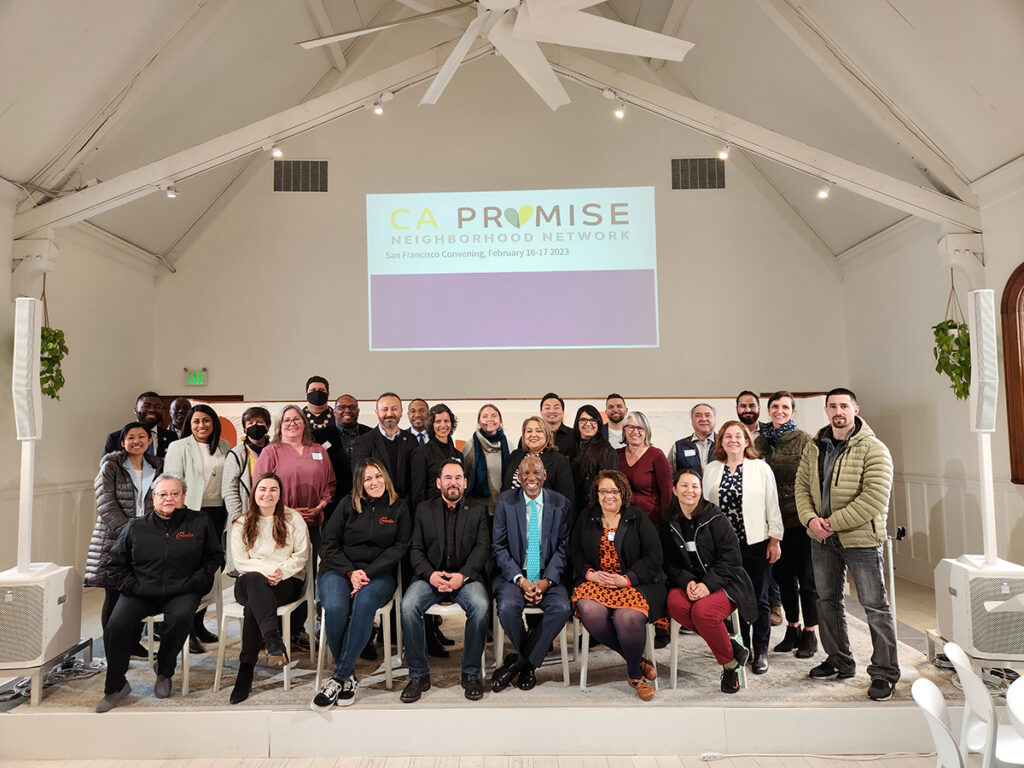
CPNN convening group photo: We had Mission Promise Neighborhood, Klamath River Promise Neighborhood, Hayward Promise Neighborhood, Chula Vista & San Diego Promise Neighborhood, Strive Together, Harlem Children’s Zone/William Julius Wilson Institute, CDSS, and the Ed Redesign Lab at the Harvard School of Education represented.

By Jillian Spindle, MEDA’s Chief Operating Officer

On February 16th, 2023, Mission Promise Neighborhood hosted the California Promise Neighborhood Network (CPNN) at our home in the Mission District of San Francisco, California. We were joined by colleagues, friends and movement builders from the Harlem Children’s Zone- William Julius Wilson Institute, Strive Together, the Ed Redesign Lab at Harvard University Graduate School of Education, and the California Department of Social Services (CDSS).

What is the California Promise Neighborhood Network (CPNN?)

CPNN came together in 2017 to support and grow the work of our federally funded Promise Neighborhoods in California. Today, CPNN includes San Diego & Chula Vista Promise Neighborhoods (led by SBCS), Hayward Promise Neighborhood (led by California State University East Bay), Mission Promise Neighborhood (led by the Mission Economic Development Agency), Corning Promise (led by the Paskenta Tribe of Nomlaki Indians) and Klamath River Promise Neighborhood (led by the Yurok Tribe).

Our work spans across the state of California in diverse communities, and together we have a common purpose- we are bringing community powered leadership and innovative cradle-to-career solutions to improve generational outcomes for children and families.

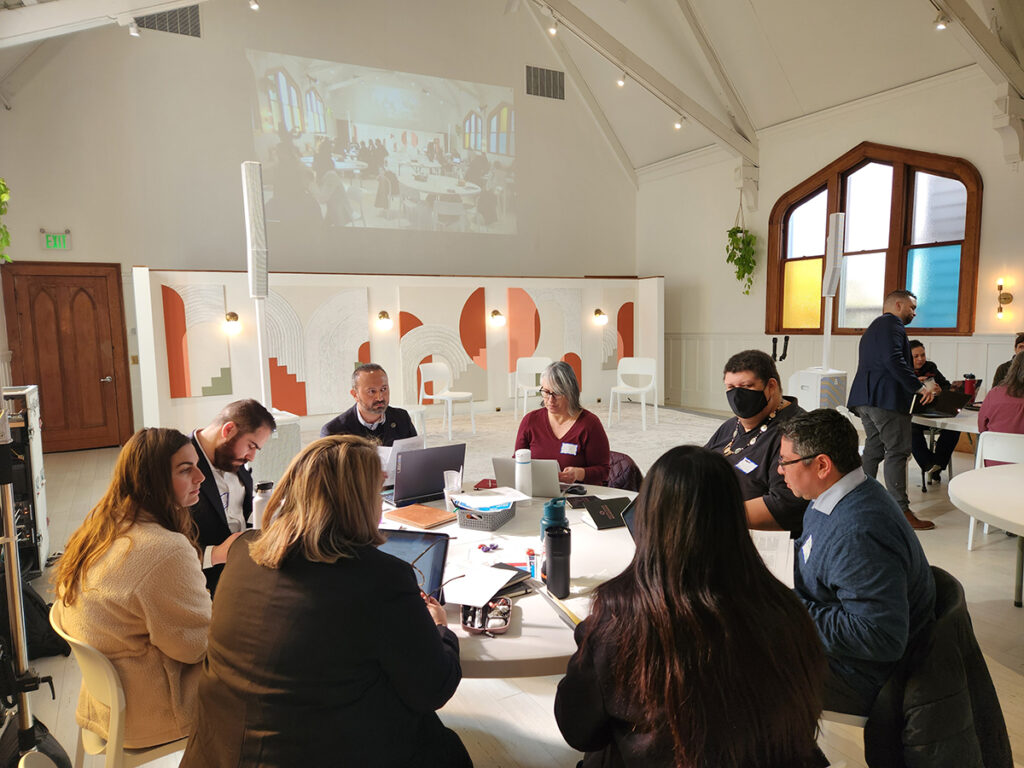
CPNN working groups meeting to plan data and evaluation strategies.

CPNN brings us together to share best practices and to problem solve in our collective impact work; to advocate for long term funding and sustainability; to share data across our network, and to show the impact Promise Neighborhoods are having across California.

February Convening- Inspiration and Building for the Future

For our February convening, we were thrilled to welcome Geoffrey Canada, Harlem Children’s Zone President and Founder of HCZ’s William Julius Wilson Institute, as a keynote speaker whose vision and leadership created the original highly successful cradle-to-career model that inspired the federal program and our local work. 

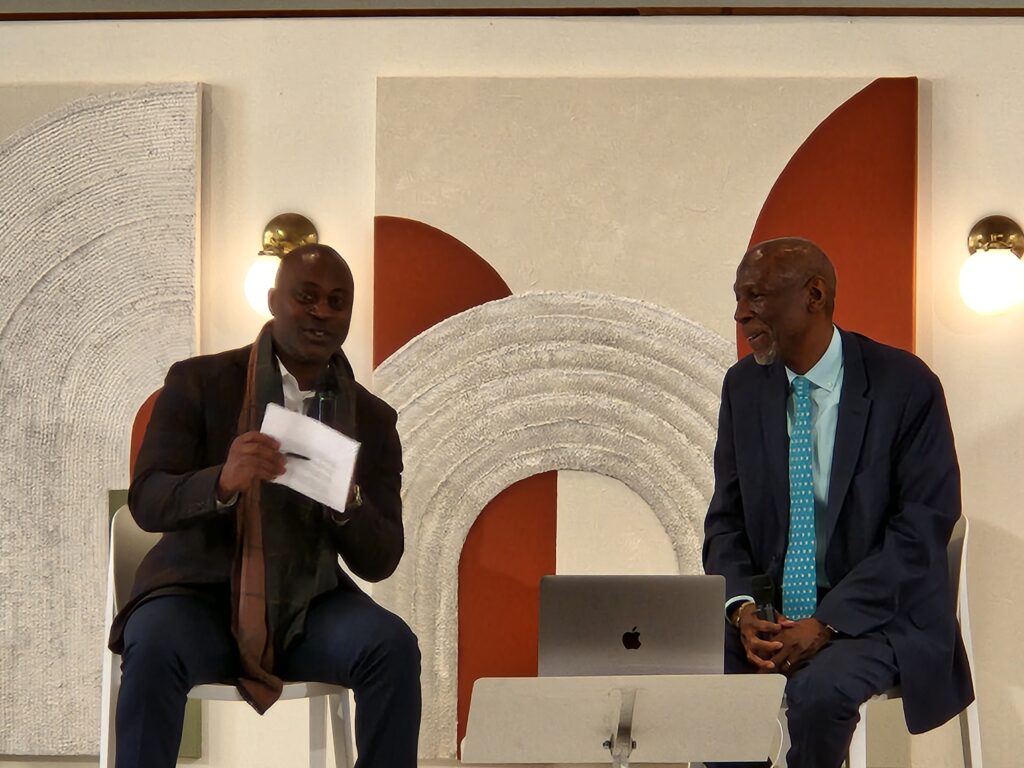
In a conversation facilitated by Josh Davis of Strive Together, Mr. Canada shared his thoughts on leadership in the field, building the next generation of leaders, and strategies for continuing advocacy, raising resources to ensure the longevity of our local initiatives, and scaling this work nationally.

Josh Davis of Strive Together facilitating a conversation with Geoffrey Canada of the Harlem Children’s Zone and the CPNN group.

Reflecting on the day, Mr. Canada noted, “As practitioners of place-based, cradle-to-career work, we are charged with the Herculean responsibility of ensuring successful futures for our young people,” he said. “It is only through the intentional sharing of best practices, like the work CPPN is doing throughout California, that we will create real change for Black and brown communities across this country.”

We set collective goals for our shared work on storytelling, evaluating our impact, and building systems to institutionalize cradle-to-career work at the state level. 

MEDA welcomed partners to celebrate Mission Promise Neighborhood’s ten year anniversary together at César Chávez Elementary School, and participated in a neighborhood tour where we shared some of our successful strategies from housing, to asset building, and our ‘Promotoras’ model. 

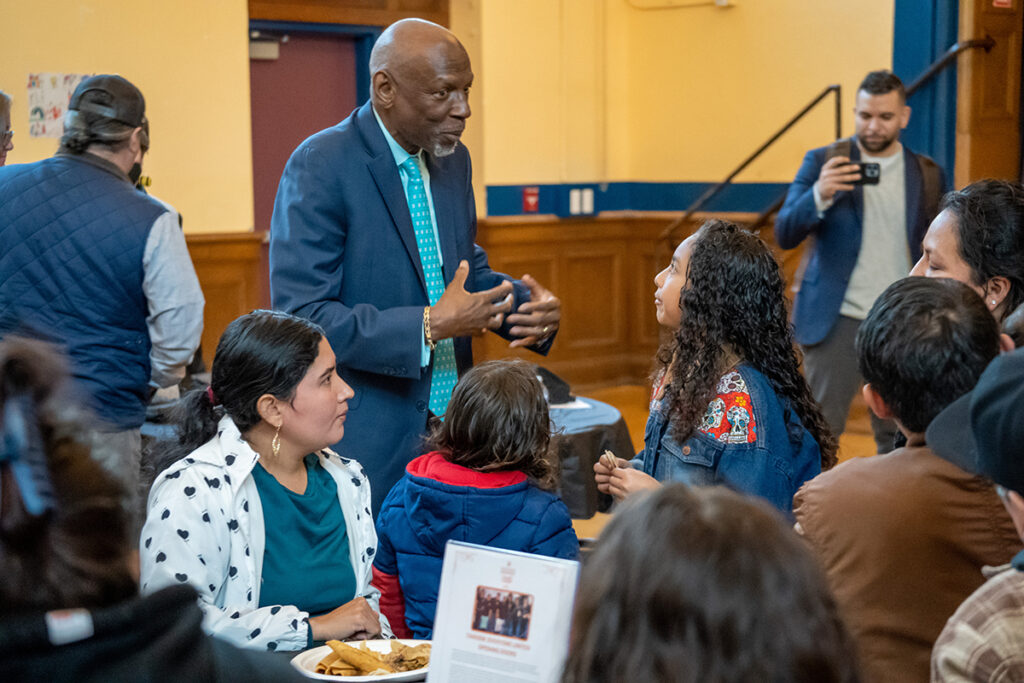
Geoffrey Canada speaks with Genesis Ulloa, MPN participant and young local poet who shared her poem at the event.

Klamath River Promise Neighborhood is the newest Promise Neighborhood in California, and CPNN has the goal of sharing learnings and best practices among its members. Josh Norris, Klamath River Promise Neighborhood Director noted their team’s experience.

“As the first exposure to the CPNN, for most of the new Klamath Promise Neighborhood team, we were inspired by the power of collective impact (led by those closest to the issues) in finding solutions we assumed were too large (or didn’t fit) in the scope of education. For example, solutions for topics such as affordable housing or premature births. We came away with a collective sense of purpose. “ 

For the first time, four CPNN members— Hayward, Chula Vista, Corning and Mission Promise- are sustaining the work through state funding from CDSS, and we are excited to partner as we bring this successful federal model to the State of California. In partnership with GRACE and the End Child Poverty in California coalition, we are committed to ensuring that many more communities in California that can benefit from Promise Neighborhoods and cradle-to-career initiatives have the resources to do so. 

To this end, we were thrilled to share a message at our MPN 10 year celebration from Assembly Member Mia Bonta announcing the launch of It Takes a Village (AB 1321), which will accomplish this goal.

Mission Promise Neighborhood and MEDA thanks our colleagues, friends, partners, and fellow movement builders who are on this journey with us, and who believe that together we can ensure that every child and family can thrive.

Read More

This month we were proud to celebrate our 10th anniversary as a Promise Neighborhood. Mission Promise Neighborhood provides a network of support services to help families achieve economic stability and gives them the tools to support their children’s academic achievement, creating a brighter future for the whole Mission community. The MPN vision includes a future where every child excels and every family succeeds. Students enter school ready for success, and graduate from high school prepared for college and career. The Mission District thrives as a healthy and safe community providing families and their children the opportunity to prosper economically and to call San Francisco their permanent home.

We are one of the few Promise Neighborhoods in the country to harness city, state, and philanthropic funds to make up for the sunsetting of our original 5-year federal grant in 2012 (Promise Neighborhood grants sunset after five years). 

How have we done this? 

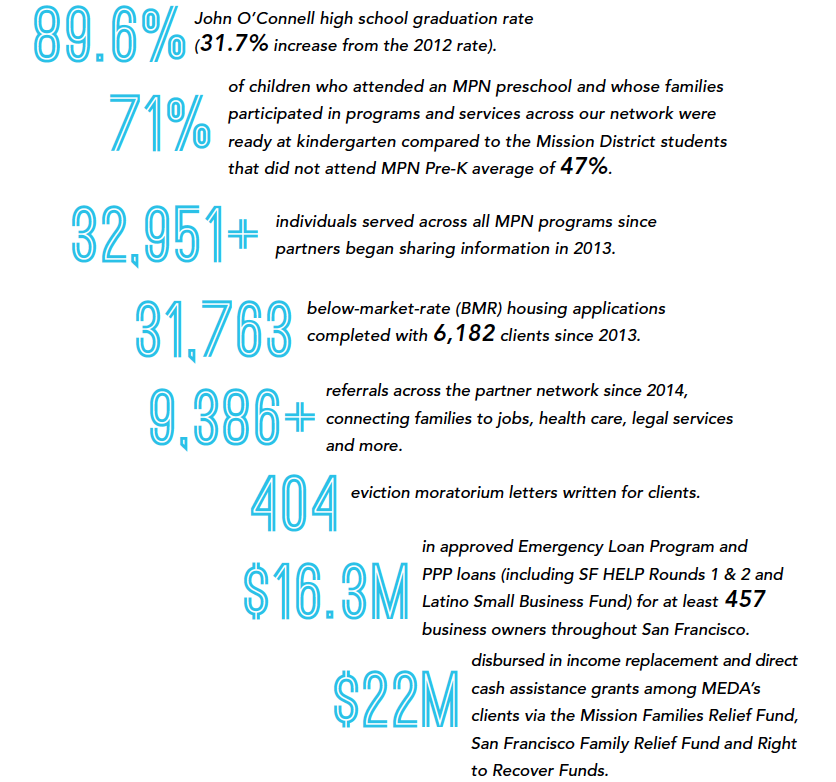
We have done so by building trust with students and families, as well as setting systems in place with 15 partner agencies, nine neighborhood schools, and City departments to provide comprehensive services along the cradle-to-career continuum to over 32,000 people.

During our ten years we have seen dramatic increases in kinder-readiness and graduation rates for Mission District children. When the pandemic hit, government and philanthropic organizations relied on our infrastructure to rapidly distribute income, housing, and health resources to those in need. We believe that this type of cross-sector approach is the future of government – it’s collaborative, accountable for results, and community-centered. That’s why we continue to push for more funding for Promise Neighborhoods in state and federal budgets.

We celebrated a decade of support with dozens of community members, agency partners and elected officials at one of our partner sites, Cesar Chavez Elementary. At the event we provided a team comprised of a MEDA Family Success Coach, a mental health consultant from Instituto Familiar de la Raza, and an after school provider – Jamestown, to work with school leadership to provide wraparound supports to students and their families. 

Thank you to our speakers: MPN parent María Reyes and student poet Genesis Ulloa, who delivered a moving poem about how this program has impacted her life in both English and Spanish, Geoffrey Canada from Harlem Children’s Zone, Board Supervisor Myrna Melgar, Catalina Rico from San Francisco Unified School District, Nelly Sapinski of Jamestown Community Center, Rosaura Diaz of Felton Institute, Josh Davis of StriveTogether.

All Promise Neighborhoods are modeled after the template set by Geoffrey Canada’s Harlem Children’s Zone. Mr. Canada spoke to the success of our Promise Neighborhood in this historical context, and noted the important role Mission Promise Neighborhood plays as part of the national movement for Promise Neighborhoods moving forward. Supervisor Myrna Melgar spoke about how Mission Promise Neighborhood provides an example for the rest of San Francisco for involving the community in schools and improving school performance. Josh Davis read a statement from Assemblymember Mia Bonta about her commitment to passing the ‘It Takes A Village’ Act to fund more Promise Neighborhoods. Promise Neighborhoods are about intentionally identifying our neighbors most in need, and doing everything we can as a community to work together to address that need. It really does take a village, and we will continue to be here providing direct services until our vision is achieved.

Read More

MONTHLY ARCHIVE

Contact

Email
info@missionpromise.org
 
Phone
(415) 569-2699
 
Address
2301 Mission Street, Suite 304
San Francisco, CA 94110

Newsletter
Get the latest news and information on
what’s happening in your neighborhood.

SIGN UP