Christopher Gil
Associate Director of Marketing and Communications
Mission Economic Development Agency (MEDA)
(415) 282-3334 ext. 152
cgil@medasf.org

FOR IMMEDIATE RELEASE
April 14, 2020

San Francisco Receives Support from StriveTogether to Get Better Results for Kids
StriveTogether grant will help local partnership strengthen leadership initiative for parents of San Francisco’s Mission Promise Neighborhood

San FranciscoStriveTogether, a national network working to bring communities together around data to make decisions and improve results for kids, today announced San Francisco as an awardee for the second round of its Strategic Initiatives grant program. San Francisco joins six other communities that will focus on local leadership initiatives.

Mission Promise Neighborhood (MPN), for which MEDA is the lead agency, will use this critical funding to build momentum and policy capacity to achieve a citywide and regional institutionalization of this community anti-poverty education initiative. 

MPN is a partnership of 15 community agencies that has seen dramatic increases in kinder-readiness and graduation rates in its community. Parents in MPN agreed that this collaborative approach should not be limited to only a few fortunate neighborhoods, and they organized to ask the state to fund Promise Neighborhoods across the country. Their advocacy led to approval of this proposal by the California Senate, and the legislation has already made it partway through the Assembly. In addition to this state-level advocacy, these parents were instrumental in helping to draft legislation requiring the San Francisco Unified School District to work with the community to close the achievement gap for the city’s Latinx students. All of this work is leading to systems change — from coordination of safety net services and to community-informed accountability processes for civic institutions — and MPN parents are leading the way. This grant will allow this parent and policy work to continue, so that this systems change can continue in San Francisco, as well as across the state.

“This StriveTogether grant will foster parent leadership at the early education and learning centers and in the nine schools in which the Mission Promise Neighborhood works, plus in our community overall,” Mission Promise Neighborhood Director Richard Raya said. “Now, more than ever, it’s critical that we invest in leadership initiatives for parents to help them navigate current challenges.”

In response to COVID-19, MPN is reaching out to nearly a thousand San Francisco Unified School District families in its shared database to make sure they have access to the emergency benefits that local, state and federal authorities are putting into effect. MPN’s extensive neighborhood network provides residents with a direct line to elected officials to let them know what is needed during this crisis and gives government an avenue to connect more of its most vulnerable community members to emergency services.

“Local leadership is critical at a time when so many systems are clearly failing youth and families,” StriveTogether President and CEO Jennifer Blatz said. “StriveTogether is investing to ensure leaders and staff reflect the diversity of the communities they serve to better support the success of every child.”

The Strategic Initiatives Fund provides grants for targeted strategies to strengthen the seven capacities outlined in StriveTogether’s strategic plan, with a different capacity selected each year. The areas of focus this year include: building organizational capacity; providing leadership development and career pathways for staff as well as local youth, parents and residents; and recruiting and onboarding for a key leadership role on the team or board.

The other leadership initiatives include: 

  • In Boston, the Boston Opportunity Agenda will work to develop career pathways at community-based organizations for parent leaders who reflect the communities being served, with a focus on better outcomes for kids ages birth to 8.
  • In Kenosha, Wis., Building Our Future will build the capability of staff and partners to understand systemic racism so they can identify the changes needed in local institutions and policies for more equitable outcomes.
  • In Muscatine County, Iowa, Aligned Impact Muscatine County will create a staffing plan that identifies key roles needed to advance the partnership’s goals and develop innovative ways to fill those talent needs across community partners.
  • In Redmond, Ore., Better Together Central Oregon will create a network of community members of color who will serve in key partnership roles and build their capacity to design agendas and action plans.
  • In Salt Lake City, Promise Partnership of Salt Lake will expand a talent toolkit created with StriveTogether for hiring and retaining more diverse staff across the Network, with more equitable hiring practices and clearer pathways for development and promotion.
  • In Tulsa, Okla., ImpactTulsa will increase its leadership council’s diversity to represent Tulsa County’s population and unique community perspectives and will develop a youth council to elevate student voice.

The Strategic Initiatives Fund is part of StriveTogether’s Cradle to Career Community Challenge, which invests in efforts to improve equity and economic mobility for children and their families. Since launching the Community Challenge in 2018, StriveTogether has invested $16.6 million in 34 communities on projects that advance equity, improve results and spread bold strategies to help students progress from kindergarten to postsecondary completion and a job.

###

About Mission Economic Development Agency (MEDA)
Rooted in the Mission and focused on San Francisco, MEDA’s mission is to strengthen low- and moderate-income Latino families by promoting economic equity and social justice through asset building and community development.
medasf.org

About StriveTogether
StriveTogether partners with nearly 70 communities across the country, providing coaching, resources and rigorous approaches to create opportunities and close gaps in education, housing, health care and more. Together, the StriveTogether Cradle to Career Network impacts the lives of more than 10 million youth across 29 states and Washington, D.C.
strivetogether.org

Read More

Co-authored by:
Associate Director Liz Cortez
Early Learning Program Manager Ada Freund

First 5 California is this week convening early-childhood stakeholders from across the state for the 2020 Child Health, Education, and Care Summit. The summit’s theme, “Equity in Action: Elevating Children, Families, and California’s Workforce,” will focus on sharing best practices around building partnerships and promoting collective impact in the early care and education field, as a means to optimally benefiting young children and their families

Mission Promise Neighborhood (MPN) will be presenting and sharing our Abriendo Puertas/Opening Doors collective impact work around partnering with parents and community organizations to positively impact kinder-readiness outcomes in San Francisco’s Mission District. 

MPN is an equity initiative: Our 15+ partners are together serving the highest-needs children in our community. Through MPN — a collective impact approach comprising many partner organizations — we are creating positive outcomes for our children, youth and families via evidence-based programming and leadership development that empowers our community to advocate for the needs of both their families and the Mission. In collaboration with Abriendo Puertas/Opening Doors National and various local organizations, many of which are part of First 5 San Francisco’s Family Resource Center initiative, we are weaving a strong social fabric to support and nurture our community. This translates to building generational wealth, while simultaneously laying pathways for academic success along a prenatal-to-college continuum. Through culturally relevant family engagement, critical services, and leadership development and advocacy, we are strengthening our community from the ground up, with an inherent piece of our work being that families are partners in the process. 

Organizations such as Abriendo Puertas have been critical in this process. Abriendo Puertas’ mission is to “support parents in their roles as family leader and as their child’s first and most influential teacher in a home that is their child’s first school” aligns with the goals of MPN. This two-generation approach builds parent leadership skills and knowledge to promote family well-being and positive education outcomes for children. Abriendo Puertas is the nation’s first evidence-based comprehensive training program developed by and for Latino parents with children ages 0-5.

The Abriendo Puertas institute and comprehensive curriculum has helped us develop the structure and resources to inform, guide and inspire our community to take ownership of our school-readiness efforts. Our facilitators, which includes parents, empower families to learn about healthy child development, school readiness, and advocacy.

In 2017, MPN began growing the number of organizations that offer Abriendo Puertas; the catalyst was the creation of an Abriendo Puertas professional learning community to double the number of families who access the program. Since that time, we have watched in awe as partnering organizations have exponentially implemented robust programming around Abriendo Puertas. Working together to increase access has been a successful collective effort: MPN has been able to reach more and more families every year. (Read brief for more information about our PLC model). 

Our success in working together to break down organizational silos is due in large part to our commitment to a collective impact approach that includes: a common agenda; collecting data and consistently measuring results; coordinating mutually reinforcing activities; open and continuous communication; and, most importantly, partnering with families in an authentic way. Backbone staff support the aforementioned efforts.

In our community, the graduating families of Abriendo Puertas are interested in advocacy and leadership opportunities. As part of our partner collective work, MPN is building a pathway by connecting parents to additional opportunities after they finish a series. The Abriendo Puertas curriculum is the ideal fit for our community because it encourages parents to advocate for what they need. Take the case of parent facilitator Albertina, who shared the following: “The program teaches us how to advocate for our children … helping to open doors for school success.”  

Ultimately, MPN’s goal is that Latino families are decision-makers in the institutions and political systems that affect their lives. Abriendo Puertas is the vehicle to making that a reality.

We are breaking cycles, through relationships, sustained effort, and access to information and resources. Families are partners in being part of the solution. Starting with success in the home environment and the early years — and changing the systems that do not work well for our community — families are creating a healthy foundation and ongoing progress to set themselves on track for lifelong success.

This is the collective work of MPN — and our promise to the next generation.


Read More

Co-authored by:
Associate Director Liz Cortez
Early Learning Program Manager Ada Freund
Mission Promise Neighborhood, San Francisco

Early/Head Start programs promote school readiness of young children (0-5) from low-income families by supporting the development of the whole child. These vital programs create a positive environment to support the growth of children via a diverse range of services, which include early learning, health and family well-being. Program staff actively engage families, using a variety of tailored parenting curricula, around children’s learning and development. 

The Abriendo Puertas/Opening Doors curriculum — the first evidence-based program developed for and by Latinx parents with children ages 0-5 — has proven to be the perfect fit for our community in the Mission District of San Francisco. The 15+ partners of the Mission Promise Neighborhood (MPN) community anti-poverty education initiative work collectively to increase the access of Abriendo Puertas/Opening Doors for our families. 

One such community-based organization is MPN partner Mission Neighborhood Centers, Inc. (MNC) Early/Head Start Program, which has offered its families the Abriendo Puertas/Opening Doors curriculum for over a decade. In that time, MNC has successfully strengthened families by building on their parental knowledge, skills and confidence. Through this work, MNC has partnered with parents to support their leadership development in being their child’s first and most important teacher. The comprehensive Abriendo Puertas/Opening Doors curriculum offers additional benefits to families, such as a focus on well-being, advocacy skills and building relationships with peers. 

Following are the Abriendo Puertas/Opening Doors 10 themed sessions:

  1. I am my child’s first teacher; our home, my child’s first school
  2. My child’s growth and development
  3. The power of words
  4. Healthy Body/Healthy Mind, Part 1: Nutrition and Physical Activity
  5. Healthy Body/Healthy Mind, Part 2: Social-Emotional Well-being
  6. My child, media and technology
  7. Count with me
  8. Let’s get ready for school
  9. Champions for our children’s future
  10. Yes, we can! Graduation

Abriendo Puertas/Opening Doors is built on the “popular education” model, which focuses on active engagement from participants and the incorporation of their experiences into the learning process. Popular education teaches that everyone has something to contribute to the learning process, and increases parents’ confidence to play an active role in supporting their children’s learning and development.

The Abriendo Puertas/Opening Doors curriculum has demonstrated positive impact on the families that have participated in our community. Parent facilitator Albertina recently shared: “The program teaches us how to advocate for our children … helping to open doors for school success.” (Watch this inspiring two-minute video featuring three MPN parent stories).

At MNC, teachers, family support staff and parents partner to ensure that children receive high-quality early care and education, and that parents garner the knowledge and skills to support their children’s learning and development. By inspiring parents to be a part of the learning process through the Abriendo Puertas/Opening Doors curriculum, Mission Promise Neighborhood is ensuring that our community’s children are healthy, ready for school and on track for lifelong success.


Read More

Co-authored by:
Director, Mission Promise Neighborhood Richard Raya
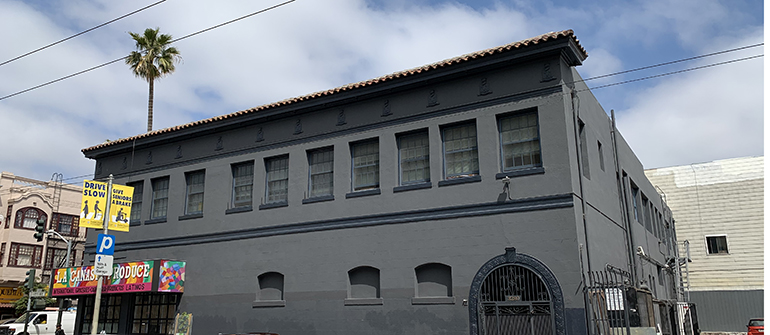
Associate Director of Mission Promise Neighborhood Liz Cortez

It’s now an unstoppable national movement: We are collaborating to improve the lives of children, breaking down barriers to build a better future for our next generation.

Mission Promise Neighborhood (MPN) is honored to be accepted into the StriveTogether Network, which comprises nearly 70 cradle-to-career initiatives across the country. Of the 13 million children served by these initiatives, 50 percent are Latinx. MPN is equally honored to moderate the plenary discussion, featuring a keynote by renowned Stacey Abrams, at the national StriveTogether conference in Washington, D.C. 

Seven years ago, tapping into the vision of then-President Barack Obama, San Francisco’s MPN became a reality. We decided that the most impactful way for our kids to succeed was to provide wraparound resources to them and their parents along the cradle-to-career continuum,  and to build the capacity of parents to be their children’s first and best advocate. Think of it as a two-generation approach.

MPN joined with more than 20 other Mission community-based organizations and aligned with City and school district leaders. We agreed on a common agenda and shared data; we collectively held ourselves accountable to results. 

Over the years, this community anti-poverty education initiative saw the following collaborative results:

  • Families reporting a medical home for children 0-5 increased from 61 percent in 2016 to 80 percent in 2018.
  • 5-year olds who were assessed as kinder-ready increased from 25 percent in 2015 to 45 percent in 2018 at target schools.
  • Students testing at or above grade-level in eighth-grade math increased from 30.2 percent in 2015 to 41.8 percent in 2018.
  • Students testing at or above grade-level in English Language Arts increased from 22.1 percent in 2013 to 36.2 percent in 2018.
  • High school graduation rates, at the MPN target high school, increased from 68 percent in 2012 to 89 percent in 2018, with the greatest increases seen for the Latinx and African American student populations. 

We are not the only ones seeing results. 

StriveTogether Networks’ initiatives are seeing similar results, creating larger-scale systems by banding together.

Stacey Abrams was the first Black woman to be nominated by a major party for governor (that occurring in Georgia) and the first Black woman to deliver the formal response to the State of the Union address. She also tripled the Latinx, Asian-American and Pacific Islander voter turnout in her state. At this week’s conference, Stacey Abrams will share how community authority and mobilization are crucial to the advocacy and policy work that will improve the lives of children of color, and any of our kids living in poverty. 

Over the years, MPN’s host agency, Mission Economic Development Agency (MEDA), learned that it must do more than provide services to achieve systems change. MEDA pivoted to build parent voice and resident participation in the political process, creating a state bill with other California Promise Neighborhoods that, if approved, would legislate the creation of 20 state-funded Promise Neighborhoods. The reasoning behind the bill is that Promise Neighborhoods are “good government”: efficient coordination of services; data sharing among agencies; and accountability to results. This bill, SB 686, has experienced early success, and is currently working its way through the legislative process. 

SB 686 is part of a national movement for increased coordination of programs and greater accountability to results along the cradle-to-career continuum. We are grateful for the work that the StriveTogether Network is nationally undertaking to scale this approach, and we are proud to be part of the change. 

The theme of this year’s StriveTogether conference is “Unstoppable” — and that’s because we have proved that together we are, indeed, unstoppable. 


Read More

photo by Alejandro Bautista

Hundreds of community members got their kids ready for the upcoming school year by taking part in the Mission Promise Neighborhood (MPN) “2019 Education Forum.” This sixth annual event was held on Saturday, Aug. 10, with the venue graciously offered by City College – Mission Campus. 

The day started with a hearty breakfast featuring tamales and sweet bread, complemented by champurrado, a chocolate drink. Attendees were then welcomed by MPN Director Richard Raya, who was excited to see faces old and new in the crowd as he explained that the day was all about our families. As MPN is a place-based community anti-poverty initiative in San Francisco’s Mission District, 15 community organizations were represented at the event.

Mission Parent Advisory’s Abraham then echoed Raya’s words, adding that it was impactful that so many parents helped plan the event by brainstorming and taking an active role in choosing main themes, workshops and activities. Abraham also put forth a strong message that parent involvement is critical to student success. 

There were then concurrently running workshops and activities, as the City College campus bustled with activity.

A trio of workshops were offered on: getting kids kinder ready, centered on tips for families to keep in mind about the transition from early learning centers to kinder, plus an introduction to Abriendo Puertas/Opening Doors, which has a mission to support parents in their role as family leader and as their child’s first and most influential teacher; cyberbullying and tips for internet safety, with suggestions around what parents can do at home to ensure their children safely use technology; and promoting literacy at home, with strategies for engaging young ones with books.

Activities were varied and compelling, as noted by MPN Family Support Manager Celina Castro-Saelao, who stated “The feedback has been that the children were having an instructional yet fun time playing and creating things. Parents were excited about all of the activities that were planned for the day.”

Kids could be seen bettering their athleticism by jumping rope, using chalk to create a colorful mural showcasing summer in San Francisco, and even face painting.

For the youngest attendees, a quiet space, complete with age-appropriate toys, was provided for infants and toddlers.

One popular activity was the Mission PhotoVoice Project, which has been making the rounds the past few years. Titled “An American Dream?,” this  is the work of women who met, learned, cried, laughed and worked together to produce powerful portraits of courage. Topics include the living conditions that families are forced to endure, their impact on health and well-being, fear of eviction and ending up on the streets, the fires and displacement occurring in the Mission, resiliency and hope, and potential changes and solutions. This exhibit, with an explanation by Early Learning Program Manager Ada Alvarado Freund, sparked many an insightful conversation with “2019 Education Forum” attendees, who told of their own issues in securing affordable and quality housing — an issue MPN is successfully working to combat.

A resource fair, with 13 partners tabling, was also well attended. Topics ranged from after-school programs and health to City College’s offerings and resources available at the San Francisco Public Library.

For the upcoming school year, families of children in K-12 received a backpack for each student, provided already stuffed by the Mayor’s Office of Neighborhood Services. Inside each backpack was a bevy of much-needed items for academic preparedness: binders; paper; calculators; crayons; markers; rulers; and the like.

Additionally, MPN provided 55 of its own tote bags geared toward kids ages 0-5, with books and activities offered for parents and children.

Concludes Castro-Saelao, “The annual MPN Education Forum always sets our families and students off on the right foot for the upcoming educational year. Every child deserves the tools to succeed in school, and this event is part of making that happen. MPN looks forward to seeing everyone again next year.”

_____________________________

MPN wants to thank the following for their support of the “2019 Education Forum.”

Mayor London Breed
MPN Parent Council
Common Sense Education
Tandem, Partners in Early Learning
MPN Early Learning Collaborative
Instituto Familiar de La Raza
Mission Neighborhood Centers, Inc.
Mission Graduates: College Connect
Jamestown Community Center
Support For Families
MEDA
Felton Institute
Parents for Public Schools
San Francisco Public Library
Mission Neighborhood Health Center

MPN also wants to thank our volunteers for the “2019 Education Forum.”

Karen Aguilar
Cammy Blackstone
Leonor Texcucano Cedeno
Diana Diaz
Gabriela Gody
Amaranta Korngold
Mireya Lopez
Loretta Pollard
Serenity Pollard
Daniela Rivas
Rosa Solorzano
Rita Vieira
Julian Yannacone
Sarai Tannacone


Read More

Co-authored by:
by Director, Mission Promise Neighborhood Richard Raya
MEDA CEO Luis Granados

(NOTE: Read eight-page report on which this blog is based here.)

Asset building is in MEDA’s organizational DNA — and we’re proud that it’s part of our origin story, which began 46 years ago.

But our future is in collective impact with partners. 

To resist and, ultimately, reverse the tidal wave of gentrification in San Francisco, MEDA moved beyond providing direct services and added an equity lens that focused on placekeeping for a community of color. 

Pivoting to reflect new challenges
In 2012, the U.S. Department of Education awarded a five-year, $30 million Mission Promise Neighborhood (MPN) grant to MEDA so that it could work with 20 community partners to close the academic achievement gap for Latino students in San Francisco’s Mission District. As a result of becoming a backbone organization for this community-wide collective-impact initiative, MEDA began to double in size. Our nonprofit rapidly pivoted from being a direct-services provider to tackling community-development work as a means to proactively responding to the pressures facing the community, from rising income inequality to rapid gentrification to anti-immigrant policies. 

For students to succeed, MEDA’s premise was that their families needed to have the tools to move out of poverty, complemented by affordable places to live and the fostering of political power to affect systems change.

The strategy also called for the array of community organizations providing support services in the neighborhood to band together, so that the scale of the solution began to match the scale of the problem.

This pivot in work led to the creation of:
The MEDA Community Real Estate team, which is preserving and producing almost 1,200 units of affordable housing in the Mission, in just five years since the program’s inception;
Permanently affordable commercial spaces for nonprofits and community-serving retail in the Mission, with 100,000 square feet to date;
Fondo Adelante, a small-business lending arm that is now a Community Development Financial Institution (CDFI), having in five years disbursed $2.5 million to small-business owners unable to access capital from traditional lenders;
Mission Adelante, a 501 (c)(4) advocacy affiliate of MEDA able to endorse or oppose candidates based on whether they have our community’s best interests at heart;
The California Promise Neighborhoods Network (CPNN) to build the impact of Promise Neighborhoods statewide; and
Leadership development and advocacy opportunities, resulting in parents organizing for political power for systems change, such as the need for community-centered schools, more City funding for affordable housing and limits on market-rate development in the Mission.

Where we are now: A focus on MPN accomplishments
To close the achievement gap for Latino students in the Mission, 20 partners agreed to a cradle-to-career continuum of wraparound services, a common agenda and shared measurement. Based on the theory that economic stability for families will lead to improved outcomes in school, this two-generation approach now serves families at nine K-12 public schools, three early learning centers and 11 family child care providers — connecting families to services, supporting students and guardians. Results-Based Accountability is collectively used to define and measure outcomes.

The scale of this collective impact initiative is unprecedented:

  • 20,873 individuals served across all MPN programs since 2013.
  • 9,893 below-market-rate (BMR) housing applications completed for 2,850 families since 2015.
  • More than 6,458 referrals across the partner network since 2014, connecting families to jobs, health care, legal services and more.

The results have been promising indeed:

  • Families reporting a medical home for children age 0-5 increased from 61 percent in 2016 to 80 percent in 2018.
  • Preschool slots are now available for 100 percent of subsidy-eligible children in the Mission.
  • 5-year olds who tested as Kinder-ready increased from 25 percent in 2015 to 45 percent in 2018.
  • Students testing at or above grade-level in Eighth-Grade Math increased from 30.2 percent in 2015 to 41.8 percent in 2018.
  • Students testing at or above grade-level in Eighth-Grade English Language Arts increased from 22.1 percent in 2013 to 36.2 percent in 2018.
  • High school graduation rates at target high school increased from 68 percent in 2012 to 89 percent in 2018, exceeding the overall district rate.

Our opportunity
MEDA, with its new lines of work, and service-provider partners in the Mission have invested in aligning their work around a common set of goals, and that collective work is now bearing fruit – in improved outcomes for students and families, as well as in greater capacity for organizations on the ground. We have an opportunity to leverage what we have learned, and the momentum gained, to support families who are vulnerable to the continuing displacement pressures during this housing crisis and are under increasing pressure from anti-immigrant policies by the federal government. 

But the funding for much of this infrastructure is set to end in less than a year. 

The risk to or community
MPN funding ends June 30, 2020, when the current federal grant sunsets. The California Promise Neighborhoods Act of 2019 (SB 686), which MPN families helped to create and champion at the capitol in Sacramento, would create a new program to award competitive grants to 20 Promise Neighborhoods across the state. The bill has been approved by the full Senate and the Assembly Education Committee, but is currently being held until next year, at the Governor’s request. If this bill is successful and approved in July 2020, the state funding could eventually help MPN; however, the funding would be too late to cover MPN’s operating costs between July 1, 2020 and time to full implementation of the new grant program. 

We are now seeking both stop-gap and ongoing funding from alternative sources. MPN partners have invested in building infrastructure that makes the alignment of our work possible. Losing funding means not just losing valuable services to students and families in the Mission, it also means the loss of the multiplier effect of many organizations complementing one another’s strengths during a time when they are needed the most. 

How the money is spent
It costs $3.5 million per year to operate MPN. The majority of the funding is allocated to community partners (43 percent) and staffing the backbone infrastructure (43 percent). The loss of this infrastructure at this moment in time would have a devastating impact on the community’s families, schools and integrated network of service providers. 

Here is how the majority of monies are allocated:

MPN PARTNERS

MPN-Funded: $1.5M
Felton Institute

Good Samaritan Family Resource Center Homeless Prenatal

Instituto Familiar de la Raza

Jamestown Community Center

La Raza Centro Legal

Mission Graduates

Mission Neighborhood Centers, Inc. Mission Neighborhood Health Center Nurse-Midwives of SFZGH

Parents for Public Schools

Seven Teepees

SFUSD—Early Education Department Support for Families

Tandem, Partners in Early Learning

YMCA Urban Services

Backbone Support Personnel: $1.5M
Promise Neighborhood Director

Associate Director

K-12 Program Manager

Early Learning Program Manager

Family Support Program Manager School-Based K-12 Family Success Coaches (8) Early Learning Family Success Coaches (3) Administrative Coordinator

Institutional Partners
Children’s Council of San Francisco

Department of Children, Youth and Their Families

First 5 San Francisco

San Francisco Department of Public Health

San Francisco Mayor’s Office of Housing & Community Development

San Francisco Office of Early Care and Education

San Francisco Office of Economic and Workforce Development

San Francisco Unified School District San Francisco Office of the Mayor

Conclusion
We must keep this momentum going as an anti-poverty strategy. Data sharing, collaboration, accountability to results: Promise Neighborhoods are the embodiment of what we call “good government.” It’s time for this type of initiative to move beyond being simply a boutique operation for select communities, and for it to become the normal way that government delivers services and strengthens underserved communities. As we all prepare for the biggest election of our lifetime in 2020, we should highlight the need for a more-just society. 

Now is the time for bold equity initiatives — based on proven models.

Read More

by Director Richard Raya

These are exciting — and busy — times for the Mission Promise Neighborhood (MPN), so I wanted to make sure you are updated on recent events and what’s ahead. Thanks for being part of MPN!

By the Numbers: MPN is All About Relationships
MPN has Family Success Coaches (FSCs) embedded at eight schools in the Mission, plus at early care and education centers. These FSCs work with MPN partners to connect families to a web of supports in the community, ranging from housing to health, financial literacy to legal rights, and more. So far this year, FSCs and community partners have made 823 such connections (referrals) for 461 families. Read more about our powerful referral tool here.We’re currently working with community partners to revamp the referral tool, using human-centered design. If you are a partner and would like to participate, please contact Technology & Data Systems Manager Michelle Reiss-Top at mreisstop@medasf.org.

State Passes California Promise Neighborhoods Act
I’m thrilled to announce that SB 686, The California Promise Neighborhoods Act, was passed by both the full Senate and the Assembly Education Committee. Now, it is heading to the Assembly Appropriations Committee. This legislation would fund up to 20 Promise Neighborhoods at up to $5 million per year, and is part of a package of proposals that could significantly reduce child poverty within four years. As part of the End Child Poverty Campaign, we participated in an awareness-raising bus tour that started in Chula Vista and ended in Sacramento. Mission families and community-based organizations have played a leading role in this effort! Ten MPN partners submitted letters of support, and four accompanied us to hearings, including Instituto Familiar de La Raza, Parents for Public Schools, Support for Families, the San Francisco Board of Education, and the City and County of San Francisco.

Connecting Family Child Care Providers to the MPN Support Network
MPN is expanding its Family Success Coaches’ reach to bring Family Child Care providers (FCCs) into the MPN network of supports. MPN hosted an orientation on June 4 for newly added FCCs. We now have formal working agreements with 10 FCCs. We are excited to collaborate with our MPN partners such as Instituto Familiar de la Raza and MEDA’s Business Development Program team, who also support some of these providers.

MPN Manager Ada Freund Appointed to Children’s Planning and Advisory Council
MPN Early Learning Manager Ada Freund has been appointed to San Francisco’s Children’s Planning and Advisory Council (CPAC). The CPAC identifies local priorities and policies for child care and early education. We’re thrilled that Ada will be representing Mission Promise Neighborhood in this new leadership role! This appointment is a recognition of the groundbreaking work that Ada and her team have been leading in the early-education community. CPAC members are appointed to three-year terms by the San Francisco Board of Supervisors and the Board of Education, in accordance with state and local law. Please join us in congratulating Ada!

New MPN Advisory Board Member from San Francisco Foundation
Director of Strategic Learning and Evaluation Jessica Dalesandro Mindnich, Ph.D., of San Francisco Foundation has agreed to join the Advisory Board. Jessica is joining Board of Education Commissioner Gabriela López as the newest MPN Advisory Board members.

The next Advisory Board meeting is scheduled for July 19.

Capacity Building for Parents of Children 0-5: Abriendo Puertas
MPN partner Support for Families hosted its Abriendo Puertas graduation on June 12. Abriendo Puertas is a parent capacity-building program created by Latino parents for Latino parents. Our parents are their child’s first and most-important teachers, and Abriendo Puertas supports families in growing their leadership skills. MPN’s Early Learning partners are projected to provide a total of 14 cohort trainings to over 200 family members this year.

Tools for Transitioning from Pre-K to Kinder
One of MPN’s Early Learning partner strategies is to support families, as they transition from Pre-K to Kinder, through the use of transition tools known as Family Portfolios, and over 280 families have been reached so far this school year. Seven Early Learning partners have participated: Mission Neighborhood Centers, Inc. Head Start; Good Samaritan; Felton FCD; and SFUSD schools Bryant, Las Americas, Chavez and Sanchez elementary. With the support of these partners, we were able to provide 16 Family Portfolio workshops to 118 parents.

Summer Schedule for Family Success Coaches
Another school year has come to an end, but school-based FSCs will remain at sites and continue to work with families at the following summer program sites: Sanchez; Flynn; and Everett (Mission Graduates and Urban Services YMCA; BVHM; and James Lick (Jamestown).

School Board Resolution for Latinx Students
We continue to work with School Board Commissioner Gabriela López, MEDA Board Member Paul Monge, and the San Francisco Latino Parity and Equity Coalition to develop a Latinx School Board Resolution. The first draft was completed and is now being reviewed by the full SFLPEC body and external community groups, with a goal of submitting to School Board committees by August, and the full Board in September.

Sharing Best Practices from Mission Promise Neighborhood
MPN joined Hayward Promise Neighborhood and Marin Promise on a panel discussion of Bay Area Promise Neighborhoods at the Rise Together Opportunity Summit in San Jose.

You can access the presentations from the Summit here.

More MPN Staff Accolades
Family Support Manager Celina Castro-Saelao was selected as a 2019 NALCAB Fellow and participated in the fellowship training in Portland. This highly competitive program was developed to ensure that next-generation Latino leaders build the skills needed to fill the increasing leadership gap in the community economic-development field. Congratulations, Celina!

Associate Director Liz Cortez completed the RBA Professional Certification from Clear Impact. Results-Based Accountability is the framework MPN uses to measure impact in the community. Liz has been MPN’s in-house expert for some time, and is now recognized outside of MPN as well. Congratulations, Liz!

Upcoming Events

Planning for the annual MPN Education Forum is underway: The free community event will be held on August 10 from 9 a.m.-12:30 p.m. at City College – Mission Campus. We are reaching out to MPN partners to lead workshops and offer resources during the event. We are looking for volunteers to help run fun interactive activities for families. Thanks to the Mayor’s Office of Neighborhood Services for providing us with 300 backpacks.

For more information, contact Celina Castro-Saelao at csaelao@medasf.org.

Read More

by Director, Mission Promise Neighborhood Richard Raya

It’s no secret that the San Francisco Bay Area’s economic engine is revving more than ever. According to a San Jose Mercury News article, If the nine-county region were a nation — no, it’s actually not, although many here think so! — the Bay Area’s $748 billion Gross Domestic Product would make it the nineteenth strongest economy in the world. (Take that Switzerland, at #20).

The Bay Area has more than its fair share of millionaires, with more being minted daily via the numerous tech I.P.O.s occurring this year.

But, unfortunately, many are being left behind in this modern-day Gold Rush.

These stats below, showcasing the wealth gap creating unprecedented inequity in the region, are from the forthcoming Bay Area Equity Atlas (available starting June 5 at http://www.bayareaequityatlas.org/). This data-driven atlas is produced by a partnership of the San Francisco Foundation, PolicyLink, and the USC Program for Environmental and Regional Equity (PERE).

  • Between 2000 to 2015, full-time workers with the lowest earnings (at the 10th percentile) saw their incomes decline by 13 percent, while the incomes of workers in the middle were completely flat, and top earners (at the 90th percentile) saw their paychecks grow by 13 percent.
  • Meanwhile, between 2011 and 2015, median market rents increased by 36 percent. A family of two full-time workers each making $15/hour can afford market rent only in 5 percent of Bay Area neighborhoods.
  • There are wide economic inequities by race and gender in the region: Among full-time workers of all races, women earn 81 percent of what their male counterparts earn and the largest gender gaps are within the White and Asian or Pacific Islander communities. And while average earnings for full-time workers was about $63,000 in 2015, Native Americans and Latino workers earn about 60 percent of the average, and Black workers earn about 80 percent of the average, while White workers earn about 130 percent of the average.
  • If there had been racial equity in income in 2015, the Bay Area economy could have been $356 billion larger.

Meeting the scale of this egregious inequity takes an initiative of similar magnitude. That’s Promise Neighborhoods, which leverage the success of an ambitious social-policy experiment, the Harlem Children’s Zone (HCZ). Started as a one-block pilot in New York City back in the 1990s, that national model for disrupting the cycle of generational poverty has grown to a 97-block area of central Harlem. President Obama described HCZ as “an all-encompassing, all-hands-on-deck, anti-poverty effort that is literally saving a generation of children.” The New York Times echoed this sentiment by claiming that HCZ is “one of the most ambitious social-policy experiments of our time.”

After a decade of solid results in low-income communities of color  — from rural Mississippi to urban Los Angeles — it is clear that the bold Promise Neighborhood education model concurrently alleviates poverty and creates educational equity by the implementation of a cradle-to-college-to-career continuum. It’s a trajectory of success.

In San Francisco’s Mission District, the Mission Promise Neighborhood (MPN) is now in its seventh year generating such success via a two-generation, collaborative approach. MPN leverages 20+ community partners — connected via a robust, customized Salesforce referral tool — to provide wraparound services so that our families are strengthened and our students have the tools to head off to college. To date, there have been 2,744 families connected to 5,590 different program referrals, pushed forward by Family Success Coaches dedicated to each school to serve as connectors to the resources available to meet MPN families’ challenges head-on. These resources run the gamut from securing affordable housing and strengthening finances to learning immigration rights and finding a medical home.

Knowing that student success begins before kindergarten, early care and education service providers are also brought into the mix. That has translated to 80 percent of all Latino 4-year-olds in the Mission now being enrolled in preschool, so that they become kinder-ready.

At the other end of the spectrum, our young adults are now graduating from high school and have the tools to head off to college, many the first in their family to do so, often abetted by the assistance of a mentor to whom the student can relate. The exciting news is that Latino graduation rates at the Mission’s John O’Connell High School have increased from 63 percent to 88 percent, while African American graduation rates went from 46 percent to 93 percent.

Now a proven model — and a solid business case — scaling Promise Neighborhoods across the land could be transformative.

In California, there is work to make that happen. SB 686, the California Promise Neighborhoods Act of 2019 penned by State Senator Ben Allen, is currently working its way through the legislative halls of the Capitol in Sacramento. If passed, the measure would mean that the vital work of all six current Promise Neighborhoods in the state can continue uninterrupted, with 20 more Promise Neighborhoods created in areas experiencing a cycle of poverty and underresourced schools.

It’s about creating equity of opportunity for all California kids.


Read More

San Francisco native Alyssa P. proudly tells of the fact that she grew up in the Mission, ZIP code 94110 — the third generation of her family to do so. Some relatives were fishermen at the Wharf way back when, all coming home to the Mission each night.
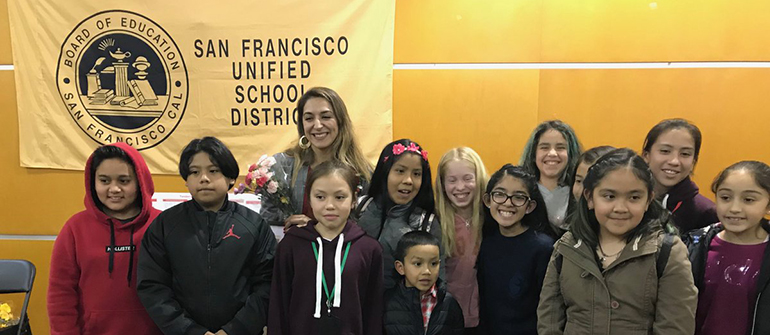


Unfortunately, as a young adult, Alyssa found that not having stable housing is disruptive to every facet of your life. After starting to raise identical twins on her own at age 23, housing translated to a far-less-than-ideal living situation. Home was a room in a garage, with neither heat, a washer/dryer nor a kitchen. That communal kitchen was shared with family members who were facing challenges, making their behavior erratic and compelling Alyssa to rarely venture into the main part of the house. There were no home-cooked meals with a family gathering to discuss their day around the table — it was just quick, cheap meals from small eateries.

Alyssa worried at the model her little ones were seeing each day. She needed to be proactive.

So in 2017, the then 28-year-old spoke to a Family Success Coach based at her kids’ Mission Promise Neighborhood (MPN) school, Cesar Chavez Elementary. MPN is a collaborative of 20+ partners, for which MEDA is the lead agency. Family Success Coaches are based at schools and early learning centers, acting as a connector to resources available to strengthen families. When Alyssa told her story to the coach, they pointed her a few blocks away to MPN partner MEDA.

The first step was to get finances in order, so Alyssa was paired with MEDA then Financial Capabilities Coach Lupe Mercado. The big goal was to pay off student loan debt. While Alyssa had studied hard and landed a decent job working as an operating-room technician, the interest on the loan was building up. After some time — and with much diligence — that issue was successfully resolved.

When Mercado internally transferred positions, becoming a Housing Opportunities Coach at MEDA, Alyssa came along. “We continued bettering Alyssa’s finances, aiming to get her what we define at MEDA as ‘rental ready,’ meaning paying down debt and bringing up your credit score. Once that occurred, it was time to start applying to City lotteries for below-market-rate (BMR) apartments in San Francisco,” explains Mercado of the plan.

Apply they did. To about 30 lotteries over a two-year span. Alyssa had become hyperfocused, eschewing spending time with friends so that she could instead garner all the knowledge she could about affordable housing.

Despite the setbacks of failing to win the lottery, Alyssa remained determined, knowing it usually takes time.

Says Alyssa, “Each night, my girls and I said affirmations and prayed that we would find a new home. I told them to envision us in a better place. To remain hopeful.”

The great news is that Alyssa’s determination paid off, with her winning the lottery for a one-bedroom apartment at a MEDA Small Sites Program property at 17th and Mission, in the heart of the neighborhood and near where she spent her younger days. The City’s Small Sites Program allows nonprofits to purchase four- to 25-unit buildings with tenants vulnerable to no-fault evictions. To date, MEDA’s Small Sites Program portfolio includes 22 such properties, comprising 154 residential apartments and 23 commercial spaces. The 17th Street property had an opening come up organically, hence the lottery for that BMR unit.

There was one more issue to solve: the need of assistance with move-in monies and a security deposit. So Mercado reached out to Catholic Charities, which in a quick turnaround time assisted the family.

There were tears of joy for the close-knit family of three when they moved into their new home on April 5. They had never before been able to call a home their own. The apartment’s high ceilings and old-time charm remind Alyssa of the Mission flat where she lived as a little girl.

Alyssa now finds peace as she lovingly prepares meals for her family in her light-filled, updated kitchen. The twins have quiet places to study, so Alyssa knows they will now become all-the-more successful at school.

Yet Alyssa’s dreams have not all been realized.

“I now have a one-bedroom, and I am working toward renting a two-bedroom. Ultimately, I want to buy a three-bedroom BMR condo in MEDA’s 18th and Mission property they will be soon building. I feel like it’s fate — my twins have been part of Dance Mission Theater since they were two-year-olds, with me volunteering there, and I know that arts organization will have a new home at 18th and Mission, too. I’m going to make this happen,” exclaims a hopeful Alyssa, who recently took MEDA’s First-Time Homebuyers workshop to ascertain how to make that dream a reality.

It doesn’t stop there. Alyssa is also looking to start her own small business offering fitness classes, so she has been taking the weekly workshops — led by Business Development and Lending Liaison Luis Ramos — where everything from creating a marketing plan to commercial-lease negotiation is taught.

Concludes Alyssa, “My girls mean everything to me, making me determined to create a better life for us, despite the challenges. I want to thank Lupe and everyone at MEDA for offering me the tools to succeed. I know now that my twins will definitely grow up to be the best they can be.”


Read More

It was a historic day last January when 27-year-old educator Gabriela López was sworn in as the youngest-ever San Francisco Unified School District School Board member. As she took her oath — in perfect Spanish, no less — it was clear that López epitomizes the future leadership uniquely positioned to move San Francisco forward.

It was also an exciting day when López recently agreed to join the 16-person Mission Promise Neighborhood (MPN) Advisory Board, where her unique perspective will push forward our education initiative’s vision to strengthen families so students achieve.

As the daughter of working-class, immigrant parents, Commissioner López is working with the community on a comprehensive, landmark Board Resolution to address the challenges that Latinx students across the city are facing — including many Mission Promise Neighborhood students.

Following is an interview of Commissioner López by Director, Mission Promise Neighborhood Richard Raya.

RR: What in your background led you to your work bettering the lives of children?
GL: Growing up in public schools in Los Angeles led to my interest in pursuing public education. I almost immediately saw the mistreatment of students of color, and decided to become a teacher in the third grade. With my understanding of how geography affects the outcome of a student’s success, I immediately wanted to create change in these areas since I saw this affected my community the most.

RR: How does it feel to be the youngest person ever elected to the San Francisco School Board, and what unique perspective do you bring?
GL: Before running, I was told that if I won I would be the youngest woman ever elected to office in San Francisco. Initially, that felt like the furthest thing from reality. And while running, my age became more of an issue because it meant instability to a lot of people, despite the fact that I had the most experience in schools and education. When I found out I won, I was truly shocked, to the point of tears, but am of course extremely proud of this accomplishment and hope to encourage other young folks to do the same! My perspective is closest to the number of new teachers we are serving and my current experience in the classroom provides me the lens necessary when making decisions that better serve all of our students.

RR: Why did you opt to deliver your San Francisco School Board oath in Spanish?
GL: The thought was immediate once I learned about the legal issues that I can work around in order to do it. I knew my parents would attend, and wanted to make sure they were able to hear the words that granted me a seat on the Board. It reminded me of the work I did often as a child to help my parents understand what was happening — and the work that many young people who are bilingual do every day for their families.

RR: How does your vision for San Francisco students align with the vision of MPN to make sure every family succeeds and every student has the opportunity and tools to go to college?
GL: My vision ensures every decision made keeps students at the center. With this in mind, we can move forward in ensuring ALL students have access to a fulfilling, rigorous and empowering education. These, and many other characteristics, are the ones we need as a people to be successful in all areas of work, schooling and socialization. Which is where I can combine efforts and make connections with the work being done at Mission Promise Neighborhood. My role as a leader of the District also includes to call out bias and racism that prevents this from helping achieve this for all of our students.

RR: How does the fact that you were once compelled to supplement your teacher salary with a gig job give you empathy for our MPN families, who often face  the challenge to make ends meet in an increasingly expensive neighborhood?
GL: I am no stranger to holding various jobs to make a living wage. Up until landing my first teaching position in 2015, I was working at a restaurant while finishing my master’s in Education. Throughout my college experience, I had two, sometimes three jobs in order to maintain a living and finish my degree. Some of these jobs required me to work graveyard shifts and many, many nights. I more than empathize with many families who are working hard to survive. I’ve seen my parents go through it, and value it more than many of the qualities I hold. As a teacher in the classroom serving the populations that so often need more than one job to support their children, I focus on making their connections to their child’s education as seamless and accessible as possible, without interfering with their work.

RR: Can you describe the importance of the San Francisco School Board resolution, on which you are currently working, to ensure Latinx students’ equity?
GL: It’s important people understand the power the School Board has over the decisions being made that comes through the district. There are many opportunities to give input, feedback and advice since we are deciding for many different families. Each group has unique needs that the District can support — and the Latinx community is no different. This resolution will be the first of its kind to support a community of folks that even within it has a variety of needs. The resolution can help address what those needs are and how to better serve that specific group. But it can’t be done without much community input!

Read More

MONTHLY ARCHIVE

Contact

Email
info@missionpromise.org
 
Phone
(415) 569-2699
 
Address
2301 Mission Street, Suite 304
San Francisco, CA 94110

Newsletter
Get the latest news and information on
what’s happening in your neighborhood.

SIGN UP