Blog-Dr Seuss Day Celina 030716

“Green Eggs and Ham.” “The Lorax.” “How the Grinch Stole Christmas.” Plus, of course, the ever-popular “Cat in the Hat.”

Most have pored over the poetic words of one or all of these Dr. Seuss books at some point, either as a youngster or reading to their own child. Not surprising considering the numbers: 600 million copies were printed of his 60 titles during Dr. Seuss’ lifetime, with translations into 20 languages.

Yet most know little about this guy with the interesting name of Dr. Seuss.

Theodor Seuss Geisel was born in 1904 in Springfield, Massachusetts. He studied at Dartmouth in neighboring New Hampshire before venturing overseas to Oxford in England to continue his education. Turning avocation into vocation, Geisel worked as an illustrator and cartoonist at two renowned magazines, Vanity Fair and Life, later venturing into the ad industry.

After World War II, Geisel shifted his focus to children’s books, under the moniker Dr. Seuss, with an enviable volume of stories produced until his death in 1991.

Each year, the National Education Association (NEA) promotes “Read Across America Day” on March 2, the birthday of Dr. Seuss.

Ms. Rose, a teacher at Cesar Chavez Elementary School, makes sure this Mission Promise Neighborhood school takes part in this nationwide event to celebrating reading.

Family Success Coach Celina Ramos-Castro underscores the need for such events by explaining, “It’s essential for our kids to develop a love of reading. This promotes vocabulary building and is critical to families learning English as a second language, which is the case for many Mission Promise Neighborhood students at Cesar Chavez Elementary School.”

Ramos-Castro’s job is also to connect parents to resources to better their child’s reading skills. She knows of many community-based organizations – all part of the Mission Promise Neighborhood initiative – that can help.

One such agency is Tandem, Partners in Early Learning. Tandem works in San Francisco, Alameda and Contra Costa counties, with a mission to “provide programs and services in high-need communities.” An example of their community impact was the successful Mission Promise Neighborhood holiday book giveaway, held at The Women’s Building in the Mission last December. Tandem was on hand to foster parents reading to their children. Other partners participated, with the Children’s Book Project donating books and the San Francisco Public Library tabling to avail families of resources.

Such educational events are an essential part of the two-generation approach of the Mission Promise Neighborhood, as a means to counter impediments to family and student success.

The challenge can be told via the numbers. At an early age, only 8.6 percent of 3-year-olds in the Mission Promise Neighborhood meet Desired Results Development Profile (DRDP) standards for English-language ability. Once in elementary school, 15 percent of third-grade students (compared to 48 percent in SFUSD overall) score at or above proficiency in English-language arts, while 22 percent of fifth-grade students (compared to 55 percent in SFUSD overall) score at or above proficiency in the same category.

The Mission Promise Neighborhood Survey in 2014 found that 64 percent of families in the Mission are reading to their children three or more times per week. That’s something to celebrate on this “Read Across America Day,” but there is still much work to be done.

To foster reading, Cesar Chavez got into the Dr. Seuss spirit today, with all grades (pre-K to fifth) taking part. To generate interest, a table was set up promoting the event. Students could be seen snapping pictures with a colorful Dr. Seuss poster located at the entrance of the school.

School staff and parents – each donning a handmade, paper “Cat in the Hat” headpiece – ventured into 25 classrooms, with the volunteers reading a story for 15 minutes. All volunteers then received an NEA certificate of appreciation.

Elvira Arriola epitomizes the power of the community’s involvement in today’s “Read Across America Day” event. Elvira and her two daughters live on Capp Street in the Mission, with both children having been students at Cesar Chavez Elementary School. For the last decade, Elvira has taken the time to read in the classrooms of her daughters.

Elvira has made the effort to create a familial culture of reading in her household.

Her youngest child is currently a second-grader, with the mother reading at home in Spanish to the bilingual youngster. Elvira’s 13-year-old turns the tables by reading to her mother in English, bettering the parent’s skills.

Elvira speaks of her experiencing bringing that love of books to school today by enthusiastically exclaiming, “I am so glad I could read to the kids. It’s great to see their smiling faces. I know they are understanding the joy of reading!”

____________________________________________________________

About Mission Promise Neighborhood
The Mission Promise Neighborhood is a citywide community partnership that was created to support kids and families living, working, and attending school in the Mission District. It brings together schools, colleges, community organizations and community leaders to help kids graduate and families achieve financial stability.

Read More

Calle 24 Latino Cultural District

by Mission Promise Neighborhood Director Raquel Donoso

Education and income are tied together. I knew that as a little girl.

My father didn’t go to college right after high school; instead, he earned his GED in the Army. My mom did eventually earn her B.S. degree when she was in her late 30’s. I saw my family’s opportunities grow as a direct result of higher education.

It was while I was at U.C.L.A. that I first learned I could have an impact on an entire population.

I was involved in a leadership program and worked with a cohort of students to write and advocate for a bill to increase the hourly wage for in-home support service workers in California. After numerous trips from my home of Los Angeles to the capital of Sacramento to meet with legislators, our bill finally arrived at then Governor Wilson’s desk … where it was ultimately killed. Despite our loss, the experience ignited something in me that has never been extinguished since. This is a fire lit by the idea that anyone can improve the lives of hundreds of thousands — even millions — of working families.

That fire remains stoked by the need to fix our broken systems.

It is unfair that we live in a world where some children and families have everything while others struggle, and I aim to change that reality.

Over the last fifteen years, this has translated to my working on statewide policy issues to improve health access, reproductive rights, the environment and income for working families. I even led a foundation with a mission to increase funding equity for communities of color, so that organizations had more resources to improve the lives of families.

Despite successes, trends in California remain disturbing. Numerous studies have documented that there is a widening gap in earnings, with income inequality being larger in California than the rest of the nation. While we live in a country that romanticizes a bootstrap narrative that those at the bottom have mobility to become part of the middle or upper classes, it is simply not the case. In the U.S., the likelihood of someone being stuck in the income group in which they were born is higher than in many industrialized nations. We know education plays a major role in this inequity. Wages for those without a high school degree declined by more than 20 percent from 1979 to 2011, while during that same period wages rose by 12 percent for those with a Bachelor’s degree, and more than 20 percent for those with an advanced degree.

I joined the Mission Promise Neighborhood as the director in 2014. This federal initiative works at the intersection of population, program and individual-level change. Mission Promise Neighborhood is a comprehensive initiative of dozens of community organizations, city agencies and leaders working together to ensure every single Mission child has the resources to thrive, from cradle to college to career.

This is by far the most-challenging work of my life, even surpassing my having been a teenage mother who struggled to raise a son on her own.

My work has challenged everything I thought I knew about systems change. Most of what I knew focused on changing administrative and legislative policy. We knew better laws were adopted; we never worked to understand how the reality changed for real families in our community. We did not know if that change meant that education and income opportunities grew at the individual level.

I now lay awake at night thinking about the thousands of Mission Promise Neighborhood families we collectively serve. Individual cases run through my mind. Will Ana’s daughter to college? And will that mean that her family is ultimately better off as a result?

I walk into our schools and see the faces of families that our systems have neglected. In the rapidly gentrifying Mission District of San Francisco, our entire community is now at stake. I often wonder if our families will be able to survive — and thrive — in a neighborhood that seems to be slipping through their fingers.

The good news is that the Promise Neighborhoods are part of a growing movement in this country. A movement of community leaders and families ready for more. A movement backed by funders such as the Annie E. Casey Foundation, working with us to foment change.

The Casey Foundation has worked with the Promise Neighborhoods to unlock the tools and support to achieve population-level results. We grapple with the concept that trying hard is not good enough. We have to go deeper, work smarter and think differently about the immense opportunities before us. Promise Neighborhoods is not about how many individuals were served, but whether collectively we have created communities of opportunities for our children and their families.

Today, I am proud to announce that I have been selected into the 10th class of the Annie E. Casey Children and Family Fellowship. It is a great honor … and an even greater responsibility.

Over the next 16 months, I will deepen my ability to lead this major system reform and join alum — from the Bay Area, California and nationwide — who are all committed to improving the lives of children and their families.

On behalf of the Mission Promise Neighborhood, I thank the Casey Foundation for their direct influence on our work. We are excited to take this work to the next level for the sake of our kids.

After all, the little girl in me has never forgotten that education and income are tied together.

____________________________________________________________

About Mission Promise Neighborhood
The Mission Promise Neighborhood is a citywide community partnership that was created to support kids and families living, working, and attending school in the Mission District. It brings together schools, colleges, community organizations and community leaders to help kids graduate and families achieve financial stability.

Read More

2071-02222016_MKT-America Saves Week Social Media_blog_640x295px

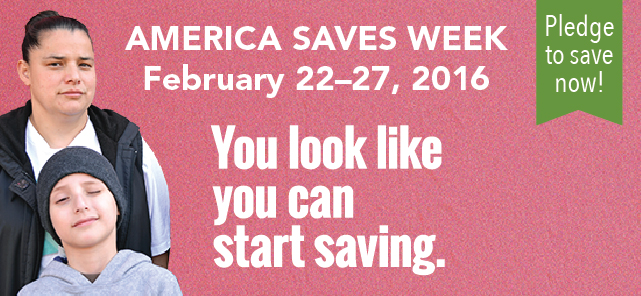
America Saves Week” is a campaign managed by the nonprofit Consumer Federation of America. This organization uses the principles of behavioral economics and social marketing to abet savings in low- to moderate-income households. The ultimate goal is to build wealth.

This year’s dates for “America Saves Week” are Feb. 22 to 27.

This mission aligns with the Mission Promise Neighborhood’s aim to build family economic success in the low-income Latino community. This is especially true of the two-thirds of immigrants, as they first need to learn the rules of money in this country to be put on the path to a better life for their family.

There is a definite need for education when it comes to household finances across the nation. This is showcased in the ninth annual “America Saves Week” survey, released today, which found that just 40 percent of U.S. households report good or excellent progress in meeting their savings needs.

Other data from the survey:

  • Saving at least 5 percent of one’s income (49 percent)
  • Saving enough for retirement, with a “desirable standard of living” (52 percent)
  • Automatic saving outside of work (43 percent)
  • No consumer debt (38 percent)

It’s not all bad news.

The survey indicated that two-thirds of Americans are making at least modest savings progress, with 70 percent reporting at least some progress in meeting savings needs.  There were 66 percent of respondents stating that they were saving at least some of their income, while 63 percent reported having an adequate emergency fund to pay for unexpected expenses such as car repairs or unexpected doctor visits – bills that seem to pop up each month.

Director Kathy Stokes of the American Savings Education Council explains the need for Americans to save as follows: “Saving just a small amount can add up over time. ‘America Saves Week’ is a great time to encourage people to start saving for retirement, even if the amount seems small.”

Part of the coaching of Mission Promise Neighborhood clients is to get them to understand how a $5 cup of coffee can add up over time. Save that $5 and see what happens after a month … or after a year.

There has been definite impact, with free workshops and one-on-one coaching leading to 332 Mission Promise Neighborhood families reporting positive financial outcomes in 2015. This is based on a formula with the acronym DISC: reducing Debt, increasing Income and Savings, and bettering Credit.

As we celebrate “America Saves Week,” this is the ideal time to make a budget and a long-term plan for your family.

Are you a Mission Promise Neighborhood family interested in free one-on-one financial coaching in San Francisco? Contact MEDA at (415) 282-3334 ext. 101; financialed@medasf.org.

____________________________________________________________

About Mission Promise Neighborhood
The Mission Promise Neighborhood is a citywide community partnership that was created to support kids and families living, working, and attending school in the Mission District. It brings together schools, colleges, community organizations and community leaders to help kids graduate and families achieve financial stability.

Read More

Blog

Most of us have fond memories of reading in the library as a youngster, and with February designated as “National Library Lovers’ Month,” this is the perfect time to reflect on the importance of reading in everyone’s lives. “National Library Lovers’ Month” is a celebration of school, public and private libraries of all types.

At Bryant Elementary School — one of two elementary schools in the Mission Promise Neighborhood — Family Success Coach Dannhae Herrera-Wilson (photo, center) knows that not all Mission Promise Neighborhood families have the tools to foster reading in the home.

“It’s vital that parents take an active role by reading to their children at a young age. This creates a love of books, and simultaneously builds language skills. This is especially important for children from immigrant families, of which there are many in the Mission Promise Neighborhood,” explains Herrera-Wilson.

As part of “National Library Lovers’ Month,” Herrera-Wilson recently brought a group of parents to the San Francisco Main Library.

None of the parents had ever set foot in this monumental building near City Hall at the Civic Center — or any library at all. With a collection of over 3.5 million books, this place can seem daunting. That’s why Herrera-Wilson set up the excursion, gave a tour and ensured parents obtained library cards.

AhmedTour participants included Safa, a native of Yemen, a country she explained  has no libraries for children. Safa applied for a library card, as did her two children. The oldest, her son Ahmed (pictured with his new library card), attends Bryant Elementary School. Safa is looking to start ESL classes at City College.

MaryRose, originally from the Philippines, was also in attendance. MaryRose’s daughter, an ardent reader named Aubry, attends Bryant Elementary. The youngest daughter, 4-year-old Nikki, is looking to start Transitional Kindergarten. “This is a great place. Thank you for bringing us here!” stated MaryRose.

Another parent taken to the library was Luis, originally from Guatemala. The youngest of six children, Luis had only made it as far as third grade because to needed to work the land as a way to help his family survive. Luis’ daughter attends Bryant Elementary. He explained why he took this trip as follows: “I want to get my library card so that I can get books in Spanish and read to my daughter, and she can read books in English to me. I feel like I am learning, just like her. I plan to return with my two children and make it a family experience.”

Herrera-Wilson also made sure to avail the parents of the venue’s growing eLibrary, especially eLearning materials that can assist students. This ties into Making Connections, a digital literacy course for parents that teaches how to use myON, an online reading platform for students. Last fall, the Mission Promise Neighborhood was asked to partner with SFUSD to lead the Making Connections program. Ana Avilez, a mother to two young children of her own, now spearheads this initiative, bridging the eLearning divide for Mission Promise Neighborhood families. Ana builds courses for parents and goes directly into schools to provide access to supplementary tools for the home, so that all students can continue building their literary skills.

Such work is vital, with the statistics showcasing the need for families. At an early age, only 8.6 percent of 3-year-olds in the Mission Promise Neighborhood meet Desired Results Development Profile (DRDP) standards for English-language ability. Once in elementary school, 15 percent of third-grade students (compared to 48 percent in SFUSD overall) score at or above proficiency in English-language arts, while 22 percent of fifth-grade students (compared to 55 percent in SFUSD overall) score at or above proficiency in the same category.

Today’s excursion was a step in the right direction, Herrera-Wilson acting as a connector to resources, as she does every day. As with any movement, those initial steps can lead to much bigger things, especially as participants go back in the community and tell of their experience.

Summing up why this outing was so important to Mission Promise Neighborhood families, Herrera-Wilson, a first-generation immigrant from Nicaragua, stated, “My desire to advocate for, empower and work with low-income families, immigrant families and multicultural families is fueled by my strong conviction that access to education is a human right regardless of race, or economic or legal status. I particularly enjoy working with women and children because I witness their vulnerability and at the same time recognize their potential, which can be beyond their imagination.”

____________________________________________________________

About Mission Promise Neighborhood
The Mission Promise Neighborhood is a citywide community partnership that was created to support kids and families living, working, and attending school in the Mission District. It brings together schools, colleges, community organizations and community leaders to help kids graduate and families achieve financial stability.
Read More

2069-02192016_FTP-ITIN Pilot Program Social Media_blog_640x295px

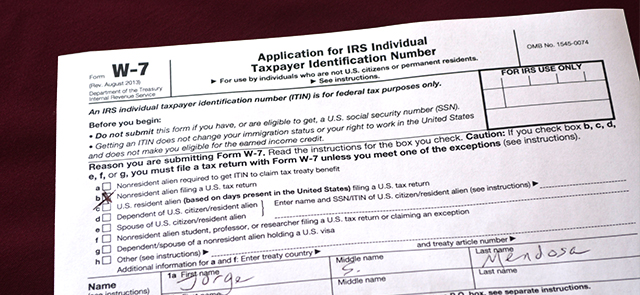
MEDA Tax Program Manager Max Moy-Borgen received some exciting news when contacted by the Internal Revenue Service (IRS) last December. It turns out that MEDA had been chosen for an innovative Individual Taxpayer Identification Number (ITIN) pilot program – just one of three sites in the nation selected. MEDA is the lead agency of the Mission Promise Neighborhood.

A nine-digit ITIN is a tax-processing number issued by the IRS so that people working in the U.S. can file a federal tax return without a Social Security Number.

Moy-Borgen knew that his years of building four culturally competent Volunteer Income Tax Assistance (VITA) sites in San Francisco had led to this honor, with free tax prep for Mission Promise Neighborhood families a big part of the services offered.

The gist of the pilot program is that MEDA’s status as a Certified Acceptance Agent (CAA) for the IRS has been expanded. This means that whereas before a dependent’s original passport or National ID Card would need to be mailed to the IRS with an ITIN application, photocopies of either of these documents will now be accepted. Before this pilot program, photocopies sufficed solely for primary and secondary taxpayers.

The genesis of this prospective streamlined process is based on the IRS having confidence in MEDA’s best practices around free tax preparation in San Francisco. This includes ITIN preparation, for which MEDA annually assists about 200 clients.

ITIN clients will benefit in two ways:

  • They will now negate the risk of losing their dependents’ original documents – a nightmare situation for anyone. Moy-Borgen has seen such unfortunate incidents in the past, with the IRS claiming they never received a client’s original passport or National ID Card.
  • What is currently a three- to four-month process will now be expedited. The reason is that just one point of contact, a supervisor in the IRS’s Austin, Texas office will be receiving the ITIN applications from MEDA, offering priority to these color-coded applications coming from the organization. Think of it as direct service rather than the possibility of getting lost in a bureaucratic maze.

It’s not surprising that the IRS is looking to streamline its ITIN-application process after two decades of the program’s existence. According to the IRS, in 2010 over 3 million federal tax returns were submitted using ITINs, with those filers paying $870 million in federal income taxes — a direct benefit to the federal coffers.

Explains Moy-Borgen of the need, “We explain to our undocumented Mission Promise Neighborhood clients that ITINs are a path to citizenship, acting as a way to prove that they have been living and working the U.S. ITINs are a means to eventually obtaining a Social Security Number, and no longer being off the radar.”

ITINs can also be used in other ways. Under the U.S. Patriot Act, provisions mandate that financial institutions collect information on their customers’ identities, and an ITIN suffices to open interest-bearing accounts. Also, an ITIN holder can secure a driver’s license in some states. Additionally, an ITIN can be used to establish or improve credit through MEDA’s Secured Credit Card with Self-Help Bank, with financial institutions even starting to use ITIN’s as a way to open credit cards, loans and mortgages.

Moy-Borgen is hoping that with the anticipated success of this pilot program, expansion to VITA sites nationwide will occur next year.

He concludes, “MEDA is honored to be part of this ITIN pilot program and looks forward to working with IRS officials to further the needs of our undocumented clients.”

Are you a Mission Promise Neighborhood family ready to get your ITIN or taxes prepared? Call (415) 282-3334 ext. 178 for your appointment for free tax prep in San Francisco.

Special thanks to the City and County of San Francisco-Human Services AgencyUnited Way of the Bay Area and Bank of the West for helping low-income residents do their taxes at no cost.

____________________________________________________________

About Mission Promise Neighborhood
The Mission Promise Neighborhood is a citywide community partnership that was created to support kids and families living, working, and attending school in the Mission District. It brings together schools, colleges, community organizations and community leaders to help kids graduate and families achieve financial stability.
Read More

FTP-EITC Press Conference-Blog

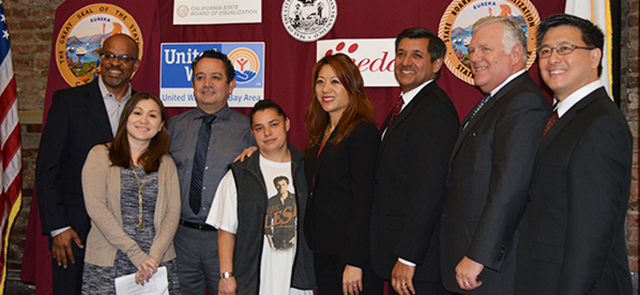
“Use it or lose it!” Those powerful words from State Board of Equalization Member Fiona Ma, at a press conference held at MEDA yesterday, underscored the importance of getting out the message about the state’s new Earned Income Tax Credit (EITC). Ma fears that if not enough Californians take advantage of this credit, politicians in Sacramento may not fund the program again.

California’s EITC supplements the federal EITC, but far too many low-income and working-class families are unaware this new credit now exists – and may be missing out on as much as $2,653 added to their 2015 tax refund.

A grouping of local and state elected officials were accompanied by nonprofits United Way of the Bay Area and MEDA at yesterday’s event. MEDA is the lead agency of the Mission Promise Neighborhood.

Executive Director Luis Granados first welcomed everyone to Plaza Adelante, the main venue for a quartet of MEDA VITA sites that now comprise the largest free tax preparation program in San Francisco. Last tax season, 4,000 tax returns were prepared for free, with $4.5 million returned to the community. The demand for free tax preparation remains equally strong this year.

Explained Granados of the power of the EITC, “With some of our families eligible for thousands of dollars of Earned Income Tax Credits, this is a large percentage of their annual household income.”

As an example of the above, MEDA client Karina Acevedo (photo, fourth from left), a resident of the Mission Promise Neighborhood footprint, was on hand to share her experience. Karina first came to MEDA in 2013 to get her taxes prepared for free. MEDA’s tax team corrected an issue from the past, getting Karina a $2,000 tax refund … but there was more work to do.

It seems Karina had credit accounts in collections, rent that had tripled in the local housing crisis, and a son in elementary school with special educational and health needs. The Mission resident was given free one-on-one coaching, opening a Secured Credit Card to rebuild her credit score, sticking to a budget and now having saved thousands, and opening a Kindergarten to College savings account for her son, Chuy. The catalyst for this bettering of her life was simple: she came to a VITA site to get her taxes prepared for free and was made aware of the EITC for which she qualified. Family economic success is now on the horizon for this Mission Promise Neighborhood family.

Karina showed her appreciation for the joint effort that made this all happen by stating, “I want to thank MEDA, the State, the City and United Way of the Bay Area for working together to make a better life possible for my family. I encourage all families to come to MEDA to do their taxes, get EITC credits and access the many other free services available.”

State Treasurer John Chiang knows firsthand the power of savings. Not only was he once a tax law specialist with the IRS, but Chiang explained to the audience today that his father managed to save a few dollars each week, despite the family’s budget being tight. Chiang saw that money grow exponentially over the years, and he now wants other families to harness the power of savings – especially via California’s EITC — to make that occur in their household. Chiang was adamant that leadership must be responsive to make this happen.

EITC Press ConferenceSpeaking on behalf of State Controller Betty Yee, Director of External Affairs John Kessler (photo, right) told of Yee’s strong belief that the state EITC is a game changer, especially as a complement to VITA sites with volunteers well versed in the needs of the low-income community.

San Francisco Treasurer José Cisneros (photo, left) was up next, telling how San Francisco’s own EITC, called Working Families Credit, aims to supplement the federal and state credits. Qualifying low-income families can earn a one-time-only additional credit of $100 if paid via a paper check or $250 if paid by direct deposit. (The program was designed to encourage families to avoid check-cashing fees by opening bank accounts.)

To showcase how their “Earn It! Keep It! Save It!” program is creating family economic success in the region and throughout the state at 200 sites, United Way of the Bay Area Chief Operating Officer Eric McDonnell explained that communities need anchor institutions. McDonnell noted that MEDA’s Plaza Adelante serves as such an anchor institution for San Francisco’s Mission District, thereby ensuring that families have access to all of the services and tools they need to achieve economic stability.

Today’s press conference was a vital step in getting out the word that the California EITC is an important means of fostering fiscal stability for low-income and working-class families. This subject’s importance was indicated by the fact that so many pivotal players in this arena came together today to put forth a unified message.

“It takes a partnership. One voice,” summed up Ma.

Are you a Mission Promise Neighborhood family ready to get all of your EITC tax credits? Call (415) 282-3334 ext. 178 for your appointment for free tax prep in San Francisco.

Special thanks to the City and County of San Francisco-Human Services AgencyUnited Way of the Bay Area and Bank of the West for helping low-income Mission Promise Neighborhood families do their taxes at no cost.

Photo gallery.

____________________________________________________________

About Mission Promise Neighborhood
The Mission Promise Neighborhood is a citywide community partnership that was created to support kids and families living, working, and attending school in the Mission District. It brings together schools, colleges, community organizations and community leaders to help kids graduate and families achieve financial stability.
Read More

2053-02112016_CRE-Iantorno-Press-Conference-Social-Media_blog_640x295px1

Christopher Gil
Senior Content Marketing Manager
Mission Economic Development Agency
(415) 282-3334 ext. 152
cgil@medasf.org

Tracy Parent
Organizational Director
San Francisco Community Land Trust (SFCLT)
(415) 399-1490
tparent@sfclt.org

FOR IMMEDIATE RELEASE
Feb. 10, 2016

MEDA and SFCLT Save Five At-Risk Properties Using City’s Small Sites Program
Work with MOHCD to save longtime San Francisco tenants from Ellis Act evictions

San Francisco, Calif. — The Mission Economic Development Agency (MEDA) and the San Francisco Community Land Trust (SFCLT) today announced the successful purchase of five apartment buildings from the Iantorno family, thereby averting prospective speculation. The properties’ tenants include an artist, a war veteran, seniors and people of color — 13 low-income households at risk of Ellis Act evictions, some after decades of residency. The Iantorno family admirably agreed to pause the process and sell to nonprofits.

Sellers Sergio and Paul Iantorno explained the Small Sites sale as follows: “As longtime owners of residential property in the Mission District, we are very pleased to be able to share in the City’s vision of preserving and increasing its stock of affordable housing. As a result of guidance from and cooperation with the Mayor’s Office and Supervisor Jane Kim, the Iantorno family was able to transfer five properties to the Mayor’s Small Site Acquisition Program. These sites were initially subject to Ellis Act proceedings; however, over the last nine months, we were able to iron out the terms for this transaction to the benefit of the tenants (and future occupants) of these buildings. This was accomplished in no small part through the collaboration and guidance from the Mayor’s Office and the financing role of the Mayor’s Office of Housing and Community Development (MOHCD). We thank buyers MEDA and SFCLT for their cooperation in achieving this mutually satisfactory outcome.”

Of the five rent-controlled properties, comprising 19 households total, MEDA purchased two properties in the Mission Promise Neighborhood footprint, 642 Guerrero (Mission/four units) and 380 San Jose (Mission/four units), while SFCLT acquired 70-72 Belcher (Duboce Triangle/five units), 1684-1688 Grove (NoPa/three units) and 1353-1357 Folsom (SoMa/three units).

All properties were purchased with financing from the City and County of San Francisco’s Small Sites program, administered via the Mayor’s Office of Housing and Community Development (MOHCD). The program was launched as a pilot in June 2014, with just $3 million in funding. Since that time, the City has financed approximately $20 million toward saving small buildings.

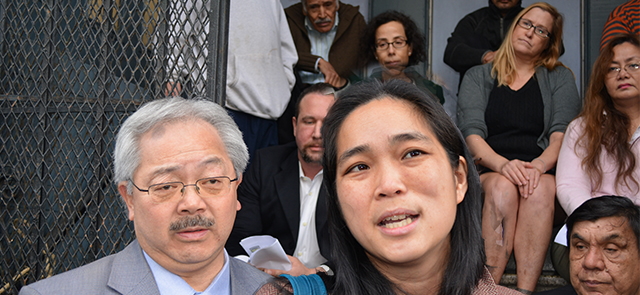
Mission Promise Neighborhood Director of Community Real Estate Karoleen Feng (photo, foreground) notes, “We applaud the City of San Francisco and Mayor Lee for their commitment to taking the Small Sites program beyond its pilot stage, and for using the program as one valuable tool toward solving the displacement crisis in the Mission Promise Neighborhood footprint, and citywide.”

Tenants at most risk of eviction are those living in buildings of fewer than 20 units. These smaller properties are the majority of buildings in many low-income San Francisco communities. One example is the Mission District, particularly hard hit by the city’s housing crisis. Per MEDA’s report, “An Assessment of Housing and Housing Affordability in the Mission Promise Neighborhood,” of the Mission’s 24,924 housing units, 17,195 are one- to 19-unit buildings. That is 69 percent of all properties in the neighborhood – the type of units that have seen the highest eviction rates in the San Francisco.

A press conference is being held tomorrow at 11am at one such building in SoMa, 1353-1357 Folsom. Tenants in this three-unit property have been fighting for 10 years to stay in their homes, enlisting the aid of Tenderloin Housing Clinic. The struggle was ended when SFCLT successfully used the City’s Small Sites program to buy the building.

Joining MEDA and SFCLT in this celebration of affordable-housing preservation will be: Mayor Ed Lee (photo, front left); an Iantorno family representative; residents Rene Yanez and Teresa Dulls; South of Market Community Action Network’s Angelica Cabande; Randy Shaw from Tenderloin Housing ClinicMOHCD; Paulina Gonzalez from California Reinvestment CoalitionEnterprise Community Partners’ Justin Chen; Fernando Marti from Council of Community Housing Organizations; and Tommi Avicolli Mecca of Eviction Free San Francisco.

Concludes Organizational Director Tracy Parent of SFCLT, “The Community Land Trust is proud to have been able to create a win-win situation for the owner and tenants of these five apartment buildings, and we look forward to working with other apartment building owners who want to sell to the nonprofit community to stabilize existing residents and neighborhoods, while ensuring these homes remain permanently affordable for future households.”

See photos.

Mission Economic Development Agency

About Mission Economic Development Agency (MEDA)
MEDA is the lead agency of the Mission Promise Neighborhood. Rooted in the Mission and focused on San Francisco, MEDA’s mission is to strengthen low- and moderate-income Latino families by promoting economic equity and social justice through asset building and community development. medasf.org

SF_Community-Land-Trust

About San Francisco Community Land Trust (SFCLT)
SFCLT is a membership-based organization whose mission is to create permanently affordable, resident-controlled housing for low- to moderate-income people in San Francisco through community ownership of the land. The Land Trust acquires existing rental buildings in which lower income tenants are at risk of displacement or rent-controlled units are at risk of losing their affordability, and converts the building into a housing cooperative in which the tenants share ownership, while the Land Trust maintains ownership of the land. sfclt.org

Read More

Mission-Bit-Blog

Sometimes you meet someone and immediately realize that your mission and core values are one in the same. That serendipitously occurred last summer between Mission Bit CEO Stevon Cook and MEDA Technology Training Coordinator Leo Sosa. MEDA is the lead agency of the Mission Promise Neighborhood.

Sosa had been invited to speak about MEDA’s free Mission Techies program to Mission Bit’s summer 2015 cohort. The venue was the Valencia Street campus of City College of San Francisco. When Sosa walked in the room, he discovered 20 youth from different backgrounds — but there were no Latinos.

After the session, Sosa shared with Cook the story of MEDA’s Mission Techies, putting Latinos from underresourced communities on the path to tech careers. This is an important part of students being supported on a cradle-to-college-to-career continuum, with Mission Techies being taught IT skills while simultaneously being encouraged to continue their higher education.

Cook then explained how Mission Bit focuses on teaching coding to high school seniors, running “camps” on that topic right in the schools.

That’s when the brainstorming began.

They knew there needed to be crossover for their programs, as both share the goal to close the diversity gap in tech. While at times this seems like a Herculean task, Sosa and Cook’s passion for their respective work provides them the impetus to push the work forward.

The result? Sosa currently shepherds some of the Mission Techie Latinos into the Mission Bit coding program, and the Mission Techies curriculum now incorporates elements of Mission Bit.

The initial joint project was for the fall 2015 cohort of Mission Techies to refurbish 10 MacBook Pros for the Mission Bit program. That number has now grown exponentially — the Techies current winter 2016 cohort is in the process of refurbishing more than 150 computers, as Mission Bit received a large donation of laptops from tech company Symantec.

The second project will be having Mission Bit run their five-week Hack Reactor coding camp at MEDA’s Digital Opportunity Center, starting next week. This camp is an immersive, JavaScript-focused coding academy.

Mission Bit and MEDA’s Mission Techies have each been making a difference in the lives of young people in the community.

Together, the synergy of these organizations’ collaboration will make that impact all the greater in San Francisco’s Mission Promise Neighborhood.

Interested in the Hack Reactor coding camp starting Feb. 8 at MEDA, a Mission Promise Neighborhood parnter?

Call MEDA’s Leo Sosa at (415) 282-3334 ext. 105; tech@medasf.org.

____________________________________________________________

About Mission Promise Neighborhood
The Mission Promise Neighborhood is a citywide community partnership that was created to support kids and families living, working, and attending school in the Mission District. It brings together schools, colleges, community organizations and community leaders to help kids graduate and families achieve financial stability.
Read More

2025-01292016_EVN-Beatriz Antunez Salesforce Webinar Social Media Images_blog_640x295px

Data. Information. Facts.

No matter how you say it, sharing data can be powerful, but it takes the right opportunity and a team of experts to make that a reality. That opportunity came from the Department of Education three years ago, with the creation and funding of the Mission Promise Neighborhood – a federal initiative to support children on a cradle-to-college-to-career continuum.

The strategy
As Director of Evaluation for the Mission Promise Neighborhood, Monica Lopez has ensured that her team is at the vanguard of innovation as it pertains to emerging data-sharing technologies.

There was an immediate need for MEDA, the lead agency, to research options for data sharing among partners of the initiative. A flexible technology was required to create a robust platform to share information about clients in San Francisco’s Mission District.

That’s when Technology/Data Systems Manager Michelle Reiss-Top put her know-how into action, starting the momentum of an impactful strategy that is still unfolding. Reiss-Top knew that Exponent Partners offered a superior product that could be integrated into Salesforce. She also knew that Exponent Partners’ founder, Rem Hoffman, had a nonprofit background and had built his platform with community-based organizations in mind.

In March 2015, a customized data-sharing platform was launched. Since that time, 75 staff at 13 Mission Promise Neighborhood partner agencies have been given a license and been trained on how to use Salesforce as a referral tool – trainings spearheaded by Reiss-Top at MEDA’s Plaza Adelante and in the nonprofits’ offices.

The webinar
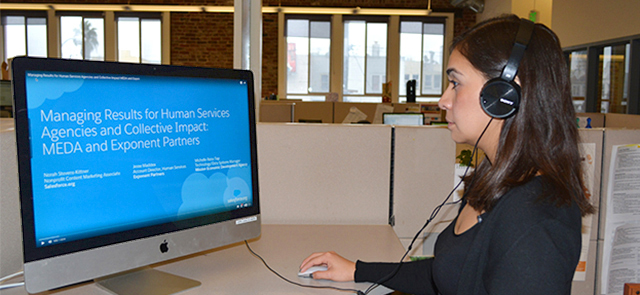
Reiss-Top took her training strategies to the next level on Tuesday, being an integral part of a 60-minute Salesforce webinar called, “Managing Results for Human Services Agencies and Collective Impact: MEDA and Exponent Partners.”

Salesforce described this live event as follows:

“Human Services agencies are increasingly looking to work collaboratively with other organizations to tackle society’s most difficult challenges, through collective impact initiatives like the Promise Neighborhoods. In this live webinar, hear how Mission Economic Development Agency (MEDA) uses both Exponent Case Management and Salesforce Communities to bring together a network of agencies, community-based organizations and schools to help families in the Mission Promise Neighborhood thrive.”

First up was Jesse Maddex of Exponent Partners, who educated the audience of 150 via a high-level view of his company’s platform as a solution for nonprofits’ case management.

Maddex next introduced Reiss-Top to bring the product’s use to life – especially its use among a diverse community of organizations serving a targeted population. Maddex had asked her to join him because he deemed as unique the use case being implemented among Mission Promise Neighborhood partners. He also valued the scope of the project being undertaken.

After explaining how the shared database works, Reiss-Top answered some questions. The common theme was security concerns, especially as related to the Health Insurance Portability and Accountability Act (HIPAA). These fears were allayed by Reiss-Top, as she explained that Salesforce is HIPAA compliant, plus users can build in higher levels of security into the platform, which she has done for the Mission Promise Neighborhood.

Reiss-Top also knows that sharing this model is important. She describes her being part of the webinar as follows: “We can use this technical solution to help staff take action on the data we collect from our clients. It highlights their needs and relieves the staff of the burden of searching through the data looking for clients, saving staff time and providing more meaningful interactions with clients.”

What are the next steps for the Mission Promise Neighborhood evaluation team?

Explains Lopez, “Mission Promise Neighborhood’s aim is to have partners become active users, consistently updating information so that this system is a living, breathing thing.”

Watch the Salesforce webinar.

____________________________________________________________

About Mission Promise Neighborhood
The Mission Promise Neighborhood is a citywide community partnership that was created to support kids and families living, working, and attending school in the Mission District. It brings together schools, colleges, community organizations and community leaders to help kids graduate and families achieve financial stability.

Read More

2007-01262016_FTP-Tax Season Room 203 Social Media_blog_640x295px

EITC: those four letters sure mean much to the low-income community of the Mission Promise Neighborhood. The term is so powerful that there’s even a day named for it. That would be “Earned Income Tax Credit Awareness Day,” which is today.

“Earned Income Tax Credit Awareness Day” is the brainchild of the IRS and is a federal strategy to foster a national grassroots movement to ensure those most in need know that EITC is a major tool for asset building.

The background
Enacted in 1975, there have been four legislative expansions of the EITC. In this time of bipartisan strife on the Hill, it is interesting to note that those on both sides of the aisle have championed this safety net that rewards work. Take the fact that three decades ago President Reagan, a conservative, actually proposed an expansion of EITC, knowing its value.

A Center on Budget and Policy Priorities October 2015 report, “EITC and Child Tax Credit Promote Work, Reduce Poverty, and Support Children’s Development, Research Finds” showcased the impact of the EITC.

The study claimed: “These working-family tax credits lifted 9.4 million people out of poverty in 2013, including 5 million children, and made 22 million other people less poor. And by encouraging work, the EITC and CTC have an additional anti-poverty effect not counted in these figures.”

The report also provided data on how the following items had been positively impacted, and are vital to our Mission Promise Neighborhood families:

  • Improved infant and maternal health
  • Better school performance
  • Greater college enrollment
  • Increased work and earnings in the next generation
  • Social Security retirement benefits

U.S. Census data from 2014 show a $75,604 median household income in San Francisco. Conversely, our Mission Promise Neighborhood survey conducted in the same year concluded that 76 percent of respondents in that community made under $35,000 per year, with 90 percent making under $50,000 per year. Most of these families would qualify for the EITC.

The maximum amount of EITC this year is:

  • $6,269 (three or more qualifying children)
  • $5,572 (two qualifying children)
  • $3,373 (one qualifying child)
  • $506 (no qualifying children)

On a statewide level, California now offers Cal EITC, starting with the 2015 filing year. While the income levels for eligibility are much lower than the federal income levels, those who do qualify can possibly get another $2,653 added to their refund.

To meet local need, San Francisco now offers a Working Families Credit, whereby qualifying low-income families can earn a one-time only additional credit of $100 if paid via a paper check or $250 if paid by direct deposit. The program was designed to encourage families to avoid check-cashing fees by opening bank accounts, which MEDA can do for clients who do not have one. MEDA advises all clients to apply, even if they are unsure if they qualify for this credit.

MEDA’s free tax preparation grows
MEDA, the lead agency of the Mission Promise Neighborhood, runs what is now the largest free tax preparation program in San Francisco, with clients seen at Plaza Adelante and three other Volunteer Income Tax Assistance (VITA) sites in the city that the nonprofit oversees.

It’s interesting to note the history of VITA. Back in 1970, Gary Iskowitz was doing graduate work and teaching tax law at Cal State–Northridge, while also working for a tax agency. Iskowitz saw a growing problem with questionable tax preparers scamming low-income people, so he approached the dean at Cal State–Northridge with a plan to give him 10 students to whom he would teach a 24-hour class in tax preparation, at no cost to the university. In return, Iskowitz asked the university to nullify the students’ tuition for the class, as they became volunteers doing free tax returns for low-income community members. People lined up around the block waiting for this free tax preparation service.

Iskowitz’ idea became the success story for what had started in 1969 as a small federal program of the IRS. Decades on, millions now receive free tax prep from volunteers nationwide, with sites ranging from nonprofit social services centers, such as MEDA’s Plaza Adelante in the Mission, to military bases.

At MEDA’s four VITA sites, Tax Program Manager Max Moy-Borgen sees his team of staff and volunteers harness the power of the EITC every day.

Moy-Borgen explains, “With some of our Mission Promise Neighborhood families eligible for over $6,000 from the federal EITC, this is a major percentage of their annual household income. The EITC is a game changer when it comes to family economic success for the low-income community, especially when now supplemented by the new California and San Francisco tax-credit programs.”

Moy-Borgen also sees the gaps for Mission Promise Neighborhood families. For example, undocumented Individual Taxpayer Identification Number (ITIN) holders are not eligible for such credits. The same goes for cash-income only clients with regards to the Cal EITC only; furthermore; most of the credit usually goes to reduce the client’s self-employment tax burden. For the San Francisco Working Families Credit, you do not qualify without at least one eligible dependent child on your federal income tax return. This combination makes it difficult for some low-income, single clients without dependents to make ends meet, as the income limit and credit amount is significantly reduced without children.

Regardless of their situation, Moy-Borgen’s team is well versed in all IRS situations that pertain to the low-income community, making sure maximum refunds are obtained for Mission Promise Neighborhood clients. This led to over $4.5 million being returned to the community last year … with 2016 looking equally impactful.

Are you a Mission Promise Neighborhood ready to get your EITC tax credits? Call (415) 282-3334 ext. 178 for your appointment for free tax prep in San Francisco.

Special thanks to the City and County of San Francisco-Human Services AgencyUnited Way of the Bay Area and Bank of the West for helping low-income residents do their taxes at no cost.

____________________________________________________________

About Mission Promise Neighborhood
The Mission Promise Neighborhood is a citywide community partnership that was created to support kids and families living, working, and attending school in the Mission District. It brings together schools, colleges, community organizations and community leaders to help kids graduate and families achieve financial stability.
Read More

MONTHLY ARCHIVE

Contact

Email
info@missionpromise.org
 
Phone
(415) 569-2699
 
Address
2301 Mission Street, Suite 304
San Francisco, CA 94110

Newsletter
Get the latest news and information on
what’s happening in your neighborhood.

SIGN UP