Linkedin at O'Connell-BlogWhether you call it a resume or a CV, most jobseekers have learned over time the power of having a robust LinkedIn profile to supplement, or even supplant, that piece of paper routinely sent to a job recruiter or handed in at the start of an interview. By robust, that means having plenty of connections, glowing recommendations and direct links to showcase your experience in your field of choice. With 40 million students and recent grads on LinkedIn, this is definitely the place to be seen, even for those just entering the job market.

With so many great bells and whistles added over time, it is important to optimize one’s LinkedIn profile.

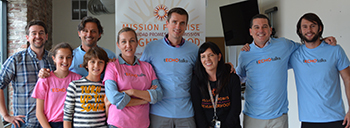
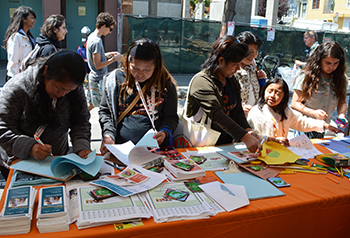
Luckily for the students of John O’Connell High School, a score of LinkedIn volunteers dropped by last week to give insider tips to foster these Mission Promise Neighborhood (MPN) young adults being ready for success after graduation, whether that means an immediate entry into the labor pool or heading off to college.

The volunteers are part of LinkedIn for Good, LinkedIn’s social impact team whose mission is to “connect underserved communities to the networks, skill, and information they need to succeed, ultimately creating economic opportunity for every member of the global workforce.” This goal was definitely reached at the event.

The trio of specific interactive workshop goals for the event were:

  • Create Professional Identity with a rock star LinkedIn profile.
  • Apply for Opportunity to find skills-related employment via LinkedIn.
  • Build a Network to reach out to professionals the students aspire to be like.

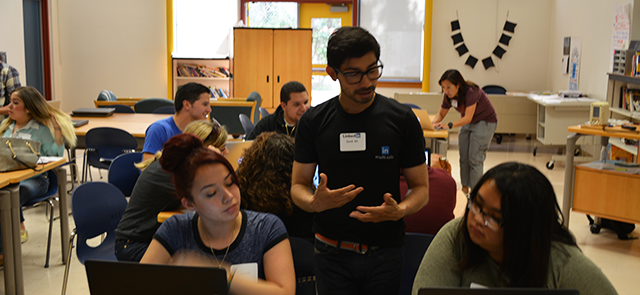
To meet the niche of students’ career paths, groups were broken into: culinary arts and entrepreneurs; building and construction; and Health and Behavioral Sciences. Workshop leaders peppered the conversation with questions aimed at getting the students to determine their career aspirations. For example, “Who is your role model?” Determining your interests is the first step to creating a LinkedIn profile that makes sense.

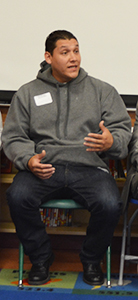
In one session, student Joilene explained what she had learned as follows: “I had put together an antique car show to raise money for charity. It was a success, so the LinkedIn volunteer told me this is definitely something I needed to put on my profile. I never would have thought of that!”

MEDA’s Laura Andersen, education manager for MPN, described the importance of today’s event as follows: “Today, our fellow community members at LinkedIn shared their time and knowledge with our O’Connell seniors. The afternoon built upon the great college and career work already happening in the school through excellent individual coaching and workshops. We really appreciate these LinkedIn volunteers for taking the time to work with the community!”

Read More

1797-10062015_MPN_Chelsea Clinton_Raquel_Blog_640x295

Just five weeks shy of her thirteenth birthday when she headed to D.C. to live in the White House, Chelsea Clinton knows plenty about public life. That early experience was the impetus for her recently released first book, “It’s Your World: Get Informed, Get Inspired & Get Going,” a primer for adolescents looking to become more engaged in their community’s issues … and those of the world.

Now a socially conscious 35-year-old, Clinton is on a rigorous, 20-city book tour, with her stopping by the Mission Promise Neighborhood’s Everett Middle School on Tuesday. Hundreds of students packed the ornate school auditorium, as they eagerly awaited Clinton’s appearance.

Clinton’s book is already educating young readers on topics running the gamut from poverty and access to education to climate change and the struggle for gender equality. All proceeds from book sales are donated to the Clinton Foundation and other charities.

A roar of applause greeted Clinton as she took to the floor after being introduced by a trio of Everett students. She spoke of her background, being in a political world at a young age. Clinton also spoke about her early travels, mostly with her mother, to places such as Sub-Saharan Africa, where, as an adolescent, she saw abject poverty and knew the issue needed to be addressed.

Such experiences compelled Clinton to tackle penning her first book, which she advised is apolitical: “When I was a kid, I loved the book 50 Simple Things Kids Can Do to Save the Earth and remember wishing there were books like it on other issues I cared about. A couple of years ago, I realized there wasn’t a book–at least one I could find–for kids today that talked about some of the big issues in our world, what’s being done and what kids could do to help make our world healthier, safer and more sustainable. This book is my attempt to do that.”

1797-10062015_MPN_Chelsea Clinton Visit to Everett_Blog_640x295pxAfter Clinton’s talk, with students’ rapt attention, it was time for the latter to ask questions. One by one they came up to the microphone, asking such things as “How can we help endangered species?” and “How can we stop sexism?” The second question prompted Clinton’s longest answer. She explained to the shocked adolescents that there are 10 countries in the world where a woman cannot go outside without being escorted by a man. That in Massachusetts there is still a law on the books stating that a 12-year-old girl can be married, if her parents want that to occur. All in all, there were about a dozen questions for Clinton.

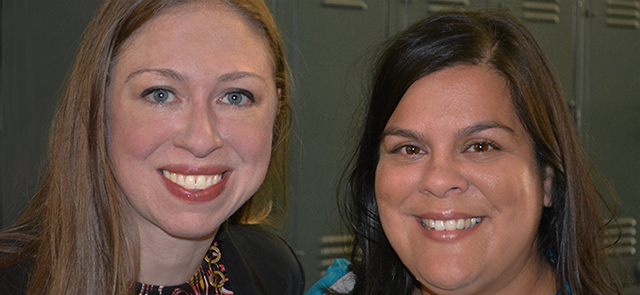
Stated Raquel Donoso (top photo, right), Mission Promise Neighborhood director, “We are honored that Chelsea Clinton came to a Mission Promise Neighborhood school to inspire our students. Every young person can help change the world, and now they know how they can start.”

To conclude the event, Everett’s principal, Lena Van Haren, gave Clinton an idea for a second book: to tell the story of a school looking to change the world.

That school? Everett, of course.

Read More

1644-08192015_FTP-Lauri Chin and Maged Nabawy_Blog_640x295px

After just five years, MEDA, the lead agency of the Mission Promise Neighborhood (MPN), now runs the largest free tax preparation program in San Francisco. While things are super busy during the first part of the year, with everyone trying to meet the April 15th filing deadline, there are still plenty of clients coming through the doors of Plaza Adelante, the Mission neighborhood center, throughout the rest of the year. 

The client need
The numbers, based on neighborhood surveys, tell the story: the majority of MPN families are defined as low- to moderate-income.

MEDA Tax Program Manager Max Moy-Borgen explains, “We have often seen that the paid tax preparers that our families seek out are focused on higher-earning individuals. This means preparers may not have known about certain credits or may have not correctly filed the taxes. Knowing the IRS laws, specifically as they meet the needs for our families, from tax credits to allowable deductions, is what allows our team to maximize refunds for our community. Some clients get 25 percent of their yearly income back as a refund. This money is vital for these families.”

Most refunds come from the Earned Income Tax Credit (EITC), a refundable tax credit for low- to moderate-income working individuals and couples. The amount of EITC benefit depends on a recipient’s income and number of children. The MEDA tax team is well versed in the EITC, plus all of the tax credits available to the low-income community. 

One perk of taxes being done at MEDA is that every tax return is checked by two preparers, as mandated by the VITA program.

“It is always good to have a second set of eyes to look at the numbers. This doesn’t happen at some tax services. We correct a number of returns that were incorrectly prepared elsewhere,” states Moy-Borgen. 

MPN’s multi-generation approach to services
MEDA Bilingual Bank Teller program graduate Angelica Colon-Chin, now starting a successful career as an employee of Wells Fargo at its downtown San Francisco branch, needed to do her taxes last winter. That’s when the organization’s Technology Training Manager Leo Sosa advised Angelica to head over to the “Taxes Plus: Go Further With MEDA!” room at Plaza Adelante, where her taxes could be prepared at no cost.

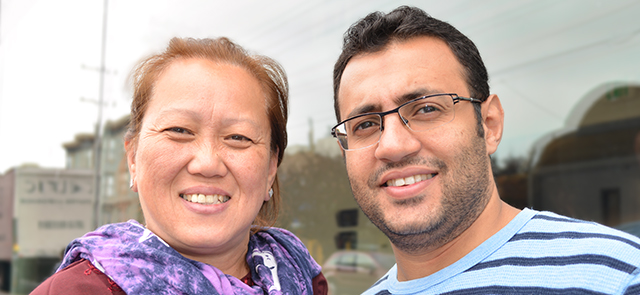
The young adult then told her aunt to do the same. So, Laurie Chin and Maged Nabawy headed over from their nearby Mission District residence to Plaza Adelante. While calculating their current year’s taxes, the astute preparer realized that the prior two years’ returns should be amended: it turns out that the prior tax preparer did not take into account the IRS’s “Nonresident Spouse Treated as a Resident” rule. This rule states that if, at the end of your tax year, you are a U.S. citizen or resident alien (even if you were not for the whole year) and married to a nonresident alien, you can choose to treat your nonresident spouse as a U.S. resident for U.S. Federal Individual Income Tax purposes.

This is an especially smart move if the overseas spouse did not have much income. Such was the case with Maged, who had been working in his native Egypt since 2011. When Maged’s income was added to Laurie’s earnings, they then got two times the standard deduction and personal exemptions on federal and state returns. The result? A $2,585 refund!

In this couple’s case, MEDA also worked with the nonprofit Bay Area Communication Access, as Laurie and Maged are both deaf and needed an interpreter for their tax sessions.

Laurie speaks of her experience at MEDA as follows: “Everyone was so nice. They set up an interpreter service for us, which was great. I was surprised at how easy the tax preparation was and it was amazing that it was free.”

It’s interesting to note that Laurie’s mother, Florence, later came to one of MEDA’s monthly Housing Opportunities sessions, this one a free workshop for first-time homebuyers.

This story showcases the service-integration model at MEDA’s SparkPoint center and with the partners of MPN, who often come together to provide multiple services to one family. It also exemplifies how a community of support can better lives, as it did for this family from the Mission Promise Neighborhood (MPN) footprint. MPN works on a two-generation approach, helping families succeed so students achieve.

In the case of this family, that became a three-generation approach.


Read More

MPN Education Forum 2015-Blog

“Today is a special day because this is the first step you are taking with your children as they begin a new school year,” enthusiastically stated Director, Mission Promise Neighborhood Raquel Donoso, as she welcomed a crowd of over 200 who packed the Salvation Army Mission Community Center on an abnormally hot August morning this past Saturday.

The Mission Promise Neighborhood (MPN) is a collaborative of over 20 partners, including the school district and mayor’s office, that have come together to make sure every family in the Mission has the resources to support their children’s learning. MPN is building a pipeline that begins at birth to make sure every child has medical care, attends an early learning program, is doing well in school, and graduates ready to attend college and begin their career.

Echoing Donoso’s comments was the next up to speak, Karling Aguilera-Fort of the San Francisco Unified School District. He spoke of getting your children off on the right foot for the 2015-16 school year, and that there were resources to help families succeed so that students achieve.

The City’s support was also showcased by Chief Deputy Director, Mayor’s Office of Neighborhood Services Derick Brown.

Following Aguilera-Fort was District 9 Supervisor David Campos. Originally from Guatemala, Campos explained his empathy for immigrant parents wanting their children to succeed. The Harvard and Stanford graduate spoke of the need to create a college-going culture at home, knowing that such support from his family fostered his achievements.

t was then time for families to break off into two information sessions: one for elementary school; and the other for middle/high school. The aim was to offer parents and students a roadmap for what to expect over the course of the school year, with a discussion on everything from mandated tests to the importance of attendance to planned meetings. Mission Graduates‘ promotoras (community outreach workers) facilitated the middle/high school workshop.

MPN Leadership Academy Manager Laura Olivas explained the impact of these classes as follows: “One mother of an adolescent advised me that she didn’t realize that a certain grade-point average was needed to be maintained by students. She now knew that fact and, more importantly, knew she needed to watch that GPA over the course of the school year.”

There were then sessions on issues of importance to MPN families, based on neighborhood surveys to determine stressors in the low-income Mission community. Causa Justa :: Just Cause advised on tenants’ rights. La Raza Centro Legal spearheaded immigration classes. Parents for Public Schools counseled on how to build a college-going culture at home.

Families who had a child under age five also received a tote bag with child development information, in English and Spanish, along with ideas for how parents can help promote their child’s development. The bag included an age-appropriate toy and books. Staff from Tandem, MPN’s literacy partner, attended the event and provided young children with books.

Liz Cortez and Ada Alvarado, of MPN’s early learning team, conducted an early care and education survey. Explains Cortez, “The goal of the survey was to get a sense of the community need for child care and parenting resources. What has been their experience? What would they like to be different? The information we received is vital to our advocacy efforts in improving access to slots and resources.”

After attending classes, each pre-registered family was given a backpack donated by the Salvation Army, Mission Lodge and the Golden State Warriors. The Mission Lodge and Walgreens came through and provided the backpacks’ offerings of a pouch with pencils/pens, books, calculators and more.

There was then lunch and time to pick up materials from partners who were tabling at the Education Forum, such as Good Samaritan Family Resource Center and Mission Neighborhood Health Center. Partner staff answered questions, with families now better informed than they had been just a few hours prior.

Summed up MPN Family Success Coach Manager Amelia M. Martínez C., “The Education Forum was a definite success. We know that families were offered the information they need so that MPN students can achieve. It’s going to be a great school year!”

Read More

Teresa Morales-Blog“I came from Mexico to this country as a teenager with my parents and 13 brothers and sisters. We lived in a labor camp and worked long hours in the fields of the Salinas Valley. After learning English, I was fortunate to get an internship with a local TV station. Thus began a rapidly advancing career in television and community-development programs, plus a hard-won degree in communications from UCSC. This personal history has given me great empathy for the hopes for a better life sought by the mostly immigrant population of the Mission that MPN serves. Now tasked with the oversight of the grassroots outreach for MPN, I work to ensure that our group of community outreach workers, or promotoras, have the tools and information needed to connect the Mission District’s low-income Latinos to the free services available from our network of neighborhood partners. MPN’s goal—and my goal—is to help our families obtain economic success, so that their children can achieve at school. That is the winning formula of the MPN team, of which I am privileged to be a part.”

Read More

Shared Database-Blog

“The price of light is less than the cost of darkness.”
–Arthur C. Nielsen, market researcher and founder of ACNielsen

The need and challenge
Michelle Reiss-Top (photo, top right) definitely understands the aforementioned quote about data. MEDA’s technology and data systems manager was tasked with implementing and optimizing Salesforce internally–a Herculean task by itself. Imagine then being asked to do so for a cadre of neighborhood partners.

Good thing Reiss-Top showcases over 12 years experience implementing systems and making processes more efficient, user friendly and economical. This is complemented by her experience in the nonprofit and human services arena, with a focus on bringing innovative technology to the service providers of San Francisco’s Mission District.

The latest challenge for the Salesforce expert was to bridge the data-collection gap among service providers of the Mission Promise Neighborhood (MPN), a citywide community partnership with the goal of ensuring that every Mission District family is economically prosperous, and that every child succeeds in school and graduates from college. MEDA serves as lead agency of this federal initiative.

Reiss-Top was aware that there was no cookie-cutter application for data sharing among 11 MPN partners. MEDA Evaluator Elisa Baeza had the laborious assignment of standardizing partner data she collected. These data were in Excel files, but no style guide had ever been created, leading to fellow MEDA Evaluator Severin Saenz having to always clean up files for consistency (e.g., dates being entered in a consistent manner). The information would then be sent to the U.S. Department of Education, with the biggest drawback being that partners would never see what other organizations were doing and which clients they were jointly serving.

The outcome
The good news is that with the completion of this intensive, four-month project, consistent data collection has become a reality.

The other good news is that there are now important insights provided by these partner data that have been collected. Take the case of MPN partner Mission Graduates, which assists high schoolers in being college ready via mentorships. The organization can now see if the student’s parents have or have not accessed other neighborhood services relating to family economic success.

On a grand scale, information can now be garnered on the status of approximately 600 MPN families. The MPN team can now also know how many clients are being served by multiple agencies, plus how much time these families are spending accessing various services. Later, there will be matching of these data with students’ school outcomes. There are built-in security measures to protect client confidentiality.

There had some initial forays into the world of data sharing among partners. Explains Reiss-Top of the lessons learned from these attempts: “The MEDA evaluation team learned some valuable lessons. The first thing we did was develop a questionnaire for partners to learn the data-collecting reality at each organization. We asked what’s missing and what would add value. This was imperative.”

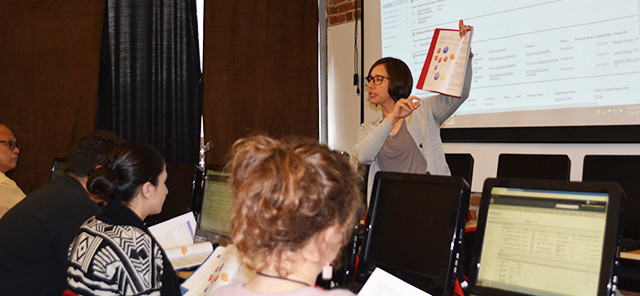
Each partner’s data coordinator receives training at MEDA. The initial training was held last Thursday in Plaza Adelante’s computer lab. Training topics include: avoiding duplicate records; quickly replicating service records; a holistic view of a household’s services and needs; reports, dashboards and ways to request more analysis and support.

As a reference tool, Reiss-Top has created a comprehensive, 44-page manual. There will later be a one-on-one training from a MEDA evaluation team member at the partner’s office, using that organization’s data.

“MPN’s hope is that each organization will find synergy with a number of partners. We have 100 community member licenses for partner users of different types. A ‘light’ user, like an executive director, can access reports. A program manager can quickly communicate with the community to share resources or expertise. This is a powerful tool. The partners at our first demo clapped when they saw their services and clients on a dashboard!” concludes an enthusiastic Reiss-Top.

Read More

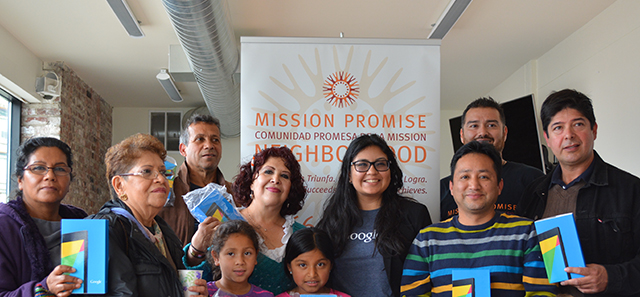
GC-Blog“I need to understand technology so that I can help my child succeed in school,” explained Mission resident Miriam, who came with her eight-year-old daughter to a free Mission Promise Neighborhood technology event at MEDA’s Plaza Adelante today (more pictures).

GC-Inside #1Miriam was just one of many Mission residents who dropped by to take digital literacy classes taught by a number of volunteers from the tech world. This “Get Connected! event,” presented by Accelerate with Google, was the fifth in the series to date and was possible only with the additional support of Platinum Sponsor ECHO Technology Solutions; Gold Sponsor Kapor Center for Social Impact; Silver Sponsor Comcast; and Community Sponsor Zoomforth.

The need to bridge the digital divide is clear: a Mission Promise Neighborhood School Climate Survey, conducted last year, indicated that just 54 percent of residents had a computer at home. This stands in juxtaposition to being in the Mission, the neighborhood of choice for many of the innovators creating the next greatest app or messengering device, thereby revolutionizing global interaction.

Classes today spanned all age ranges, with fun, physical activities for kids to Android app building.

Additionally, there were non-tech offerings running the gamut from housing resources and getting your GED to signing up for a WiFi point of access.

A packed room also was offered the invaluable counsel of a Latino Career Panel, who shared their intriguing stories of how they wound up working in the world of tech. Panelists included: Juany Torres of Google; Martin Thormann of ECHO Technology Solutions; Lawrence Coburn of DoubleDutch; Daisy Galvan of Facebook; and Roberto Lopez from Apple. The takeaway was that there are opportunities for Latinos in the tech industry, especially with the Hispanic population growing the fastest of any minority in the U.S., translating into a market the tech industry will want as customers.

GC-Inside #2As an added benefit, every person who attended five workshops today was entered into raffles of over 20 tablets and prizes, courtesy of Google. The winners’ faces beamed with joy, as they now had a computing device to better their family’s lives.

Summed up Miriam as she left Plaza Adelante, with a Google Nexus 7 tablet in hand, “I now have more of the tools needed to help my family. I look forward to learning more!”

Read More

Cinco de Mayo-Blog

Many people mistakenly believe that Cinco de Mayo is a celebration of Mexico’s independence– an event that is actually commemorated every September 16th. Here’s a quick history lesson to set the record straight.

After the Mexican-American and the Reform wars of the mid-19th century, Mexico was mostly bankrupt, so the nation put forth a two-year moratorium on payments of all of its foreign debts. A trio of European powers–Spain, England and France–sent naval forces to Veracruz to demand payments. While Spain and England ultimately negotiated with Mexico, France seized the opportunity to attempt to carve another piece of their empire out of Mexican territory.

The result was a May 5th, 1862 battle in the east-central state of Puebla, with heavily armed French forces outnumbering their poorly supplied Mexican opponents. Despite these odds, Mexico decisively won under the leadership of General Ignacio Zaragoza Seguin, a Texas-born Mexican. This created a sense of national pride still commemorated today, especially because the seemingly omnipotent French army had not suffered a defeat in the five decades prior.

Some historians surmise that if the French had won the Battle of Puebla, their stronghold in the region could have led to the European nation interfering in the American Civil War by aiding Confederate forces. This could have meant a very different outcome in that conflict, thereby changing the course of U.S. history.

Over a century and a half later, Cinco de Mayo has become an annual celebration filled with music, dance, song and plenty of regional food. The festival is held throughout the United States and Mexico, the latter primarily in Puebla.

Cinco de Mayo-InsideOn Saturday, San Francisco’s Cinco de Mayo, a true feast for the senses, was held in the Mission on Valencia between 21st and 24th streets. Mission Neighborhood Centers, a valued community partner, hosted its 11th annual Cinco de Mayo celebration, with a good time being had by all. The Mission Promise Neighborhood had a resource table, availing community members of free services for family economic success.

Cinco de Mayo still helps define a community’s strength.

Read More

girl with tablet pc at home

Eric Mendez was ready to start his life anew. The young man came back to San Francisco after having paid his dues by being incarcerated for several years. One of the first things Eric noticed was that his 5-year-old son was not doing well academically. This compelled Eric to immediately pursue full custody of the boy, with that goal being achieved 11 months ago.

The biggest issue Eric noticed was that his son’s reading level was not where it should be, as the youngster was having difficulty distinguishing letters.

“He just couldn’t get his ABC’s right,” explained the single father, who was looking to offer the parental support he did not get as a child.

Things sure changed once Eric and his son were exposed to digital literacy via the San Francisco Unified School District (SFUSD) Startup:Education program. This pilot program was implemented this school year at four elementary educational institutions: Cesar Chavez, which is one of the four Mission Promise Neighborhood schools; John Muir in the Western Addition; Bret Harte in the Bayview; and Gordon Lau in Chinatown.

These days, Eric’s son reads well … and often. The first-grader pores over a digital book for an hour at a time. This is something the boy wants to do.

This story is echoed by that of Miriam Rivera, whose daughter is now a first-grader thriving with technology. Miriam has been empowered by Startup:Education, being given the tools required to ensure her daughter’s education is a positive experience. As part of a two-generation approach, Miriam has become more tech savvy, as before she wasn’t sure how to use her smartphone for anything other than calls. A new world has opened up for the entire clan.

These inspiring stories — relayed at an SFUSD meeting of city and community partners — showcase the necessity of tech in a family’s life in 2015. Deputy Director Justin Barra of Startup:Education nodded in approval as the parents told of how their lives had been bettered, confirming the organization’s mission to “take a startup approach to improve education for all students.”

Startup:Education, a supporting organization of the Silicon Valley Community Foundation, was launched by Facebook founder and CEO Mark Zuckerberg and his wife, Priscilla Chan, in 2010. A year ago, Startup:Education committed $120 million to support initiatives to improve education in underserved communities in the Bay Area, for a five-year period.

“Education is the most important thing — and not just within these school walls during the day. I am motivated by what I have heard,” summed up Barra.

San Francisco Superintendant of Schools Richard Carranza stressed how Startup:Education had quickly made a difference. Carranza explained, “It is not about parent engagement. It is about parent empowerment.” He continued, “We want every SFUSD student to be challenged to kindle her or his spark, chart a course for a meaningful future and build the knowledge and skills to achieve it.”

Startup:Education is part of SFUSD’s broader Family Digital Literacy: Closing the Multi-Generational Divide program, which is a scalable, pre-kindergarten to third grade literacy project; the program’s focus is on accelerating reading proficiency for students through extensive, robust family engagement and personalized learning by blending technology into the elementary literacy curriculum and in the home. This school experience is complemented by a family digital literacy program–designed by SFUSD, MEDA and the Wexford Institute — that is executed by community-based partners at the YMCA.

Director, Mission Promise Neighborhood Raquel Donoso, who told the crowd of the need for parents to have the tools for family economic success so that the student can achieve, represented MPN. MEDA Executive Director Luis Granados thanked the valued partners in attendance, emphasizing the need to leverage resources and to be focused on solutions. Donoso and Granados know that Startup:Education is a huge step in the right direction and concurred that the city’s elementary students, such as Eric and Miriam’s children, are on the right path.

Startup Education-Inside“I now have faith my son will go to college,” Eric (photo), told the crowd, beaming as only a proud parent can do. “My son wants to be a marine biologist. Thank you for investing in my child’s future.”

Read More

Health Week-BlogA walk down Mission Street this morning revealed plenty of food items available for breakfast, but the healthy options were way fewer than the non-healthy options, which also tend to be costlier. For example, while a soda can be had for a couple of bucks, that nutritious green drink will set you back about eights dollars. On face value, it’s easier on your wallet to opt for the cheaper treats, from donuts to bagels, but what is the cost to one’s health?

Polls from renowned worldwide organizations, such as the World Health Organization, consistently place the United States way down the list of healthiest nations. While we have a health care system envied by many for its research and surgical know-how, the for-profit system seems more geared to curing disease rather than preventing maladies.

The American dinner table is in bad shape. Portions are huge, with seconds the norm. There is a paucity of green items, with white foods dominating most plates. Supper is generally followed by a sugary treat, as ice cream and cookies vie for popularity with pie and cake.

Coupled with a lack of exercise–with after-dinner walks way less common than time staring at a device–the nation is suffering from a health crisis.

To meet the challenge of bettering the nation’s health, April 6th to 12th is “National Public Health Week.” The goal is to get Americans to take a look at their health habits.

To start, the idea is to have Americans sign a pledge, from the American Public Health Association, to take care of their health, so that in 2030 the United States will be the healthiest county on the planet. There is also a petition to create a groundswell of support for legislators to promote health nationwide.

Things are not better closer to home in San Francisco’s Mission District. Data in the San Francisco Community Health Assessment and Profile (September 2012, page 41), compiled by the San Francisco Department of Public Health, showed major issues in the community.

The research revealed a 56.9 obesity rate for San Francisco Latinos, meaning a Body Mass Index (BMI) greater than 30. Another 17.4 of Latinos in the city were estimated as overweight, with a BMI between 25.0-29.9. There is an urgent need to address this health crisis.

Health Week-InsideAs a way to educate the community, on Friday, March 20th, the Mission Promise Neighborhood held a Chavez Health Fair, with 150 bags of healthy snacks handed out to the elementary school students.

MEDA’s Community Health & Safety Manager Avni Desai knows this education needs to start at an early age. “”We need to make the healthy choice the easy choice for our children and their families in the Mission. Providing healthier landscapes and educating families about health is crucial to ensure our children are achieving and families are succeeding,” explains Desai of the need.

We urge you to sign the American Public Health Association pledge today. For the nation. For your family. For you.


Read More

MONTHLY ARCHIVE

Contact

Email
info@missionpromise.org
 
Phone
(415) 569-2699
 
Address
2301 Mission Street, Suite 304
San Francisco, CA 94110

Newsletter
Get the latest news and information on
what’s happening in your neighborhood.

SIGN UP